F1's original Italian masters: Before Antonelli, there were Farina and Ascari
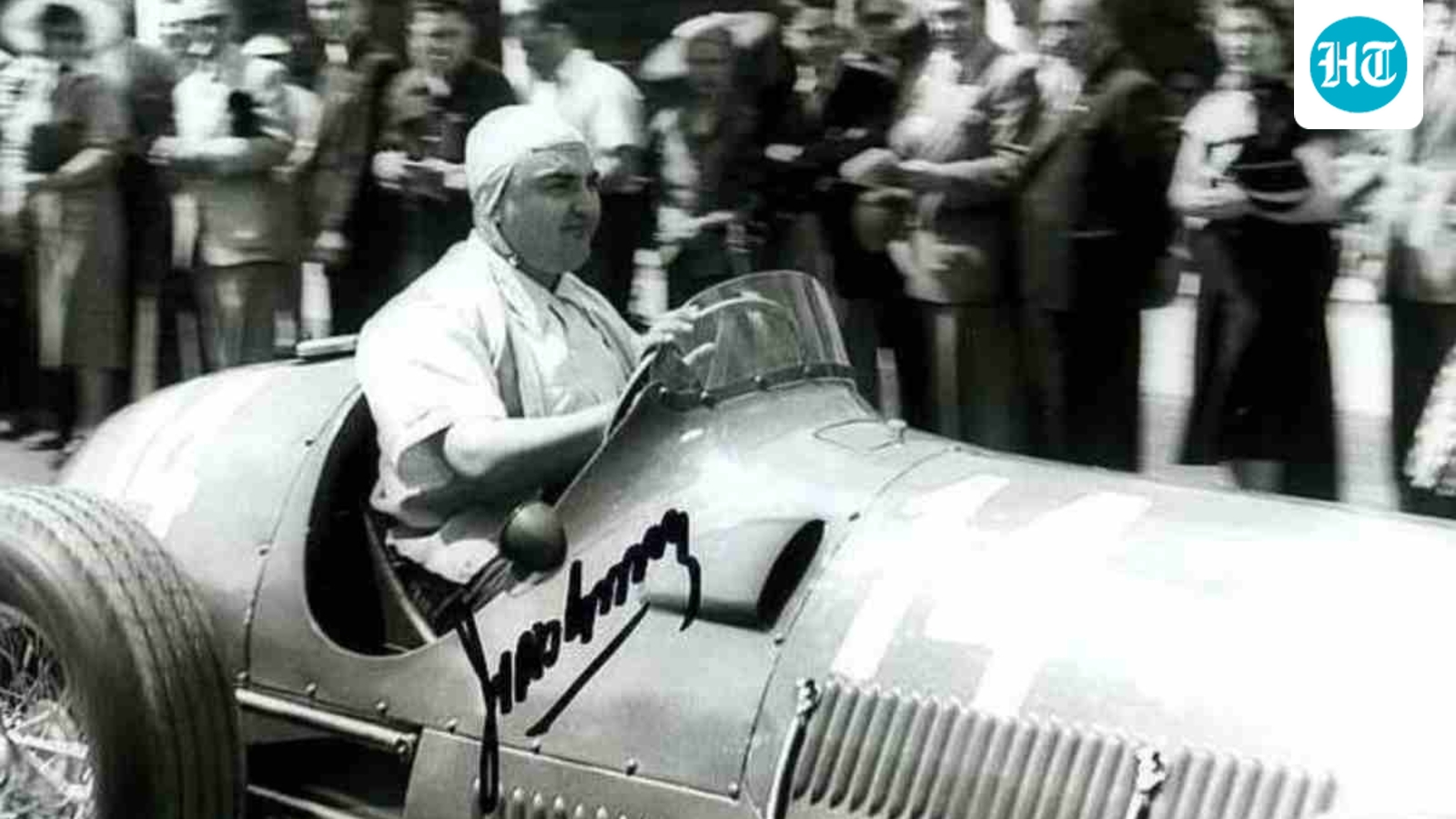
As Kimi Antonelli stands on the cusp of rewriting record books, Italian motorsport finds itself between hyper anticipation and a heavy, echoing past.
Amid the sleek corporate hospitality suites of the paddock and the roaring hybrid power units (PU) in the garages, it is easy to forget that Italy is one of Grand Prix racing's foundational cornerstones. Yet, despite being one of motorsport's spiritual homes, Italy has lived through an agonising drought.
More than 70 years have passed since an Italian driver last stood atop the Formula 1 world. In fact, only two Italians have ever claimed the world drivers’ championship — Giuseppe ‘Nino’ Farina in 1950 and Alberto Ascari in 1952 and 1953.
For the current generation of fans, whose F1 vocabulary is shaped by Lewis Hamilton, Max Verstappen and the rising wave of young talent, these names are perhaps long forgotten. To understand the weight of a potential new Italian champion, one must look back at the two men who etched Italy’s name into the sport’s immortal text.
‘Gladiator’ Farina
When the inaugural season of the FIA Formula 1 World Championship kicked off at Silverstone on May 13, 1950, the man who conquered the afternoon was an aristocratic Turin-born lawyer with a penchant for high speed.
Farina was a study in contrasts. Cultured, educated and physically imposing, Farina earned a doctoral degree in law and had an elite athletic background. Yet behind the wheel of the Alfa Romeo supercharged 158 ‘Alfetta’ he was an unyielding, fearless competitor.
Farina’s drive at the 1950 British Grand Prix was absolute dominance. Pole position, fastest lap and victory. He was devastatingly fast, but his career was defined by a razor-thin margin between brilliance and disaster.
Enzo Ferrari famously remarked that Farina was a man of steel who acted like a high-strung thoroughbred, regularly visiting the hospital after pushing his machines far beyond their limits.
He clinched the inaugural title at Monza later that year, roared on by a delirious home crowd. Though he raced until 1955 — 1950-51 for Alfa Romeo and 1952-55 for Ferrari — Farina’s legacy remains anchored to that historic dawn of F1. He ultimately met a tragic end in 1966, ironically killed in a road accident while traveling to watch the French Grand Prix.
Ascari, the maestro
Ascari remains Ferrari’s only Italian world champion and the last driver from the peninsula to conquer the sport.
Born in Milan in 1918, Ascari carried a heavy surname. His father, Antonio Ascari, was a legendary pre-war racing icon who died at the 1925 French Grand Prix when Alberto was just seven. Despite the trauma, Alberto recognised his bloodline and answered to the call of speed by initially starting on motorcycles before shifting to four wheels under the watchful eyes of family friend, Enzo Ferrari.
Affectionately nicknamed Ciccio by Italian fans, Ascari defied stereotypes. He drove not recklessly but with impressive precision, calculating every apex and managing his machinery with peerless mechanical empathy.
When regulatory changes forced F1 to run to Formula 2 specifications in 1952 and 1953, Ascari and the revolutionary Ferrari 500 created an era of absolute hegemony. He won six of the seven championship rounds in 1952, and five in 1953, securing back-to-back world titles — a feat matched at Scuderia Ferrari only by the legendary Michael Schumacher decades later.
Off the track, Ascari was endearingly human, crippled by superstitious quirks. He abhorred black cats, feared unlucky numbers, and guarded his lucky blue helmet and jersey obsessively.
Tragically, his life mirrored his father’s. In May 1955, while testing a sports car at Monza, Ascari crashed and died at the young age of 36, the same age as his father.
A seven-decade silence
For 73 years, the spirits of Farina and Ascari have hung heavily over Italian motorsport. As decades rolled by, Italian fans witnessed generations of exceptional talents. Michele Alboreto, Giancarlo Fisichella and Riccardo Patrese won multiple races but the supreme prize always slipped away.
Foreign titans claimed the red cars of Maranello while the championship trophy migrated to Britain, Germany, Brazil and beyond.
Now, as a new era dawns and a meteoric Italian talent stands on the threshold of breaking records, the ghosts of Turin and Milan are stirring.
Farina and Ascari proved that Italian grit, precision and passion could conquer the world. As the modern grid prepares for a potential changing of the guard, the legacy of F1's original Italian kings waits to be claimed anew.
KioskNews shows a cleaned-up reading view extracted from the publisher’s page — the original always lives on their site, not ours.