Japanese company develops a humanoid robot 'ambulance' for on-the-spot repairs
Turns out that breaking down at work isn’t a uniquely human experience.
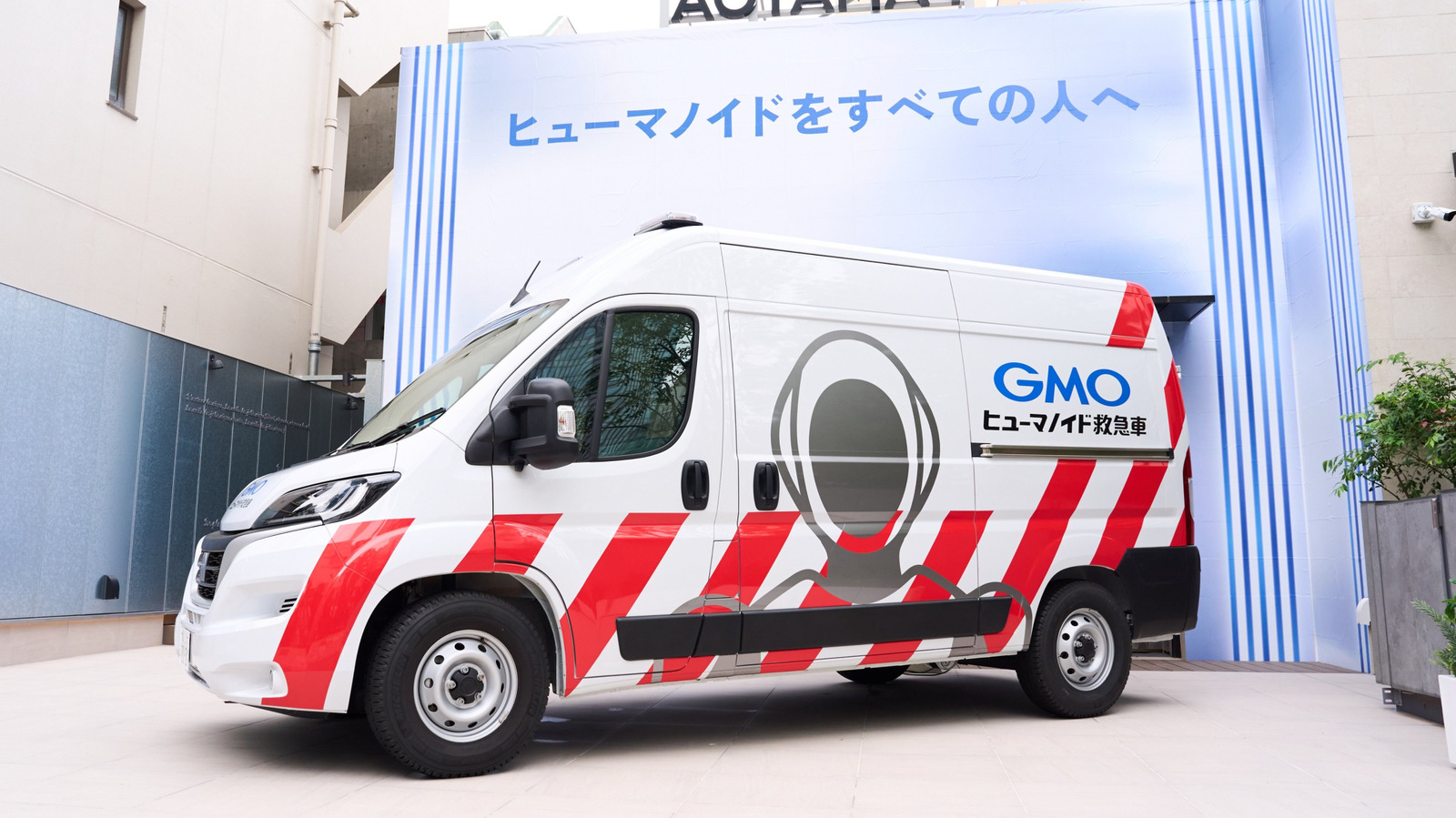
If you see what looks like an ambulance with a set of flashing lights weaving through Tokyo traffic, it might not be rushing to save a human. GMO Internet Group is unleashing what it calls Japan's first "humanoid ambulance" on the streets of Tokyo this month.
A maintenance van designed to make house calls when humanoid robots break down, the ambulance carries diagnostic equipment, spare parts, repair tools and engineers to wherever a robot has stopped working. If a robot can't be fixed at the roadside, there's a spare humanoid on board ready to be subbed in and take over on the spot. Meanwhile, the broken unit is ferried back to GMO's repair base at its Humanoid Lab in Shibuya, Tokyo.
There's only one ambulance stationed at its Tokyo headquarters for now, and it won't be used to respond to any and all stricken robots; the service only covers humanoids deployed by GMO AI & Robotics Trading (also known as GMO AIR), with dispatch decided on a case-by-case basis. That's the same company behind the humanoid robots working as baggage handlers at a Tokyo airport. It's currently running a trial of Unitree-built machines at Haneda in a collaboration with JAL Ground Service through 2028.
"When humanoids become more popular, this kind of service will be needed," said Shota Takizawa, an engineer at GMO AIR, at a press event covered by Euronews. The interior and exterior styling of the ambulance came from designer Yasumichi Morita of Tokyo firm GLAMOROUS, who modeled the look on emergency vehicles from around the world. Its exterior features purple roof-mounted lightbars and the text "Humanoid Ambulance."
GMO says that the ambulance service was created after damaged humanoids had to be sent away for repair, leading to service disruptions. "Learning from that experience, we came up with the idea of providing replacement humanoids," GMO AIR's CEO, Tomohiro Uchida, said. GMO's parent business is internet infrastructure: domains, hosting, that type of thing. Its robotics unit doesn't build robots at all, but instead resells hardware from Unitree and other manufacturers, then sells services around the machines.
Japan's government published an AI Robotics Strategy back in April that targets more than 30 percent of the global robot market and a roughly $135 billion domestic industry by 2040. One flashy van isn't going to have much of an impact on those numbers, but GMO is clearly pitching the ambulance as a solution built ahead of need; a way to bank field-repair experience before humanoids are common enough to demand it.
KioskNews shows a cleaned-up reading view extracted from the publisher’s page — the original always lives on their site, not ours.