Chinese chipmaker Hua Hong bets big on silicon photonics amid AI boom
China’s second-largest contract chipmaker, Hua Hong Grace Semiconductor, is aggressively expanding into silicon photonics, as the company looks to capture the next wave of the global artificial intelligence infrastructure boom.
Speaking on an earnings call with analysts on Thursday, Hua Hong chairman and president Bai Peng said the company planned to significantly expand its footprint in silicon photonics – a critical technology used in AI optical modules – during its next major capacity expansion in 2027.
“We want to participate in all silicon-based devices [inside optical modules],” Bai said, adding the sector is one of the two areas – along with power management chips – in which it wants to add “significantly more capacity”.
The plan underscores how the chip foundry is seeking to capture the next wave of the AI hardware boom, as rising wafer prices and shipments helped it achieve robust earnings for the third quarter.
For the three months ended September 30, the Shanghai-based chipmaker’s net profit surged 147 per cent year on year to US$123.4 million, according to its stock exchange filing on Thursday.
Total revenue hit a record US$987.1 million, a nearly 20 per cent year-on-year increase. That was partly driven by the integration of its newly acquired subsidiary Huali Microelectronics, aimed at bolstering the company’s advanced manufacturing capacity.
Excluding the figures from Huali Microelectronics, the firm’s total revenue reached US$803.4 million, beating the company’s previous guidance of US$770 million to US$780 million.
The AI boom had “caught most people by surprise”, Bai said. He likened the current AI infrastructure buildout to the early days of the internet, calling semiconductor chips “the new oil of the industrial age”.
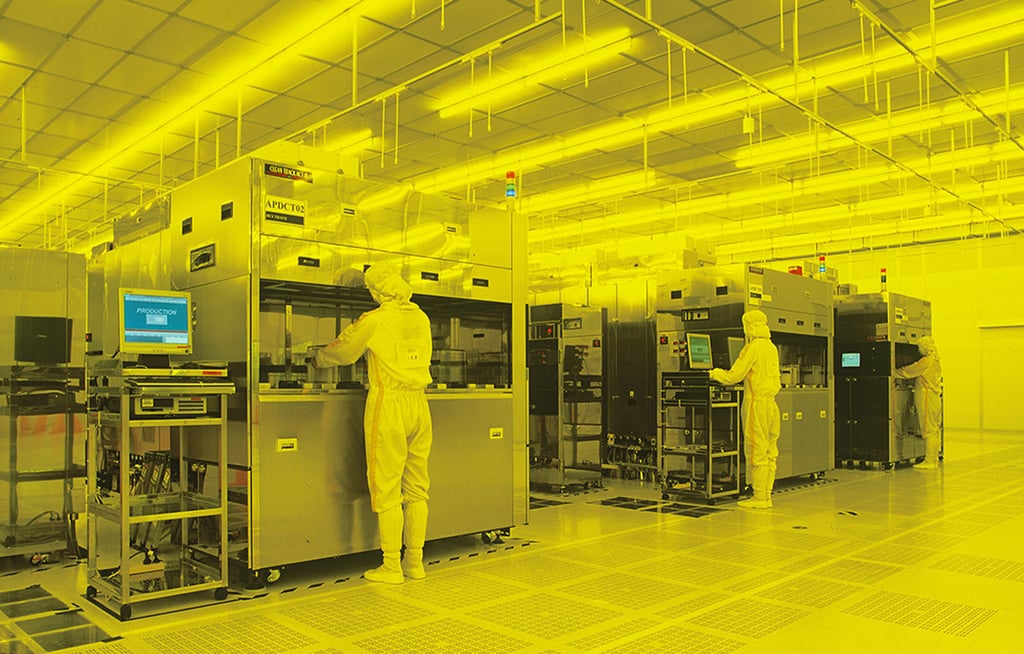
“As a speciality technology foundry with a broad technology portfolio, Hua Hong Grace has seen increasingly higher demands for microcontrollers, flash memory, power management and power discrete products, with corresponding tight supply in some segments, even as we continue to expand capacity,” Bai said.
The chipmaker expected the pattern of rising demand and prices in the industry to continue “for some time”, he added.
To address a shortage in production capacity, the chipmaker is pushing forward with construction of its new Fab 9B facility “with highest possible speed”. It began moving equipment into the fab – based in the eastern Chinese city of Wuxi – in mid-September, he said.
However, the chipmaker anticipates ongoing supply constraints even as new capacity comes online, as local foundries – especially its larger rival Semiconductor Manufacturing International Corp (SMIC) – are running their fabs at full capacity amid a scramble among tech giants and start-ups to secure computing power.
A large part of the company’s capacity expansion for next year has already been booked by customers, Bai said, adding that the firm’s overall fab utilisation would remain at 100 per cent or slightly higher.
During the third quarter, Hua Hong’s total production capacity utilisation rate stood at 102.9 per cent, according to its filing on Thursday.
Shares of Hua Hong had dropped 2.04 per cent to HK$67.3 in Hong Kong ahead of the earnings release.
KioskNews shows a cleaned-up reading view extracted from the publisher’s page — the original always lives on their site, not ours.