Food Sample Testing Triples In A Decade, But Failure Rate Falls

When a food company promises faster growth, stronger immunity or easier digestion, how can consumers know whether those claims are backed by evidence?
That question has come into focus after the Food Safety and Standards Authority of India (FSSAI) issued notices to several prominent food companies over claims made about their products.
The regulator has questioned Zydus Wellness's Complan claims, including "2X Faster Growth" and "Supports Concentration and Memory", and asked Nestle India for scientific evidence for claims about digestibility and immunity in its infant nutrition products. It has also raised concerns over the alleged promotion of infant milk substitutes through social media.
Regulatory notices are part of the food-safety enforcement process. But when prominent brands face questions over claims that influence consumer choices, a larger question emerges: how often do food products fail to meet prescribed standards, and how has the picture changed over time?
Food Sample Testing Has Increased, But Failure Rate Has Fallen
In FY16, authorities analysed 72,499 samples, of which 16,133 were found non-conforming, a rate of 22.3 per cent.
By FY26, the number of samples analysed had more than tripled to 2.2 lakh. The number of non-conforming samples also rose, reaching 40,023. However, their share fell to 17.9 per cent, the lowest rate in the 11-year series.
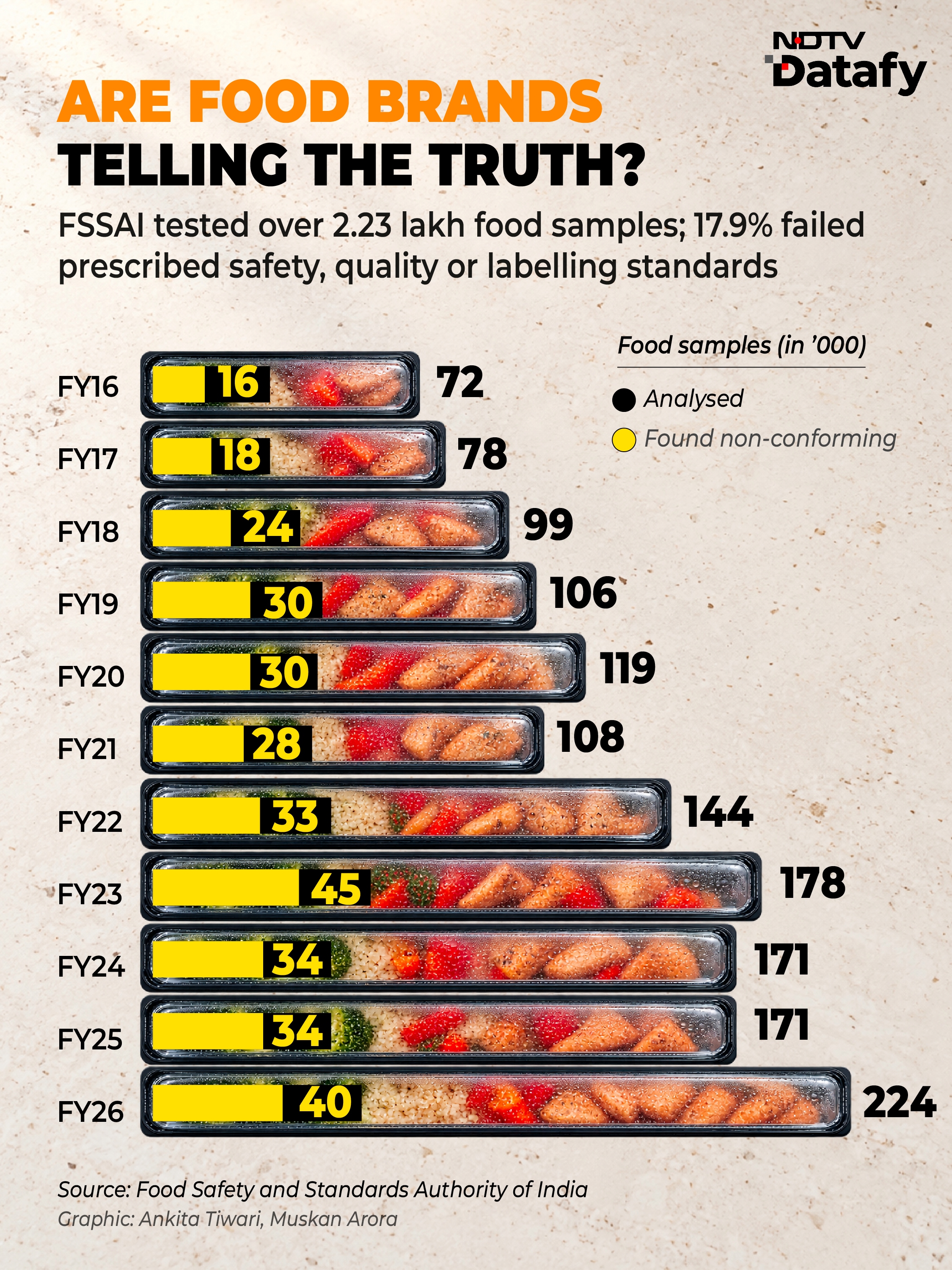
The non-conforming rate reached its highest level in FY19, when 28.6 per cent of the samples tested failed to meet prescribed standards.
So, a larger volume of food is being tested while a smaller share of the samples is failing.
Uttar Pradesh Accounts For Highest Share Of Failed Samples
The state-wise data for FY26 show considerable variation in the share of samples found non-conforming.
Uttar Pradesh recorded 20,427 non-conforming samples out of 39,519 analysed, giving it a non-conformity rate of 51.7 per cent. Rajasthan followed, with 4,594 out of 17,325 samples failing to meet standards, a rate of 26.5 per cent.
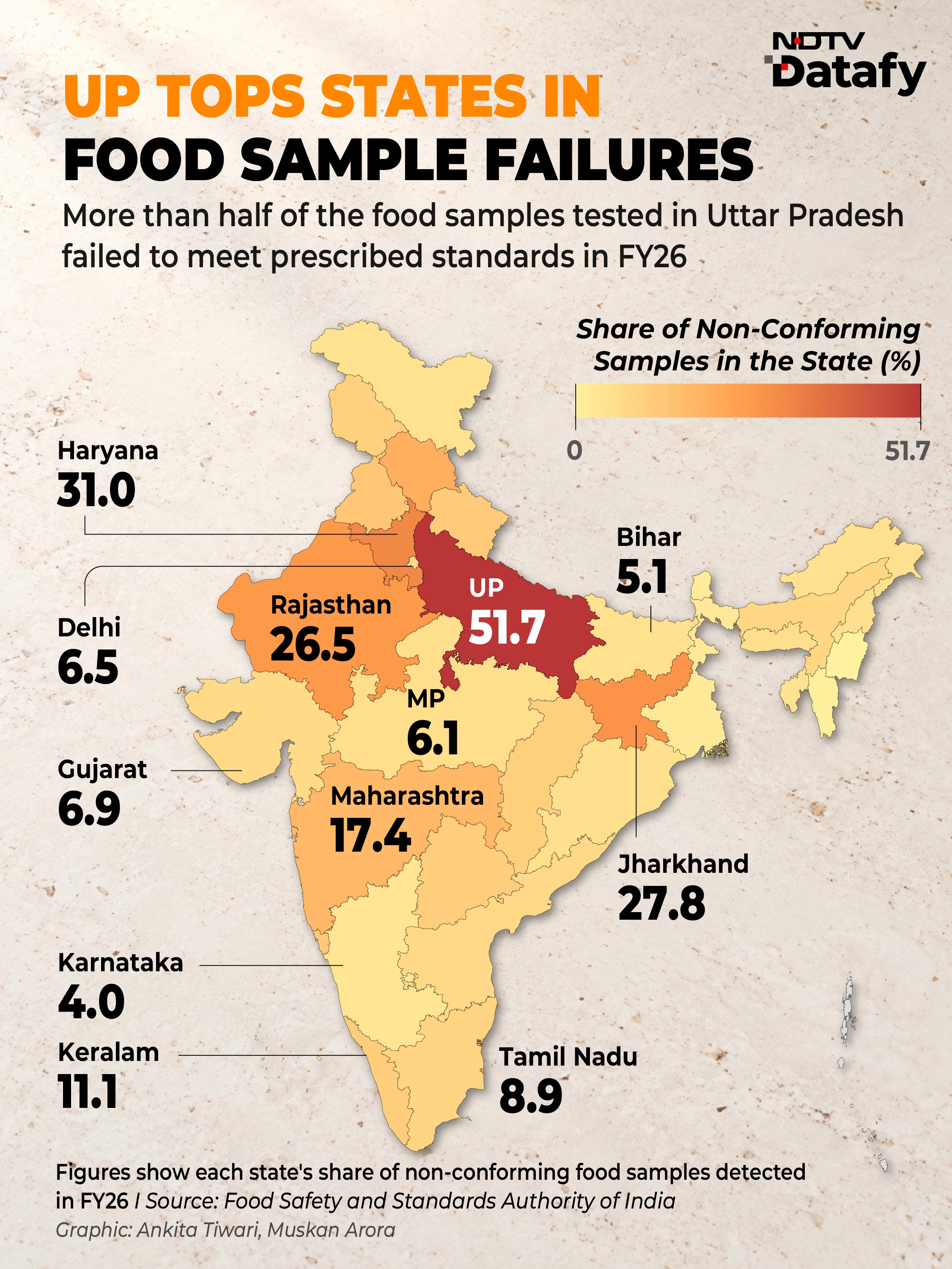
Haryana recorded a non-conformity rate of 31 per cent, with 723 of 2,335 samples failing. Jharkhand reported 27.8 per cent, while Puducherry recorded 21.6 per cent.
The picture was different in states with larger testing volumes.
Tamil Nadu analysed the highest number of samples, at 44,603, but 3,984 were non-conforming, a rate of 8.9 per cent. Karnataka analysed 13,349 samples and recorded a rate of 4 per cent.
KioskNews shows a cleaned-up reading view extracted from the publisher’s page — the original always lives on their site, not ours.