The 6 Best Thriller Books Released Since 1990, Ranked
A proper thriller should make you slightly unreasonable. One more chapter becomes four. It’s like binge-watching but instead of watching, you read. You start distrusting somebody because they paused before answering a question. You tell yourself you will stop once the character reaches safety, then the book reveals that safety was the problem. That is the level I want. Suspense is useful. Compulsion is better.
And these six get there through completely different pressure points. If somebody tells me books can’t be thrilling. Or that generally, thrillers are disposable. These are the books I start handing over.
6 'The Firm' (1991)
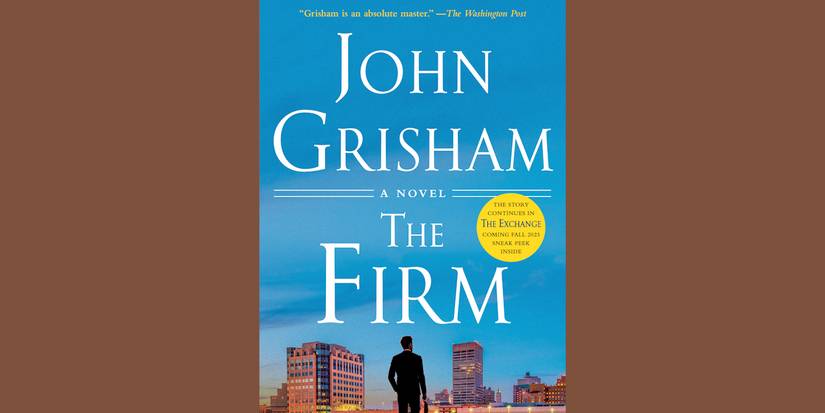
The Firm follows Mitch McDeere, a brilliant young Harvard Law graduate who accepts an astonishingly lucrative job at a small Memphis firm and gradually discovers that his new employers are laundering money for organized crime and keeping employees loyal through surveillance, intimidation, and murder. John Grisham wrote it, and the setup is still almost offensively effective because Mitch’s nightmare begins with everything going right.
The house, BMW, salary, bonuses, beautiful offices — each perk becomes uglier once Mitch understands why the firm is so generous. Then the FBI approaches him and the book traps him between two institutions that both want information only he can safely access. What I love is how much of the suspense comes from ordinary professional life becoming contaminated. Photocopies become dangerous. Billing records become evidence. A business trip can be surveillance. Sydney Pollack’s 1993 film starring Tom Cruise made the story a huge screen hit, but the novel gives Mitch’s impossible calculation much more room to tighten around him. He has to betray somebody. The thriller is figuring out how to survive the choice.
5 'Intensity' (1995)

Intensity follows psychology student Chyna Shepherd after a serial killer attacks the family whose home she is visiting, forcing Chyna to hide, pursue him, and eventually enter his world after discovering that another young victim may still be alive. Dean Koontz wrote the novel with almost no interest in allowing either Chyna or the reader a comfortable place to stop.
The title is unusually honest advertising. Chyna survives the opening horror and could theoretically escape, but learning about the imprisoned girl changes the equation. From there, the book becomes frightening because Chyna keeps moving toward the man every survival instinct should tell her to flee. Edgler Vess is terrifying partly because he has turned sensation itself into a philosophy. He wants to experience everything intensely and has discarded morality as though it were simply limiting his range. That leaves Chyna fighting somebody who does not respond to normal boundaries. Few thrillers sustain this much forward pressure without making the reader numb. This one somehow keeps finding another reason to tighten your grip on the book.
4 'Shutter Island' (2003)
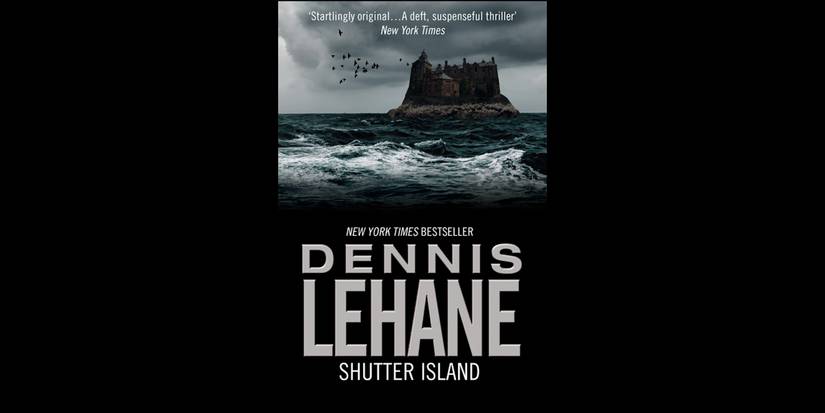
Shutter Island follows U.S. Marshal Teddy Daniels as he travels to Ashecliffe Hospital for the criminally insane to investigate the disappearance of patient Rachel Solando, only to encounter hostile doctors, impossible clues, a gathering hurricane, and evidence suggesting the hospital may be hiding something far larger than an escaped patient. Dennis Lehane wrote it, and he makes the island feel suspicious before anybody has actually done enough to justify Teddy’s suspicion.
That uncertainty is the pleasure. A patient passes Teddy a warning. Staff members seem rehearsed. Records disappear behind institutional authority. Teddy is also carrying grief over his wife Dolores and increasingly disturbing memories of liberating Dachau, so even his own mind cannot function as neutral evidence. Martin Scorsese’s 2010 adaptation with Leonardo DiCaprio and Tom Hanks is excellent, which makes reading the novel afterward particularly interesting because you can watch Lehane build the trap without a camera directing your attention. Once you know where the story is going, the whole book changes. Conversations you read one way become almost unbearably sad the second time.
3 'No Country for Old Men' (2005)

No Country for Old Men follows Llewelyn Moss after he finds the aftermath of a drug deal in the Texas desert, takes a suitcase containing two million dollars, and becomes the target of remorseless killer Anton Chigurh while Sheriff Ed Tom Bell tries to understand the violence spreading through his county. Cormac McCarthy wrote it with the stripped-down force of somebody who does not need twenty pages to make a man entering a motel room terrifying.
Moss is capable enough that you keep believing he might actually stay ahead. He checks rooms, studies sight lines, hides the money, anticipates pursuit. Chigurh simply keeps coming. The coin tosses are what make him unforgettable because he treats murder as though he is obeying a system rather than making a choice. And Bell slowly becomes the emotional center precisely because he cannot reduce what he is witnessing to a neat lawman-versus-killer story. The Coen brothers’ 2007 film is so extraordinary that it nearly fused itself permanently to the novel, yet McCarthy’s book gives Bell even more space to wrestle with age, evil, and the uncomfortable suspicion that the world has moved somewhere he cannot follow.
2 'The Girl with the Dragon Tattoo' (2005)
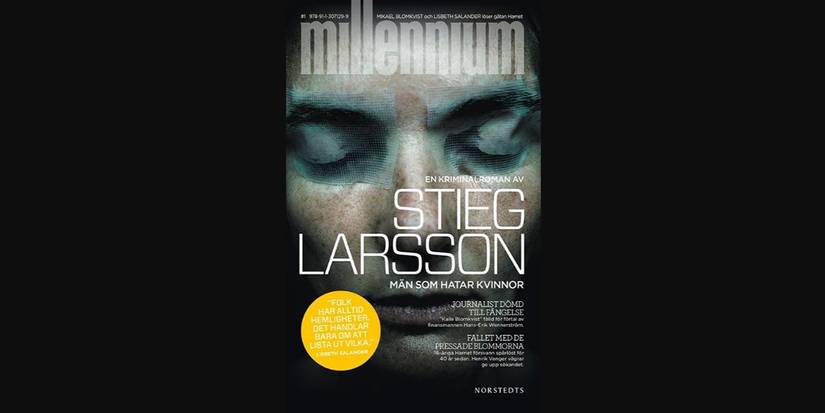
The Girl with the Dragon Tattoo follows disgraced journalist Mikael Blomkvist as he investigates the decades-old disappearance of teenager Harriet Vanger from a wealthy Swedish family, eventually joining forces with hacker Lisbeth Salander as the case exposes secrets far darker than either expected. Stieg Larsson wrote it, and the genius of the setup is that a cold case everyone has learned to live with becomes more disturbing every time Mikael and Lisbeth discover another piece.
Once the photographs, names, dates, Bible references, and family history start lining up, this becomes one of those books where stopping between chapters feels actively irritating. Lisbeth is the accelerant. She has access to information Mikael could never reach, notices patterns people underestimate her enough to leave exposed, and carries her own fury toward men who abuse power. Both the Swedish film starring Noomi Rapace and David Fincher’s 2011 version with Rooney Mara made her iconic on screen. The book has more time to show why she operates the way she does. She is not there to make the investigation edgier. She changes what kind of investigation is possible.
1 'Gone Girl' (2012)
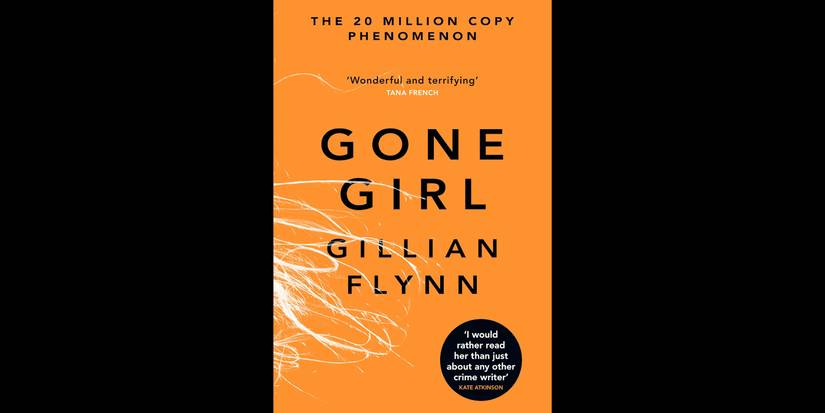
Gone Girl follows Nick Dunne after his wife Amy disappears on their fifth wedding anniversary, leaving behind signs of a struggle, a trail of anniversary clues, and enough suspicious behavior from Nick to turn the missing-person case into a national obsession over whether he murdered her. Gillian Flynn wrote it, and I genuinely wish it were possible to erase this book from memory every few years just to experience its shifts again.
The frightening thing is how eagerly the novel recruits you. Nick lies, so you judge him. Amy’s diary gives you another marriage, so you judge him differently. The media manufactures its own Nick. Amy’s parents already manufactured a fictional version of their daughter through the “Amazing Amy” books. Everybody is performing somebody, including the reader, who keeps wanting one clean person to believe. Flynn understands marriage as a place where two people can know each other with terrifying precision and use that knowledge either as intimacy or ammunition. David Fincher’s 2014 film had Ben Affleck playing Nick and Rosamund Pike as Amy. It captured that viciousness beautifully, but the book gets even deeper inside the mutual performance. The missing woman is the hook. The idea that your spouse may understand exactly how to weaponize the person you became for them is what makes Gone Girl impossible to shake.
Collider Exclusive · Villain Personality Quiz Which Criminal Mastermind Would Be Your Nemesis? Lecter · Joker · Moriarty · Chigurh
Four of the finest criminal minds ever put on screen. One of them would look at you and see something worth their time. Eight questions decide which one comes for you, why they picked you, and what they would want when they arrived.
🍷Lecter
🃏Joker
♟️Moriarty
🪙Chigurh
01
What would a criminal mastermind notice about you first? Great villains choose their opponents carefully. Something about you got their attention.
02
How do they make first contact? The introduction tells you everything about what is coming next.
03
What do you actually believe about right and wrong? Every nemesis is really an argument about the thing you believe most.
04
What finally gets under your skin? Everybody has a pressure point. Finding yours is the whole plan.
05
They have made their move. How do you fight back? This is the part of the film where the audience finds out who you are.
06
What would they use against you? A good villain never brings a weapon you have not already handed them.
07
What do they actually want from you? The money is never the point. Something else always is.
08
How does it end between the two of you? Eight questions in, this is the one that decides who comes for you.
The Case File Is Complete Your Nemesis Is…
Four criminal masterminds. One of them was always going to be yours. Here is who comes for you, why they picked you out of everyone available, and what they want from the encounter.
Hannibal Lecter
Your nemesis does not want to beat you. He wants to know you completely, and he is patient enough to wait for it. The frightening part is how good the conversation is.
- Lecter is the most dangerous kind of opponent: the one who finds you interesting. He never raises his voice, because he has never needed to.
- You keep a great deal to yourself and you are careful about what you show. That reserve is exactly the door he would knock on.
- The films understood something other thrillers missed. The horror is not the violence. It is being perfectly understood by the wrong person.
- He would be unfailingly polite about all of it. That is the worst part.
The Joker
Your nemesis is not after money, territory or revenge. He is after a demonstration, and you are the person he has chosen to prove his point on.
- The Joker only picks opponents who believe in something. Your decency is not a defence against him. It is the entire reason he showed up.
- He has no plan you can predict and nothing you can take away, which removes every tool you would normally reach for.
- His whole argument is that you are one bad day away from being him, and you would spend the rest of your life proving him wrong.
- He would call it a magic trick. You would call it the worst night of your life.
Moriarty
Your nemesis respects you, which sounds flattering until you work out what it means. He chose you because nobody else was worth his time.
- Moriarty is the original criminal mastermind, the template every later one borrows from: a mind the equal of the hero's, pointed the wrong way.
- You enjoy being the cleverest person in the room. He is counting on exactly that, and he has already built the room.
- This is the rare nemesis who would be genuinely disappointed if you lost badly. He needs the game to be worth playing.
- It ends the way these things always end. Two people, one problem, and only one way down.
Anton Chigurh
Your nemesis has no personal interest in you whatsoever, and that is precisely what makes him unsurvivable. You are not a rival. You are a stop on the way.
- Chigurh does not negotiate, gloat or explain. He arrives, he asks one question, and the answer was decided long before you opened your mouth.
- You trust yourself to handle things. He is the one problem in the world that has no interest in how capable you are.
- No Country for Old Men rewrote the screen villain by removing the thing audiences quietly rely on: the sense that talking might work.
- Call it. He will wait.
KioskNews shows a cleaned-up reading view extracted from the publisher’s page — the original always lives on their site, not ours.