Diwali Mubarak: When the house made room for everyone
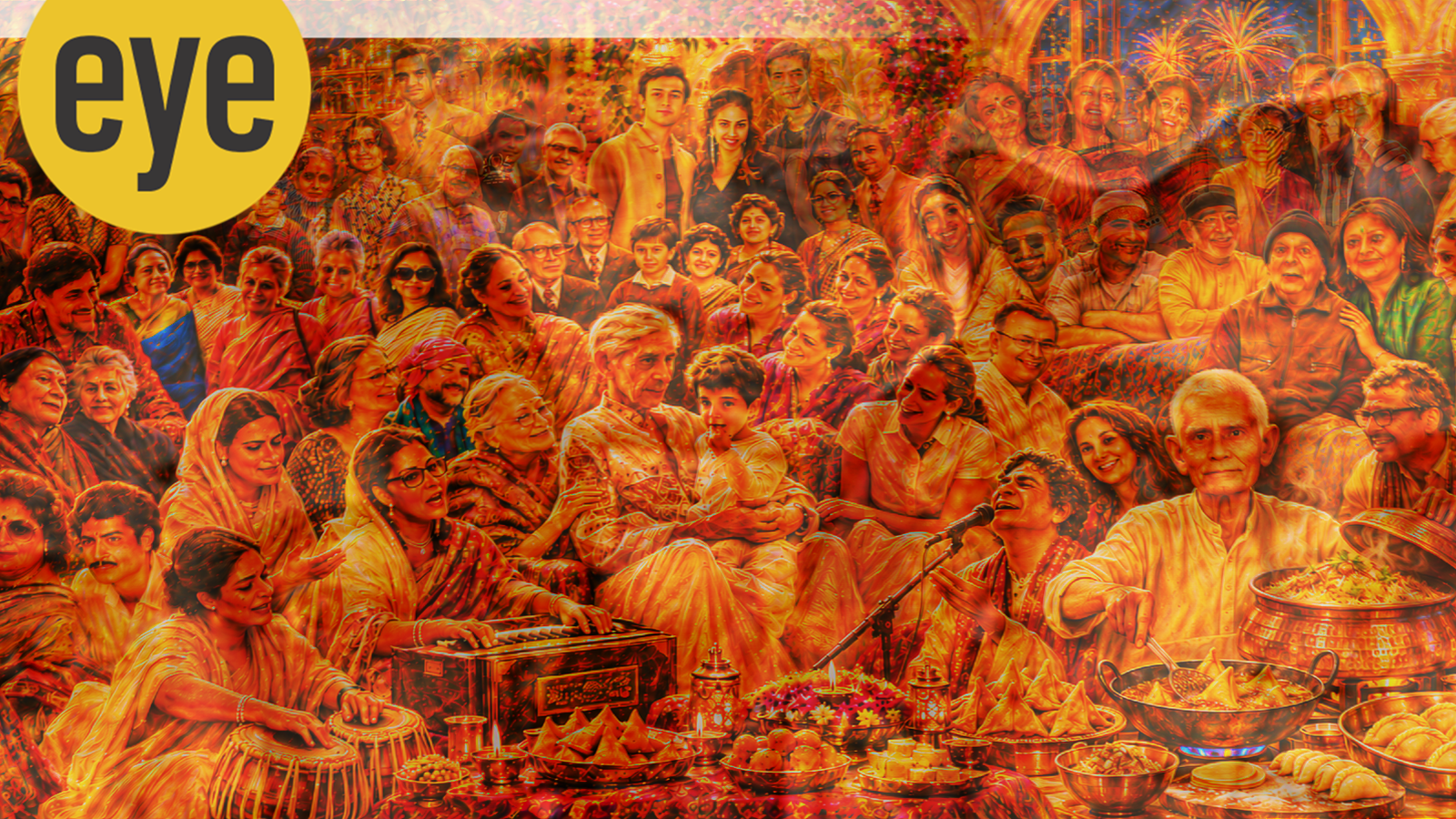
The first Diwali memory that reaches me is a smell: khoya browning slowly in a pan, stirred until it darkened and caramelised, with only a little sugar, a scattering of chironji and cardamom rising like a warm breath through the house.
That fragrance travelled with us from Delhi to Nagpur, where we hosted Diwali for three years. It found its way into the curtains, the cupboards, the clothes laid out for the evening. Long before the first diya was lit, Diwali had begun in the kitchen.
Our home was filled with relatives, neighbours, friends, Papa’s colleagues and people who came simply because there was room for them. Deepa Bhua and Pupaji would finish their puja and arrive with Chinky and Pinky Didi and Junoo Bhaiya. Nina Aunty and Rishabh Uncle came after their prayers in Jangpura. Abha Aunty, Ajay Uncle, Archana, Aiyana and Ruchi joined us. Kavita Aunty and Dr Chaudhry would arrive with her son Prashant.
Each family had prayed at home; then they came to pray and be with us. The Ramayana opened. The aarti began. We stumbled over a word or lost the tune. Someone laughed; someone started again. No one had to perform perfection. The prayer was in the gathering, in the trying, in the room made large enough for everyone.
Some arrived with patakas for the fireworks. Others brought stories, laughter and the promise of a long evening. Papa’s colleagues came; neighbours came; friends came to play cards. The house kept filling until it felt less like a house than a heart with every chamber awake.
The people who kept our home going were part of that warmth too: Panditji, Baba, Ram, Janardhan, Khaggi and Vinod. The evening moved from puja to fireworks, from fireworks to singing, from songs to cards, and from cards to more talk, more laughter, more tea.
Panditji was our vegetarian Brahmin cook: a small man whose stature filled the kitchen. He could turn away anyone who wanted to enter, but he let me sit beside him. I could question him, talk to him, watch him work—even sit on his lap.
Story continues below this ad
He made samosas by the hundreds, or so it seemed to my little mind. Their pastry was so fine you could see the potato and pea filling through its skin. The masala was simple: coarsely ground spices, lal mirchi and good hing. With them came a chutney of dhania, imli and a little yoghurt. People swooned over those samosas. I never tasted a better one.
Then there was the kathal ki biryani: vegetarian, yet so rich and satisfying that people were shocked to discover there was no meat in it. The secret was the fruit, the spices, the hands that cooked it—and a Diwali table where nobody had to leave hungry.
Before the cards came out, there were songs. We sang ghazals. I would be asked to sing; Bhua would sing; others joined. The evening moved from prayer to poetry without announcing the change. The same room held aarti, Kabir, samosas, fireworks, music and cards. No one needed to explain why they belonged together.
One memory from the time my grandfather died remains especially vivid. I was five and a half, perhaps six. From the puja and the days around his passing, I remember Bhua singing Kabir. Her voice seemed to hold the divine. We listened, paying obeisance to her and to the song. She sang Mati kahe kumhar se. I was too young to understand every word, but I understood the stillness it made. A song gathered the family around one voice; the smallest person in the room seemed suddenly to contain the whole sky.
That is where Nasir Kazmi comes in, though only briefly. His question, Woh sahilon pe gaane wale kya hue?—what became of those who sang along the shore?—has always made me think of people arriving at one another’s homes. A family finishes its puja and crosses the city to ours. A neighbour brings fireworks. A friend enters and finds a song already waiting. The shore is not only a place of departure. It can be where people arrive.
Story continues below this ad
I think of the people who showed me light without naming it as a gift: my mother and dadi making gujiyas; Panditji letting a small boy sit beside him; Bhua singing Kabir; the people who kept the house warm and working. A lamp matters. So do the hands that light it, and the hands that make room around it.
Diwali, the constant
Diwali travelled with me when I moved to America. Friends gathered in my home, some familiar with the rituals, others learning them as they came. The place changed; the lamp, the food and the invitation travelled. Come in. Eat. Sit. Listen. If you know the words, sing. If you do not, stay until the melody finds you.
Last year, Diwali filled my Mumbai home in its own way. Satya, our cook in Bombay, was in the kitchen, doing what a good cook does: making the house smell like welcome. And Abdullah, who is Muslim, led the entire Lakshmi puja. He offered the prayers with care and devotion. No one needed to make a speech about what it meant. We were together, and the room held us
.
That evening felt like Jashn-e-Chiraghan, a celebration of lamps. The light did not ask anyone to become someone else before entering. It fell on all of us as we were: with our different names, faiths, memories and ways of praying. The diya did not become smaller because more people stood around it.
A geet, a ghazal, a nazm, a thumri, a dadra, a chaiti, a barahmasa—each has its own history and its own way of breathing. They are not the same song in different clothes. But they can carry longing, devotion, separation, joy and the hope of return. They let us hear another person’s ache without needing to share their language, faith or life. Difference remains; recognition becomes possible.
Story continues below this ad
I sometimes long for a more feminine way of living—not an imagined past without injustice, but an ethic shaped by care: empathy, kindness, decency, humanity, love and indulgence. These are not soft decorations around life. They are what make a life livable. I saw them in the women who cooked and prayed, taught us songs, made room for our mistakes and welcomed those who came through the door.
Turn the clock back
A world eager to divide us will always find a line to draw: religion, language, caste, colour, country, surname. Our traditions matter; our names matter. They should enrich the shared home, never become an excuse to deny another person dignity, safety or love. Hindu, Muslim, Sikh, Isai, Yehudi: we are human before we are made into categories, and Indian together in all our many inheritances.
I return to the house: the khoya browning, cardamom rising, Panditji at work, the kathal biryani surprising its guests. I hear the aarti falter and begin again. I hear Bhua sing Kabir. Then come the ghazals, the fireworks and the cards. The evening stretches; the house keeps throbbing with love.
This Diwali, read a poem aloud. Sing something you have not sung in years. Ask someone you love which song they remember. Make the gujiyas slowly. Invite people in. Put one more plate on the table. Let the fireworks be followed by conversation, and the conversation by a song.
Story continues below this ad
What in this world is truly ours? Perhaps it is the voice we carry after the singer is gone, the samosa we never forgot, the people who arrived after their puja, the lamp that made room for another face. Perhaps it is the joy we choose to share.
Let the lamps burn brightly. Let the songs pass from one voice to another. Let Diwali make the house larger than its walls.
Diwali Mubarak to all.
KioskNews shows a cleaned-up reading view extracted from the publisher’s page — the original always lives on their site, not ours.