Will Jensen Huang’s downfall tip the scales against open-source AI?
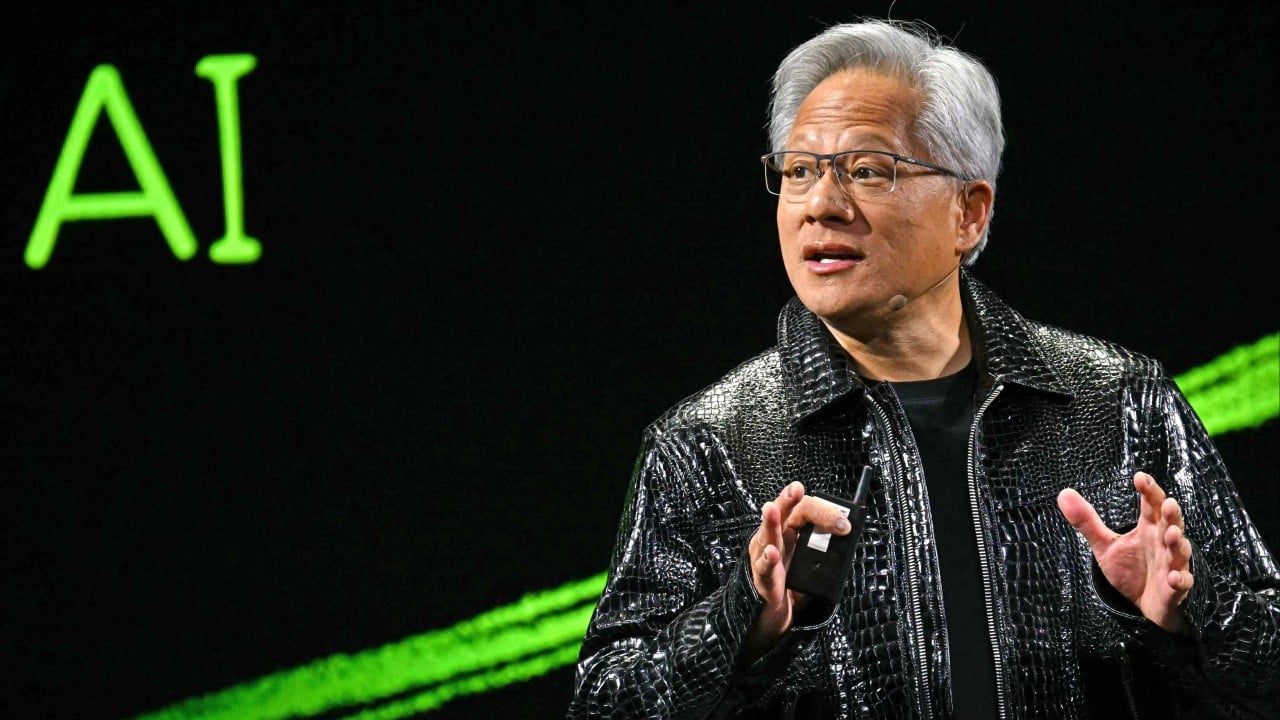
Jensen Huang’s abrupt resignation from Nvidia has cast uncertainty over the US chip giant’s multibillion-dollar investments in open-source artificial intelligence, while potentially depriving Chinese developers of one of their most influential advocates in Washington.
His departure could prompt Nvidia to scale back spending on open-weight models and their supporting infrastructure, analysts said, although strong commercial incentives would likely keep the company committed to the broader ecosystem.
Huang resigned on Thursday amid media reports of his alleged extramarital affairs, including one with a Chinese businesswoman suspected by US intelligence of working for Beijing – an allegation that Beijing has repeatedly denied. Chief financial officer Colette Kress will serve as interim CEO while the board searches for a permanent successor.
His departure has raised questions about Nvidia’s future direction, with potential repercussions for companies across the AI ecosystem.
Under Huang, Nvidia expanded beyond its core chip business, investing billions in cloud computing providers such as CoreWeave and AI inference platforms that support the deployment of open-weight models. It has also developed its own family of open-weight models, known as Nemotron.
Huang has been the singular driving force behind Nvidia’s aggressive, high-conviction bets
Nvidia plans to spend US$26 billion over five years developing open AI models, according to a filing with the US Securities and Exchange Commission last year. In September, Nvidia also announced plans to acquire Hugging Face, a leading platform for sharing open-weight models, in a US$12.9 billion deal.
The proposed acquisition has yet to close, with the US Department of Justice raising monopoly concerns, Reuters reported last month.
“Huang has been the singular driving force behind Nvidia’s aggressive, high-conviction bets,” said Su Lian Jye, chief analyst at technology research firm Omdia. Without him, Nvidia might come under investor pressure to review or reduce its investments in open models, he added.
Open-weight bets under scrutiny
Nvidia has a clear commercial reason to expand the open-source ecosystem. By making AI models more widely accessible, Nvidia encourages developers and businesses to build applications that ultimately drive demand for its chips and computing infrastructure, according to Su.
Rui Ma, a tech analyst and founder of the Tech Buzz China newsletter, said Nvidia benefited commercially from its open-weight strategy by ensuring the industry “isn’t dominated by a handful of giant companies that can afford to develop their own chips”.
Major AI model companies including OpenAI have started developing their own chips in recent years in a bid to reduce reliance on Nvidia. However, open-weight models divert users away from these closed-source companies, accruing greater value to the chip providers themselves.
YouTube video player
This strategy can be seen in Huang’s long-standing support for Chinese AI models, most of which are open-weight, such as DeepSeek and Alibaba Group Holding’s Qwen, Ma said. Alibaba owns the South China Morning Post.
While Nvidia’s commercial incentives to support open-source AI would survive a leadership change, individual investments in frontier models and infrastructure providers could face greater scrutiny, especially those relating to China, Ma said.
“We’ll see how Nvidia moves forward, but I think they will certainly have to cool the parts of their business that touch China, even indirectly, and probably prioritise their core business over other more tangential objectives like developing open-source models or funding them.”
China’s AI pathway loses a powerful advocate
Where Chinese companies could benefit is if Nvidia’s pullback from open-source AI leads to slower progress in the American open-source ecosystem. Nvidia was a major investor in one of the leading US open-source AI start-ups, Thinking Machines Lab, but it is now unclear whether a US$2.5 billion investment, reported in September, will be completed.
Chinese open-weight models continue to lead their US counterparts by several months. Should this gap widen, Chinese companies could see accelerated adoption of their models, particularly in markets where technological sovereignty and costs influenced deployment decisions, Su said.
Still, Huang’s departure could also hurt Chinese developers by weakening one of the most influential voices advocating for open-source technology more broadly, analysts said. Huang has repeatedly argued against cutting China off from American AI technology, maintaining that continued engagement would help preserve US technological leadership.
His resignation comes amid growing national-security concerns in Washington over Chinese open-weight models and the risks posed by their widespread adoption.
In April, two Republican-led congressional committees launched an investigation into Chinese models developed by DeepSeek, Alibaba and Moonshot AI, questioning whether their adoption by US companies could expose sensitive data, create cybersecurity risks or undermine American technological leadership.
The political balance has now shifted considerably towards those advocating tighter restrictions
In September, US intelligence and cybersecurity agencies accused those same companies of systematically extracting capabilities from American models, further intensifying scrutiny of Chinese AI.
Huang’s scandal could strengthen the position of policymakers pushing for tighter restrictions on Chinese technology, Ma said.
“The political balance has now shifted considerably towards those advocating tighter restrictions,” she said. “It could mean even greater scrutiny of Chinese open-weight models and restrictions on their availability and use.”
Sun Chenghao, a senior fellow at Tsinghua University’s Centre for International Security and Strategy, said the most direct impact of Huang’s departure on Chinese companies would be the likely tightening of US restrictions on advanced chip exports to China, including access to US chips in third countries such as Thailand and Malaysia.
On Friday, former OpenAI star researcher Will DePue released a report claiming to have found “conclusive forensic evidence” that leading Chinese AI companies DeepSeek, Moonshot AI, MiniMax and Ant Group continue to train their flagship models using Nvidia Blackwell graphic processing units, which are restricted from being exported to China.
The companies did not immediately respond to requests for comment.
“The more likely outcome is that the US continues to promote its own models globally while tightening restrictions on China’s access to computing power and related services, leaving the open ecosystem increasingly constrained by geopolitics,” Sun said.
KioskNews shows a cleaned-up reading view extracted from the publisher’s page — the original always lives on their site, not ours.