Nvidia’s Jensen Huang affair revives China Initiative concerns in Silicon Valley
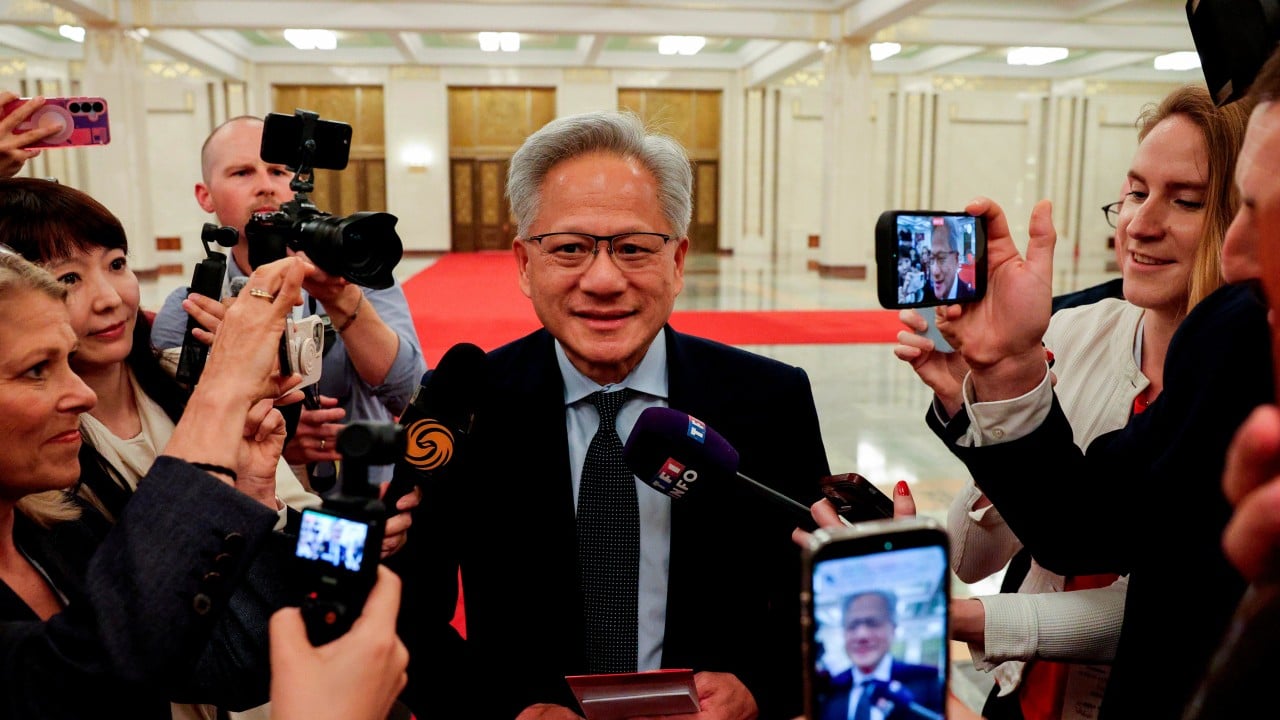
Nvidia boss Jensen Huang’s admission that he was unfaithful to his wife has become a widely discussed topic around the world, amid allegations linking the woman involved to Chinese intelligence.
While many social media users treated the affair as another piece of celebrity gossip, several Chinese professionals working at major Silicon Valley technology companies expressed concerns about its potential implications for their own careers.
If the billionaire founder of one of the United States’ most successful technology companies, with close links to the country’s political and business leaders, can find his personal life subject to national security scrutiny, what might that mean for them?
For some, the story has recalled uncomfortable memories of the US Department of Justice’s China Initiative, launched in 2018 by the first Trump administration to address economic espionage and technology-related national security threats.
The controversial programme, criticised for unfairly targeting Chinese and Chinese-American researchers, was discontinued in 2022 but its impact on trust among technology professionals has not entirely faded.
08:30
Why are more Chinese scientists leaving the US to return to China?
Chinese professionals were often the first to “feel the chill” when such incidents occurred, a Silicon Valley-based hardware sourcing specialist of Chinese heritage, with 30 years of experience sourcing critical components from Asia, told the South China Morning Post.
An AI engineer from China, who earned his PhD in the US and now works at an American artificial intelligence start-up, questioned whether companies would become more suspicious of employees of Chinese descent, potentially affecting career prospects and even job security.
The renewed concerns come amid growing US-China tensions over access to advanced AI computing power, with Nvidia at the centre of Washington’s efforts to restrict China’s access to the technology.
Huang has repeatedly argued that maintaining access to the Chinese market serves American commercial and technological interests.
He says that excluding American technology companies from China could accelerate the development of competing Chinese technologies and potentially weaken the United States’ long-term leadership in AI.
This puts him in a politically sensitive position, although there is no public evidence so far that the recently disclosed personal relationship has influenced his business decisions.
Nvidia’s products are indispensable to the AI industry, with demand far exceeding supply – a situation that could continue for years. As its CEO, Huang is a highly sought-after guest among political leaders and business executives around the world, including China.
While some ordinary Chinese technology professionals in Silicon Valley worry they may be more vulnerable to national security scrutiny in the wake of Huang’s predicament, social media discussions took a different direction.
An informal poll conducted on Chinese social media by a prominent data and business analyst with 1.66 million followers explored what might have motivated the woman to approach Huang.
02:58
Who is Alice Huang, the woman at the centre of Nvidia CEO Jensen Huang’s affair scandal?
The most popular opinion, with 31 per cent of responses, suggested that she was simply pursuing financial gain and was willing to use an intimate relationship to achieve that goal.
This was followed by “nothing more than the two people falling in love”, at 20 per cent. Only 15 per cent agreed that she was seeking to obtain business intelligence, making it the least popular of the five options.
While the espionage allegations were a major focus of discussions on US-based social media platforms, some users questioned why someone engaged in espionage would openly share photographs of herself with Huang and appear unconcerned about being photographed or filmed with him over several years.
Beyond the public speculation, a more practical question is being raised within the industry: what could China realistically gain from access to Nvidia’s CEO?
Even if China acquired Nvidia’s most advanced GPU designs, it still would not be able to make equivalent chips, given its constraints in leading-edge semiconductor fabrication.
Reproducing Nvidia’s CUDA software ecosystem would be an even greater challenge for Chinese chipmakers, given the vast and well-established community of developers built around the platform.
That does not mean access to Huang would have no intelligence or commercial value. There is speculation that it could offer valuable insights into Nvidia’s business strategies and decisions concerning the Chinese market.
The Chinese foreign ministry has dismissed the allegations as baseless attempts to discredit China.
Passionate about science? Dive deeper with the Dark Matters newsletter, a weekly in-depth analysis on China’s rise in science, technology and military that goes beneath the surface. Sign up for free now.
KioskNews shows a cleaned-up reading view extracted from the publisher’s page — the original always lives on their site, not ours.