Australia is inching closer to a recession after one RBA rate rise too many | Greg Jericho
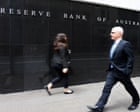
Earlier this month, the six members of the Reserve Bank monetary policy board voted to raise the cash rate to 4.85%. Last Thursday, the October labour force figures showed unemployment hit 4.9%. And on Wednesday, the inflation rate jumped to 4.9%, overwhelmingly due to surging fuel costs.
If they weren’t sure they had stuffed up by raising the cash rate on Melbourne Cup day, the market quickly told them.
Before the November decision, the market was almost certain rates would be lifted. As I noted at the time, the RBA let everyone know it was not concerned about unemployment having risen to 4.7% in September.
Afterwards, investors, and pretty much everyone outside the Martin Place headquarters, could feel the stuffing being knocked out of the economy. It felt like one rate rise too many. By Wednesday last week, the market anticipated a rate cut by April 2028.
Then last Thursday, after the unemployment numbers were released, the market was forecasting two rate cuts by April 2028 and one by this time next year:
Click here if this graph does not display
On the day the RBA raised the cash rate, it did so based on its latest estimates for the economy released the same day that had unemployment reaching 4.9% … in December 2027.
Hey, look, being out by 14 months is not that bad?
Unfortunately, the RBA has some experience this year in being wrong. Just three months ago, it thought unemployment would only be 4.5% at the end of this year:
Click here if this graph does not display
It’s not like we couldn’t see the rise in unemployment coming.
In the minutes of the November monetary policy board meeting, we are told that the three members who voted to keep rates at 4.6% “expressed their concern that the economy might be near the point of entering a materially sharper downturn and pointed to the costs in terms of unemployment”.
But the other six members thought they knew better.
And now we are hearing talk about recessions and the name Claudia Sahm being mentioned.
Longtime readers of this column will be well acquainted with Sahm – I wrote about her measure of recessions first in February 2020.
Rather than sit around and wait for two quarters of negative GDP, Sahm proposed we look at increases in unemployment.
She did this because not only is GDP a very slow measure – for example if the December quarter of this year is the start of a recession, we would only find out in June next year when we get the March quarter GDP numbers.
That’s a bit late to do much.
GDP can also hide things due to exports. Are we going to care that GDP goes up because companies in Australia exported a lot of LNG, iron ore or copper but unemployment is still rising? Probably not.
As I often say, you can’t eat GDP, but you know the difference between having a job and being unemployed.
Consider that in the 2010s there were nine quarters where GDP would have gone backwards were it not for trade:
Click here if this graph does not display
after newsletter promotion
It happened at the end of 2023 as well (when I was also suggesting the RBA stop slowing down the economy).
Sahm also realised you can’t just look at the actual amount of unemployment.
This is a criticism that has been flung at me by some other commentators and economists for daring to suggest the RBA has got it wrong – after all, 4.9% is a lot lower than unemployment used to be.
But if you look at unemployment over the past 30 years, every economic downturn except Covid saw unemployment rise to levels that previously would have been considered OK:
Click here if this graph does not display
No one in 2008 during the GFC was telling people to calm down because 5.9% unemployment was lower than it had been for most of the previous 20 years.
The issue was how fast it was going up.
This was Sahm’s insight. She noticed that before recession, unemployment always rose quickly rather than gradually.
She argued that the recession sirens should go off and governments should start implementing stimulus measures if the three months average unemployment rate rises by more than 0.5 percentage points in a year.
In October, with the 4.9% rate, the Sahm measure hit 0.6 points:
Click here if this graph does not display
The RBA argues that for Australia a Sahm recession is triggered when it goes over 0.75 percentage points – a level I think is rather too high and gives the RBA a bit too much scope to forecast rising unemployment without saying it expects a recession.
But even so, if the unemployment rate in November remains at 4.9% and then rises to 5.0% in December, the Sahm measure will hit 0.76.
But rather than trigger stimulus, we already know that in December the government is planning spending cuts, driven by the ludicrous suggestion there is too much demand in the economy and we need to slow things down.
Alas for everyone, things are already slowing down rather more dramatically than is healthy – or than the RBA expected.
KioskNews shows a cleaned-up reading view extracted from the publisher’s page — the original always lives on their site, not ours.