MMDA warns motorists vs. NCAP-related scams
Make this your preferred source to get more updates from this publisher on Google.
The Metropolitan Manila Development Authority (MMDA) on Tuesday warned motorists against falling victim to scams masquerading to be part of the No Contact Apprehension Program (NCAP).
Under such schemes, the MMDA said, scammers create fake websites and payment modes to collect money and sensitive financial information.
"Wala po kasi kaming capability na hulihin 'yan. We have to rely with our law enforcement agencies to capture 'yung mga scammers," MMDA Chairperson Romando Artes said during a press conference.
(We don't have the capability to catch them. We have to rely on our law enforcement agencies to capture the scammers.)
Artes warned that motorists could be tricked into providing their one-time passwords (OTPs) on fake NCAP websites.
The MMDA already filed a complaint with the National Bureau of Investigation (NBI) and coordinated with the Department of Information and Communications Technology, (DICT) and the Cybercrime Investigation and Coordination Center (CICC) regarding the scams.
It is also considering coordination with the Bangko Sentral ng Pilipinas (BSP) and the Anti-Money Laundering Council (AMLC) to explore ways of preventing scammers from receiving payments.
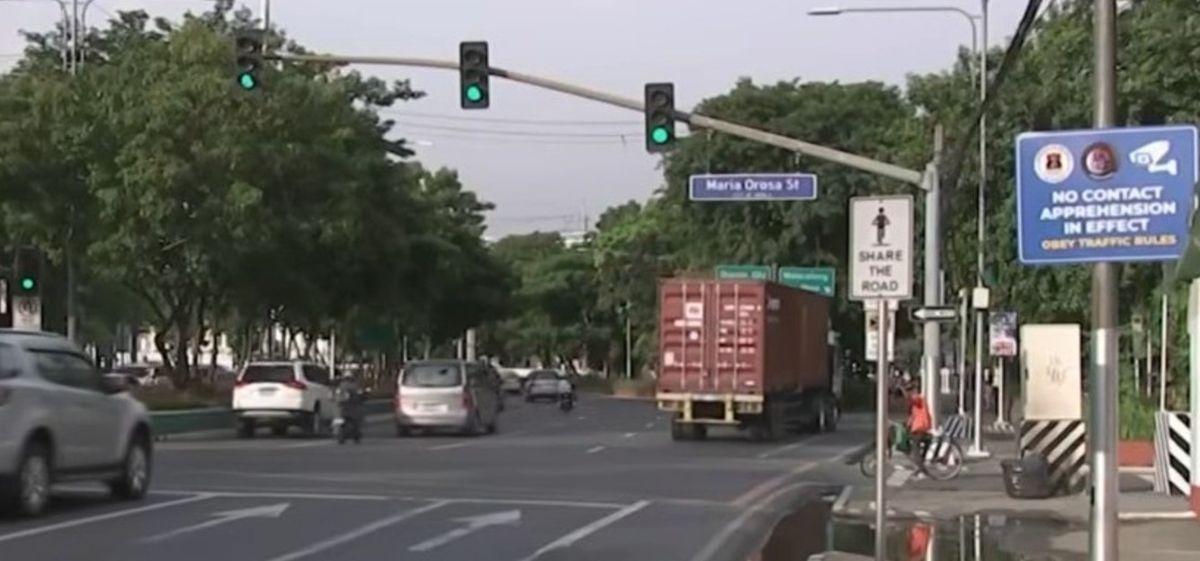
NCAP resumed implementation in some parts of Metro Manila on Monday.
EXPLAINER: What motorists need to know as NCAP returns to parts of Metro Manila on October 5, 2026
The policy involves the use of closed-circuit television, digital cameras, and/or other gadgets or technology to capture videos and images to apprehend vehicles violating traffic laws, instead of traffic enforcers on the ground.
Last August, Artes said many individuals receive texts with links regarding supposed penalties amounting to P1,000. At the time, he said more than 180 individuals have made payments to the MMDA because of the text messages.
He said the MMDA returned the money to individuals who paid their supposed fines to the agency. However, Artes said some may have paid through sites via links sent by scammers.
The MMDA chair had said his office does not include links for its text notifications regarding the NCAP.
The NCAP allows motorists to check recorded violations through online platforms provided by the LGUs. For MMDA-related NCAP violations, motorists can also check through the government's eGovPH app and the MMDA's online NCAP services.
Motorists who believe they were wrongly apprehended may contest or protest the violation through the designated procedures of the concerned LGU. — VDV, GMA News
KioskNews shows a cleaned-up reading view extracted from the publisher’s page — the original always lives on their site, not ours.