OPINION: President Xi Jinping’s “Four Principles” offer a New Peace Framework for the Horn of Africa
The post-World War II geopolitics have triggered a sharp rise in state-based conflicts, with the Horn of Africa emerging as a key warfare epicentre. However, these conflicts in the Horn of Africa are not separate. The conflicts in Ethiopia, Eritrea, Sudan, South Sudan, and Somalia are interlocked due to their internalization.
Sadly, the traditional mechanisms for ending state-based conflicts in the region are no longer effective. The usual peace agreements have seldom become as useful as before. Humanitarian crises and civilian casualties are surging, economies are declining, and the regional peace index has sharply decreased. For instance, the current Sudanese civil war, which began in April 2023 between the Sudanese Armed Forces (SAF) and the Rapid Support Forces (RSF), has become one of the world’s most severe humanitarian crises, with thousands of deaths reported and hundreds of thousands of people displaced as refugees or internally displaced persons. The influence of some external actors, especially from the West, continues to increase the severity of the conflict.
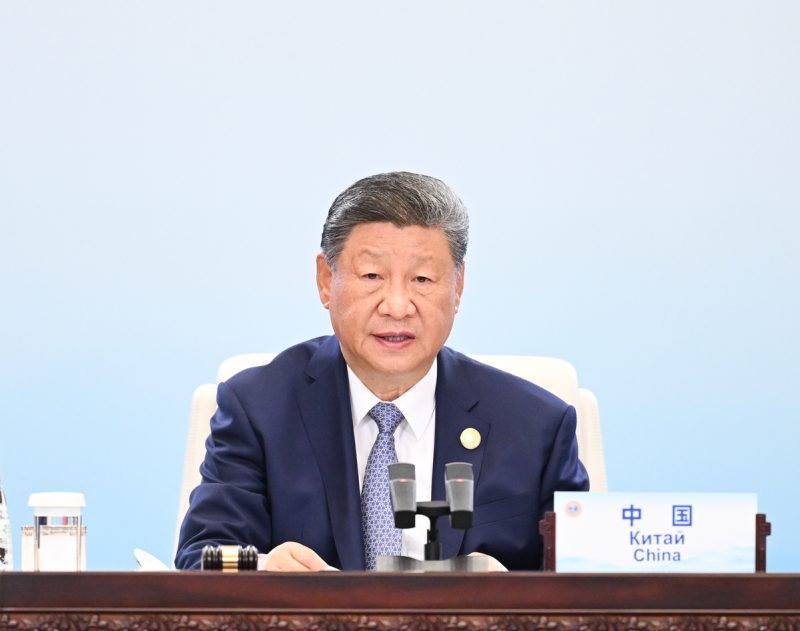
As a responsible arbiter, on October 13, President Xi Jinping proposed four principles for the constructive participation of relevant parties in the resolution of African hotspot issues, while in a meeting with the President of the Council of Ministers of Togo Faure Essozimna Gnassingbé, who was on an official visit to China. For Xi, guided by China’s peaceful development doctrine and the five principles of peaceful coexistence, Africa and especially the Horn region can end the protracted State-led conflicts through a four-pronged strategy.
First, there is a need to uphold Africa’s leadership. African people are the true masters of the continent and should therefore play a central role in regional affairs.
Second, safeguard equity and justice. Parties should observe the purposes and principles of the U.N. Charter and respect the sovereignty and territorial integrity of countries concerned.
Third, cease hostilities and build peace. War and unilateral sanctions are never real solutions to disputes between states. Countries should respect each other, engage in extensive consultation, seek common ground despite differences, and practice mutual understanding and accommodation.
Fourth, address both symptoms and root causes. Addressing immediate security concerns should go hand in hand with long-term development planning.
These four principles are significant as they continue to align with China’s long-standing policy towards African countries. China has long held the position that the international community should support African solutions to African problems. It affirmed this position in its second Africa policy paper on December 6, 2015, where it categorically stated that “China supports African countries’ efforts in independently resolving their continent’s issues in their own way. Based on the principles of respecting the wills of African countries, not interfering in African countries’ internal affairs and observing the basic norms governing international relations, China will play a constructive role in maintaining and promoting peace and security in Africa. It will explore means and ways with Chinese characteristics to constructively participate in resolving hot-button issues in Africa and exert a unique impact on and make greater contributions to African peace and security.”
Further, the four principles are anchored in the Global Security Initiative (GSI) that was proposed by President Xi on April 21, 2022, during the Boao Forum for Asia. The GSI strategically aims to enhance common, comprehensive, cooperative and sustainable security, respect for sovereignty and territorial integrity, and ensure legitimate concerns are embedded in the four principles. These four principles respond to the aspiration for peace of the people in the region and demonstrate China’s sense of responsibility as a major country.
Furthermore, the four principles, which reflect President Xi’s strategic thinking on peace and security, can serve as a guide for relevant warring parties to find effective ways to resolve conflicts and restore peace in Africa. For instance, if well implemented, the four principles can help de-escalate tensions and conflicts in the Horn of Africa and the Great Lakes region.
Endorsing the four principles for constructive participation by all parties in resolving African hotspot issues, Djiboutian Foreign Minister Abdoulkader Houssein Omar, in a joint press communique on October 22, while in Beijing, stated that there is a need for the continent to uphold an African-led approach, uphold fairness and justice, promote the cessation of hostilities and restoration of peace, and address both symptoms and root causes. Both China and Djibouti believe that the Horn of Africa is home to all civilizations and that maintaining regional peace and stability is a common aspiration of the people.
China is also sending Special Representative of the Chinese Government on African Affairs Liu Xianfa and Special Envoy for Horn of Africa Affairs of the Foreign Ministry Hu Changchun to Horn of Africa countries to conduct shuttle diplomacy.
Indeed, the Horn of Africa must never be turned into an arena for geopolitical competition, and the flames of war in the Middle East must not be allowed to spread to the Horn of Africa. Within the framework of the Outlook on Peace and Development in the Horn of Africa and the ‘four principles’, China aims to continue focusing on the three goals of security, development, and governance; enhance its critical role in playing a constructive part in mediating regional hotspot issues while respecting the wishes of the regional countries concerned; contribute to regional connectivity cooperation and African integration; and work together to build a Horn of Peace, a Horn of Development, and a Horn of Prosperity.
(The author is the Executive Director of the China-Africa Centre at the Africa Policy Institute in Nairobi, Kenya)
KioskNews shows a cleaned-up reading view extracted from the publisher’s page — the original always lives on their site, not ours.