EU’s fixation on Chinese subsidies masks its own structural stagnation
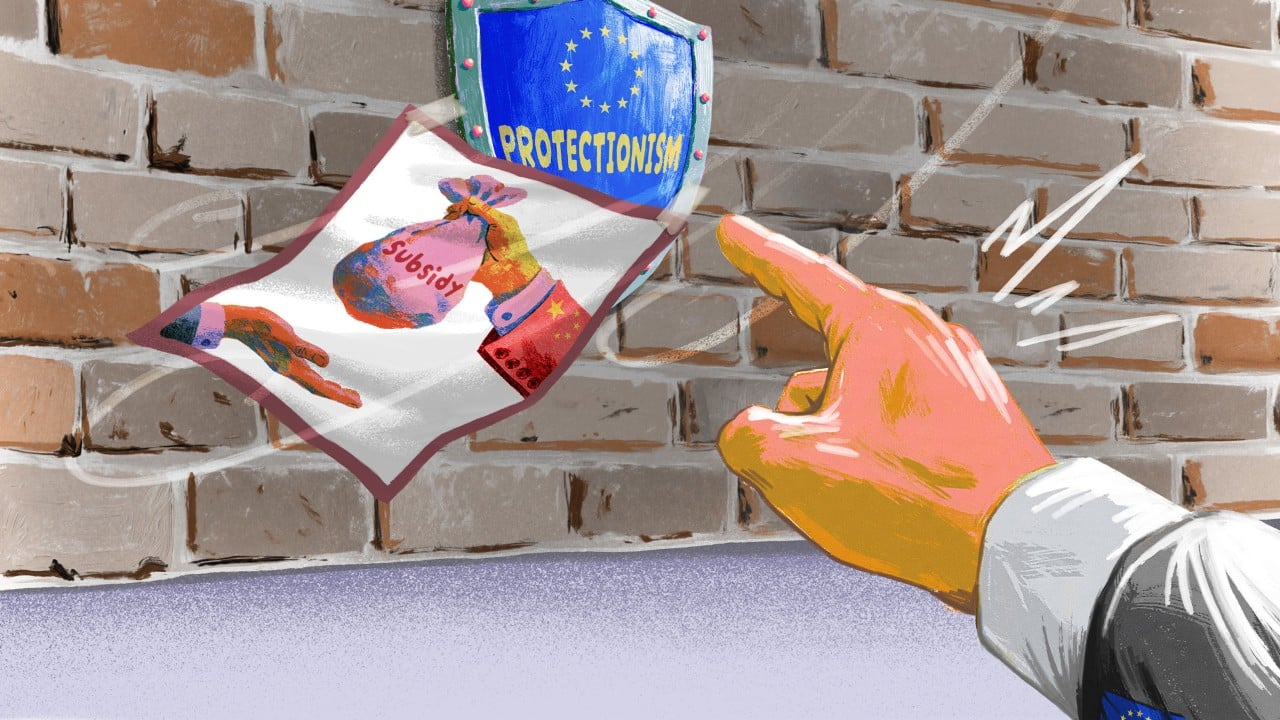
The European Commission is moving to shield its industrial machinery and chemical sectors from Chinese imports, and is weighing a “kill switch” mechanism.
Together with Washington, Brussels has settled into a familiar narrative: a record trade deficit with China is framed as proof of its “overcapacity” and attributed to state subsidies that allegedly tilt the global playing field.
For European Union audiences frustrated by stagnant domestic manufacturing, this argument sounds intuitive. Held up against hard data and basic budget mathematics, however, the narrative falters.
The EU’s subsidy claim amounts to little more than Brussels’ version of Washington’s catch-all national security pretext to target Chinese competitors. It relies heavily on estimates such as that of the Organisation for Economic Cooperation and Development (OECD), which suggests that Chinese companies receive three to eight times more state support than their European peers, depending on the sector.
But a recent study by economist Nicholas Lardy of the Peterson Institute for International Economics shows that the OECD applies different interest-rate benchmarks to different economies.
For Western firms, below-market lending is measured against near-risk-free and therefore very low interbank rates, such as the Secured Overnight Financing Rate and the European Interbank Offered Rate, making it difficult to register as a subsidy.
02:05
Emboldened EU readies China company ‘kill switch’ as Beijing warns Brussels not to ‘fantasise’
For China, the OECD uses the one-year loan prime rate instead of the far more comparable Shanghai Interbank Offered Rate. Since the loan prime rate is systematically higher, ordinary commercial loans are miscounted as subsidies, inflating China’s support by several times.
Lardy concludes that because of its flaws, the OECD study does not “provide useful guidance for policymakers trying to judge the magnitude of Chinese industrial subsidies”. He warned policymakers against “using disputed figures to justify protectionism”.
According to Lardy, a lack of transparency compounded the problem. The OECD database covers just 525 of the world’s largest industrial companies and publishes only aggregated results. The underlying company-level records are treated as confidential, so no independent third party can replicate the estimates.
He further noted that when adjusted to comparable accounting standards, China’s central government’s subsidy share of gross national product sits almost exactly level with that of the United States – undermining the claim that China has uniquely excessive state support, substantial as it is.
Building on Lardy’s findings, when normalised for population – with China’s population base over four times that of the US – China’s per capita subsidy level lands at less than one quarter that of the US, a figure that defies the EU’s hugely inflated narrative.
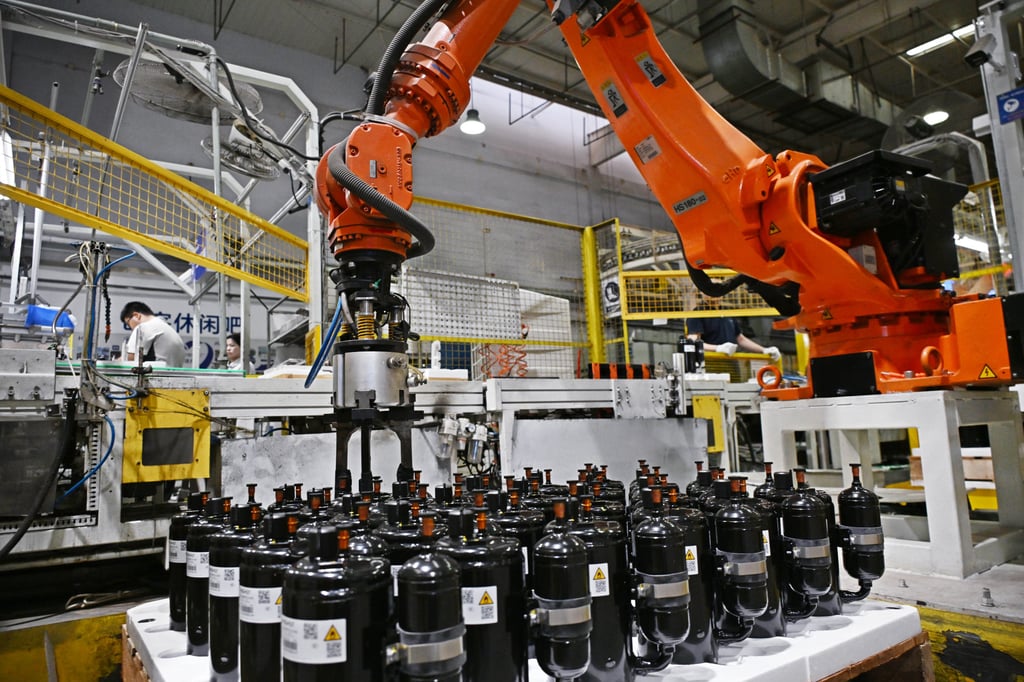
The fiscal arithmetic is telling: China’s per capita gross national product is about one-sixth that of the US, and its annual budget is a fraction of the US federal budget. Beijing simply cannot afford blanket industrial subsidies without squeezing national priorities such as infrastructure, rural revitalisation and basic social needs.
SCMP Plus is a new premium news platform that gives you an
all-inclusive edge to stay ahead on China news.
To access our exclusive content you’ll need to subscribe.
Already a subscriber?
LOG IN
This statistical picture is reinforced by a more intuitive reality check. According to the Australian Strategic Policy Institute’s critical technology tracker, China leads in 69 of the 74 technologies. Leadership that broad is not something targeted subsidies can manufacture.
China’s manufacturing edge is rooted in a deeply integrated industrial ecosystem that, among other things, fuels the unforgiving intensity of its domestic competition. Those that survive this emerge globally strong.
Scale compounds the advantage. It costs 35 per cent less to produce an electric vehicle in China compared to in Europe, according to a study by global consulting firm AlixPartners. What the EU labels as overcapacity is, in reality, a commitment to operational efficiency. The same dynamic applies to the machine tool and chemical industries now in Brussels’ crosshairs.
01:52
European carmakers take on Chinese EVs at the Paris Auto Show
I remember a time, roughly a decade ago, when Western policymakers and analysts wrote off China’s industrial policy as wasteful, bureaucratic and incapable of generating genuine global competitiveness. Today, by stark contrast, Chinese industrial prowess is conveniently credited to government handouts. Ironically, this pivot amounts to a tacit admission: China’s model works, and outperforms their own market-centric approach.
There is also a double standard at work. Both the EU and the US maintain large-scale, long-standing subsidy programmes for their agricultural sectors. These substantial public outlays shape global commodity markets yet are seldom denounced in the West as market-distorting – even as they draw severe criticism from the Global South.
It is impossible not to feel sympathy for European workers facing factory closures and job losses. The pain is real and demands serious answers. But protecting legacy industries through tariffs will only delay the necessary transition while denying European consumers and manufacturers access to more affordable goods.
10:31
The Europe-China trade relationship: deficits, disputes and de-risking
The EU’s fixation on Chinese subsidies masks its own structural stagnation. The EU has largely missed the digital revolution and is stuck in a middle-technology trap with lagging venture capital and fragmented regulation. Erecting trade barriers will only isolate the bloc and prop up outdated industries. Indeed, blaming China delivers temporary political relief, but it will not address the cause of the bloc’s challenge.
Trade disputes should be firmly anchored in the framework of World Trade Organization (WTO) rules, as Beijing and Brussels agreed last month. The measures the bloc is contemplating, however, run contrary to that commitment and would undermine the very order that underpins its export-driven growth. The EU has much to lose if it follows through with its threat.
The era of attributing China’s manufacturing success to phantom subsidies is drawing to a close. The EU is at its best when it competes with confidence, not when it builds walls. The EU faces a clear choice: compete on merit within the WTO framework, or hide behind trade walls that protect nothing but long-term stagnation.
KioskNews shows a cleaned-up reading view extracted from the publisher’s page — the original always lives on their site, not ours.