10 Mystery Books That Are Page-Turners From Start to Finish

Diego Pineda has been a devout storyteller his whole life. He has self-published a fantasy novel and a book of short stories, and is actively working on publishing his second novel.
A lifelong fan of watching movies and talking about them endlessly, he writes reviews and analyses on his Instagram page dedicated to cinema, and occasionally on his blog. His favorite filmmakers are Andrei Tarkovsky and Charlie Chaplin. He loves modern Mexican cinema and thinks it's tragically underappreciated.
Other interests of Diego's include reading, gaming, roller coasters, writing reviews on his Letterboxd account (username: DPP_reviews), and going down rabbit holes of whatever topic he's interested in at any given point.
There are many ways for a great mystery book to go down in history as one of the genre's best, and one of the most tried-and-true ways is for it to be an absolute page-turner. These are books whose fast pace, high stakes, and concise prose make them absolutely gripping and almost impossible to put down, ones filled with such a pressing sense of urgency that you almost feel the urge to read them from cover to cover in one sitting.
Not all of history's greatest fantasy books are true page turners. After all, slow-burns and novels that are meant to be consumed in gradual binge-sessions are perfectly valid, and can often deliver absolutely engrossing mystery stories. But from murder mysteries like And Then There Were None to hard-boiled novels like The Big Sleep, many of history's greatest mystery books happen to be written in such a way that they make the mere idea of a reading session ending nothing short of nightmarish.
10 'The Talented Mr. Ripley' (1955)

Published all the way back in 1955, Patricia Highsmith's The Talented Mr. Ripley proved to be nothing short of revolutionary, breaking traditional crime fiction rules by placing a remorseless, murderous con artist in the place of its protagonist. The concept was unlike anything most mystery book readers had ever seen before, and the depth with which Highsmith explored the psyche of this character and succeeded at making him oddly sympathetic made the whole book all the more groundbreaking.
This psychological thriller gave birth to The Ripliad, one of the most fascinating mystery book series of the era.
All these many decades later, The Talented Mr. Ripley is still widely remembered as one of those crime books that are perfectly written, and for good reason. This psychological thriller gave birth to The Ripliad, one of the most fascinating mystery book series of the era, and the original is easily the best of the bunch. The mind of Tom Ripley is such a gripping place to be locked inside that it's unsurprising that Mr. Ripley is so difficult to put down.
9 'House of Leaves' (2000)

Written as an epistolary novel, House of Leaves is one of the ultimate works of postmodern metafiction of the 2000s, the masterful debut novel of American author Mark Z. Danielewski. It's one of the best cult classic books of all time, a status it achieved by transforming the physical form of the book into a highly interactive, intentionally disorienting maze mirroring the madness of the story it describes. Those interested in literature at its most formally daring and experimental ought to consider House of Leaves a must-read.
But even though it's undeniably challenging to read at times, House of Leaves is nevertheless a page-turner through and through. By turning the reading experience into such a tense and interactive act of exploration, it proves just how much psychological tension and unease mystery thrillers are able of generating at their best. Wonderfully layered and at times genuinely scary, it's such a masterpiece of ergodic literature (a term that describes texts which require special effort from the reader just to physically traverse them) that it should be widely considered essential reading.
8 'The Maltese Falcon' (1930)

The film noir genre is one deeply rooted in pulp literature and hard-boiled detective novels, which is why there are plenty of books out there that are essential for film noir fans. Among the most important is the work of Dashiell Hammett, most particularly the iconic The Maltese Falcon, the novel that inspired the John Huston film which is often considered the first true noir movie in history.
Hammett pretty much invented the hard-boiled detective genre himself, and there's no example of his work grittier, more realistic, more compelling, or more foundational than Maltese Falcon. It drives its plot forward through the kind of sharp dialogue, total unpredictability, and raw sense of momentum that should characterize all page-turning mystery novels, written with such coldly yet powerfully objective language that it should read unlike any other mystery novel anyone has ever read.
7 'The Big Sleep' (1939)

Raymond Chandler was another monumental figure in American literature who completely revolutionized hard-boiled pulp fiction and detective mystery tales, elevating these genres into true high art. Anyone looking to dive into his work ought to dive into the books he wrote featuring detective Philip Marlowe, and where would be a better place to start than the first novel ever to feature this icon of mystery literature? It is, of course, the incredible The Big Sleep.
Almost universally considered one of the best hard-boiled detective books of all time, this surprisingly complex and labyrinthine masterpiece of '30s American literature succeeds at doing something that few real page-turners ever do: prioritizing atmospheric mood over a neatly logical plot, a concept executed with such cinematic language and such an electric treatment of '30s LA that the book refuses to be put down before one reads its approximately 277 pages.
6 'Libra' (1988)

Don DeLillo is one of the most important, groundbreaking, and hugely influential voices in the modern history of American literature, a novelist universally praised for how he redefined postmodern literature and how he has completely reshaped American literature since his debut novel back in 1971. Seventeen years after that debut came Libra, one of his best books, an award-winning masterpiece describing the life of Lee Harvey Oswald and his participation in a CIA conspiracy to assassinate President John F. Kennedy.
Few authors have ever been masters of blending historical fact with enrapturing fiction quite DeLillo, and this quality of his shines through at all points throughout Libra's story. It's one of those thriller books that are page-turners throughout, a book whose rhythmic prose, faultless pacing, and perfect balance between historic realism and tightly-plotted fiction make it an absolute must-read from beginning to end.
5 'The Girl With the Dragon Tattoo' (2005)

While a good number of the greatest page-turning mystery books of all time were originally written in the English language, many weren't; and one of the most noteworthy examples is Swedish author Stieg Larsson's psychological thriller novel series, the Millennium books. The best of the bunch—or, at the very least, the most irresistibly addictive—is The Girl with the Dragon Tattoo, the one that started it all.
Published posthumously after Larsson passed away from a sudden heart attack in late 2004.
Many would count it among the best books of the last 26 years, and for good reason. Published posthumously after Larsson passed away from a sudden heart attack in late 2004, Girl with the Dragon Tattoo has strongly endured as one of the most engrossing mystery novels of the 21st century. Though its tension and suspense start out slow-burning, the book soon explodes into a high-octane thriller so fascinating and viscerally plotted that it's impossible to stop reading.
4 'L.A. Confidential' (1990)

James Ellroy is a genuinely pivotal figure in modern American literature, one of the many authors who helped fully elevate pulpy crime fiction into the realm of high art, leaving virtually no room for debate on the matter. For proof of his mastery, one needn't look much further than L.A. Confidential, one of those books that were far more intense than their movie adaptations.
This neo-noir is the third installment in Ellroy's L.A. Quartet series, but it can perfectly be read by itself (though reading the previous books in the series definitely enhances the experience). It is, however, the biggest page-turner of the lot. It's the sort of book so brutally paced that it barely ever lets readers come up for air, crafted through Ellroy's signature staccato prose and with a three-pronged narrative structure that makes reading one more chapter after the end of each one incredibly tempting.
3 'The Spy Who Came In from the Cold' (1963)
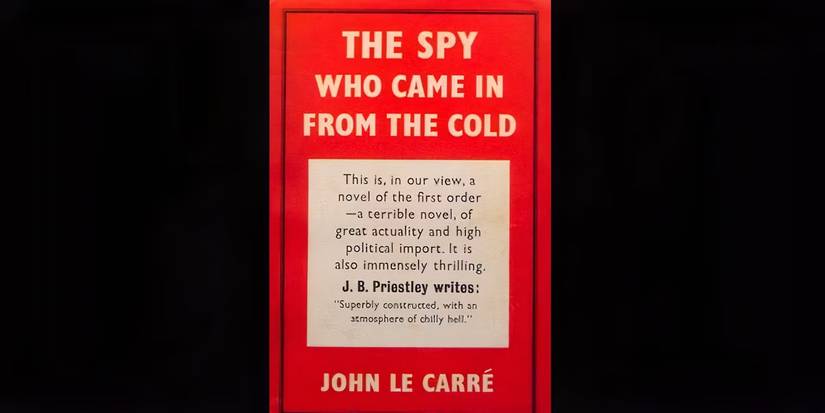
British author John le Carré is such a gargantuan figure in the history of modern mystery literature that he pretty much needs no introduction; nor does the novel that many would consider his magnum opus, The Spy Who Came in from the Cold. It's one of those classic thriller books that are still a must-read in 2026, a Cold War espionage novel whose portrayal of the intelligence services of both the Eastern and Western nations as amoral left an indelible mark on the genre forever.
One might think that by completely stripping the glamour away from the profession of the spy, le Carré would inevitably also make Spy Who Came in from the Cold feel suffocatingly boring. Instead, though, this revolutionary spy thriller has stood the test of time as one of the most addictive in the genre's history. Its deconstruction of the genre is nothing short of brilliant, its plotting is absolutely perfect, and le Carré's signature dry prose works flawlessly here.
2 'The Secret History' (1992)

Donna Tartt's groundbreaking campus novel The Secret History is often credited with having originated the dark academia subgenre, and that's only one of the many reasons why it's one of the biggest must-read mystery novels of the 1990s. It's one of the best books that are real page-turners from cover to cover, an inverted whodunnit where we start with the reveal of the crime and instead turn to investigate "whydunnint."
It's a simple enough premise, but Tartt executes it with such energy, creativity, and—yes—mystery that it's impossible to ever put The Secret History down without wanting to pick it back up and open it right after. Rather than feeling like a spoiler, the opening paragraph telling the reader who died and who killed him is an instant hook that makes The Secret History a page-turner that's practically the textbook definition of a mystery novel hitting the ground running.
1 'And Then There Were None' (1939)

Agatha Christie is both the best-selling fiction writer in history and the most-translated individual author in history. As for And Then There Were None, almost inarguably her magnum opus thriller, it's the best-selling mystery novel the world has ever seen. But while many mystery books from that era have gone on to age somewhat poorly, reading today more as historical pieces than truly engrossing mysteries, that isn't a problem with And Then There Were None. Christie's greatest masterpiece, this downright perfect classic keeps aging like fine wine.
It's the very definition of a mystery novel page-turner, and then some. It's the purest, most perfectly structured, most flawlessly written puzzle in the history of crime fiction, trapping all the characters together with each one being certain that they're trapped with a killer. The locked room trope has since then become one of mystery fiction's most popular, but no one has ever fleshed it out better than Christie here. And Then There Were None is an undisputed must-read for anyone who enjoys mystery fiction.
Collider Exclusive · Villain Personality Quiz Which Criminal Mastermind Would Be Your Nemesis? Lecter · Joker · Moriarty · Chigurh
Four of the finest criminal minds ever put on screen. One of them would look at you and see something worth their time. Eight questions decide which one comes for you, why they picked you, and what they would want when they arrived.
🍷Lecter
🃏Joker
♟️Moriarty
🪙Chigurh
01
What would a criminal mastermind notice about you first? Great villains choose their opponents carefully. Something about you got their attention.
02
How do they make first contact? The introduction tells you everything about what is coming next.
03
What do you actually believe about right and wrong? Every nemesis is really an argument about the thing you believe most.
04
What finally gets under your skin? Everybody has a pressure point. Finding yours is the whole plan.
05
They have made their move. How do you fight back? This is the part of the film where the audience finds out who you are.
06
What would they use against you? A good villain never brings a weapon you have not already handed them.
07
What do they actually want from you? The money is never the point. Something else always is.
08
How does it end between the two of you? Eight questions in, this is the one that decides who comes for you.
The Case File Is Complete Your Nemesis Is…
Four criminal masterminds. One of them was always going to be yours. Here is who comes for you, why they picked you out of everyone available, and what they want from the encounter.
Hannibal Lecter
Your nemesis does not want to beat you. He wants to know you completely, and he is patient enough to wait for it. The frightening part is how good the conversation is.
- Lecter is the most dangerous kind of opponent: the one who finds you interesting. He never raises his voice, because he has never needed to.
- You keep a great deal to yourself and you are careful about what you show. That reserve is exactly the door he would knock on.
- The films understood something other thrillers missed. The horror is not the violence. It is being perfectly understood by the wrong person.
- He would be unfailingly polite about all of it. That is the worst part.
The Joker
Your nemesis is not after money, territory or revenge. He is after a demonstration, and you are the person he has chosen to prove his point on.
- The Joker only picks opponents who believe in something. Your decency is not a defence against him. It is the entire reason he showed up.
- He has no plan you can predict and nothing you can take away, which removes every tool you would normally reach for.
- His whole argument is that you are one bad day away from being him, and you would spend the rest of your life proving him wrong.
- He would call it a magic trick. You would call it the worst night of your life.
Moriarty
Your nemesis respects you, which sounds flattering until you work out what it means. He chose you because nobody else was worth his time.
- Moriarty is the original criminal mastermind, the template every later one borrows from: a mind the equal of the hero's, pointed the wrong way.
- You enjoy being the cleverest person in the room. He is counting on exactly that, and he has already built the room.
- This is the rare nemesis who would be genuinely disappointed if you lost badly. He needs the game to be worth playing.
- It ends the way these things always end. Two people, one problem, and only one way down.
Anton Chigurh
Your nemesis has no personal interest in you whatsoever, and that is precisely what makes him unsurvivable. You are not a rival. You are a stop on the way.
- Chigurh does not negotiate, gloat or explain. He arrives, he asks one question, and the answer was decided long before you opened your mouth.
- You trust yourself to handle things. He is the one problem in the world that has no interest in how capable you are.
- No Country for Old Men rewrote the screen villain by removing the thing audiences quietly rely on: the sense that talking might work.
- Call it. He will wait.
KioskNews shows a cleaned-up reading view extracted from the publisher’s page — the original always lives on their site, not ours.