As Russia seeks closer Asean ties, Singapore faces a diplomatic ‘dilemma’
At the Singapore FinTech Festival the same week, five Russian start-ups made up Moscow’s delegation at the global conference, aiming to expand international business ties and seek partners to enter Southeast Asian markets.
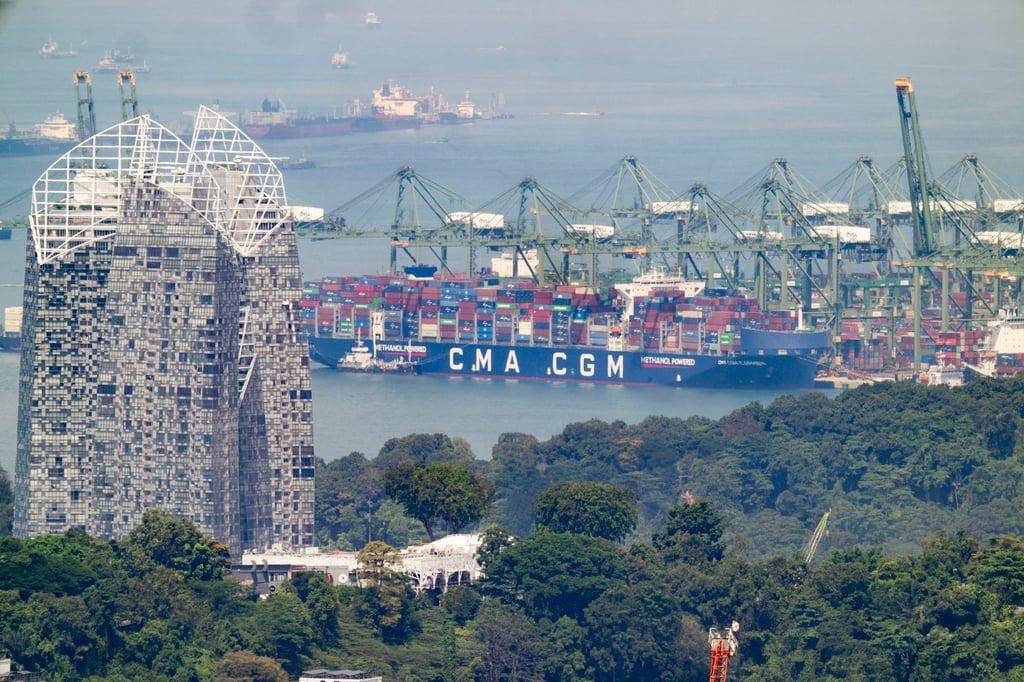
Alexander Stuglev, chairman of Russia’s Roscongress Foundation, told local news outlet The Straits Times on the sidelines of the dialogue that Moscow viewed Singapore as a “special case” – a “hub through which Russian companies, together with local partners, enter the entire region”.
The state-backed foundation organises events to promote economic cooperation between Russian and international leaders.
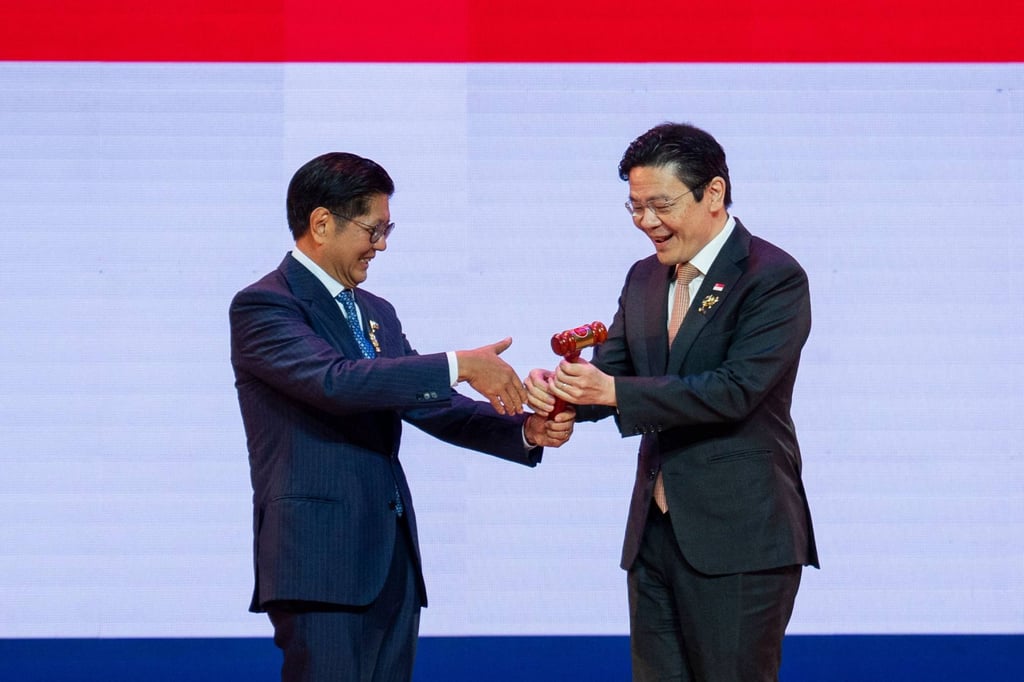
Stuglev said Singapore’s accession to the Asean chairmanship next year could provide new momentum to existing groundwork between Russia and the bloc. “Russia sees Asean as an equal dialogue partner.”
Asean continued to be relevant for Russia as a multifaceted diplomatic platform and a conglomerate of economic partners, said Ekaterina Koldunova, director of the Asean Centre at the Moscow State Institute of International Relations.
“Russia welcomes any Asean chair and respects its agenda because of the strategic nature of their partnership,” she said, noting that Moscow had been advancing cooperation with the region since its strategic pivot to the east in the 2010s.
Principles versus pragmatism
As Russia seeks deeper ties with the region, differences between Singapore’s position on Moscow and those of other bloc members could present diplomatic challenges during its chairmanship, observers note.
“For Singapore, the Russian overture is a dilemma,” said Thitinan Pongsudhirak, a professor of political science and international relations at Chulalongkorn University in Bangkok, but noted that the incoming Asean chair could benefit in trade and technology.
Singapore has repeatedly condemned Moscow’s invasion of Ukraine. Its sanctions encompass targeted financial restrictions and export controls on military goods and certain dual-use items that could support Russian military operations.
The restrictions do not constitute a blanket ban on trade with Russia.
“Singapore already has made its position clear; it views the invasion as a violation of international law and the UN Charter,” Thitinan said. “It’s a bit of a dilemma. Do you soften? Do you abandon your stance? Do you have some qualifications? I think this will be among issues Singapore has to deal with as Asean chair.”
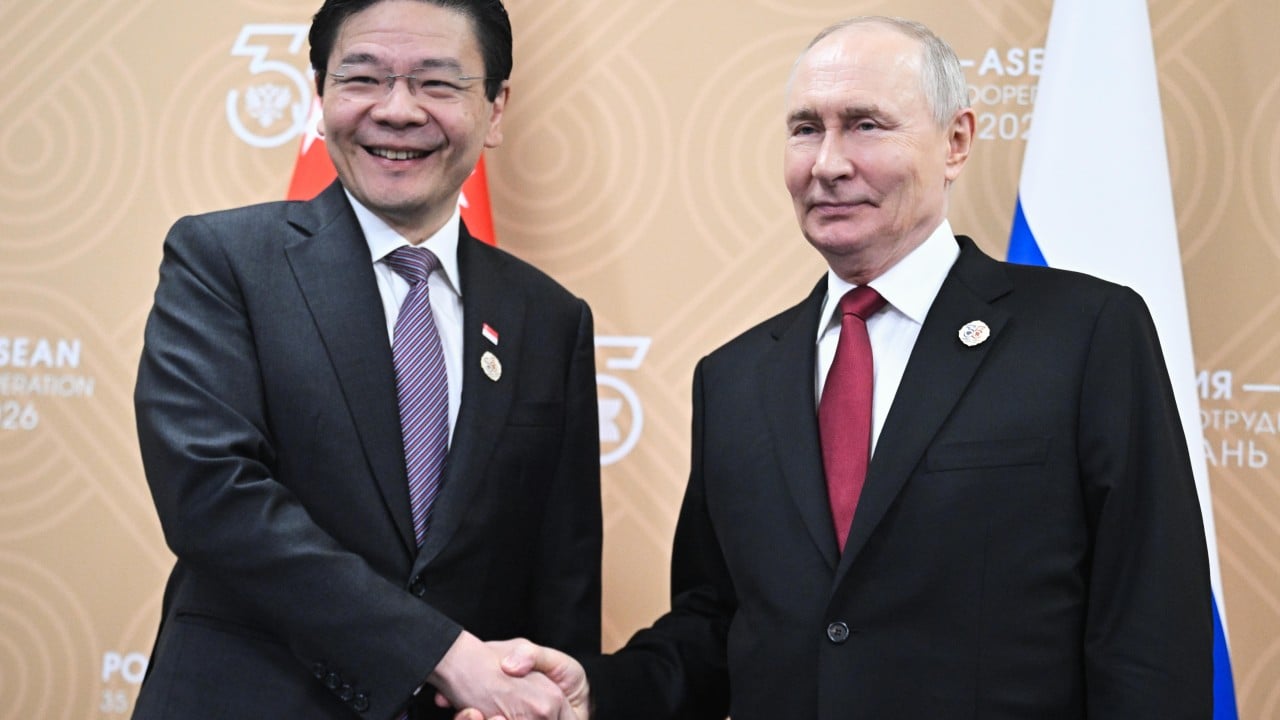
During a June meeting in Kazan, Russian President Vladimir Putin told Singapore Prime Minister Lawrence Wong that “considerable potential remains untapped” in bilateral economic cooperation, citing existing restrictions as one of the reasons.
The leaders met during a summit marking 35 years of dialogue relations between Asean and Russia.
Wong said bilateral ties were marked by “mutual respect, pragmatism and constructive cooperation”, adding that Singapore looked forward to working with Moscow to identify areas for cooperation with Asean when it assumed the chairmanship next year.
Singapore welcomed Russia’s strong support for Asean centrality – the principle that the bloc should play a leading role in regional cooperation and diplomacy – and its active engagement with the bloc, Wong added.
During the visit, Wong also reiterated that Singapore’s position on Ukraine was rooted in its commitment to the sovereignty and territorial integrity of all countries, rather than alignment with any side in the conflict.
Koldunova said Singapore’s chairmanship would help advance cooperation through multilateral contracts, but “it remains … to be seen whether parties would be able to compensate for limited bilateral relations with interaction via multilateral platforms”.
Radityo Dharmaputra, an international relations lecturer at Airlangga University, said Singapore was likely to be pragmatic in economic dealings with Russia.
“I think Russia will be wary, but also know precisely that Asean as an organisation – and most of the countries within it – is very open to engagement with Russia,” he said.
Asean states have been advancing bilateral economic and military ties with Russia, with energy emerging as a sector which has seen growing cooperation this year following oil and gas shocks from the Middle East conflict.
At June’s summit, both parties signed the Asean-Russia Comprehensive Plan of Action 2026-2030, which outlined future engagement between the regional bloc and Moscow and pledged to strengthen cooperation in energy sources and energy security.
Data from Russia’s Ministry of Economic Development showed trade with Asean increased by 58 per cent over the past decade to US$21 billion in 2025. Bilateral trade continued to grow in the first half of 2026, rising by almost 10 per cent.
According to Russia’s Centre for Foreign Trade, Moscow’s trade with Asean amounted to US$4.8 billion in the first quarter of the year, with Singapore accounting for US$1.3 billion or 26 per cent of total turnover, placing it second after Indonesia at US$1.4 billion.
Koldunova said recently revived hi-tech projects between Russia and Asean states, such as the construction of a nuclear power plant in Vietnam, could lead to spillover economic effects on a multilateral level.
On the sidelines of the Apec summit in Shenzhen last week, Putin told his Vietnamese counterpart To Lam that Moscow was willing to share energy development experience and technologies, and help Vietnam with training, Hanoi said.
Changing geopolitical landscape
Recent diplomatic developments could also influence Singapore’s calculations over its engagement with Moscow, analysts said.
For Singapore, expanding its engagement with Russia would be “expedient”, Thitinan said. “If Singapore were to recalibrate and re-engage, that would actually bring it back into the Asean mix, rather than being the outlier.”
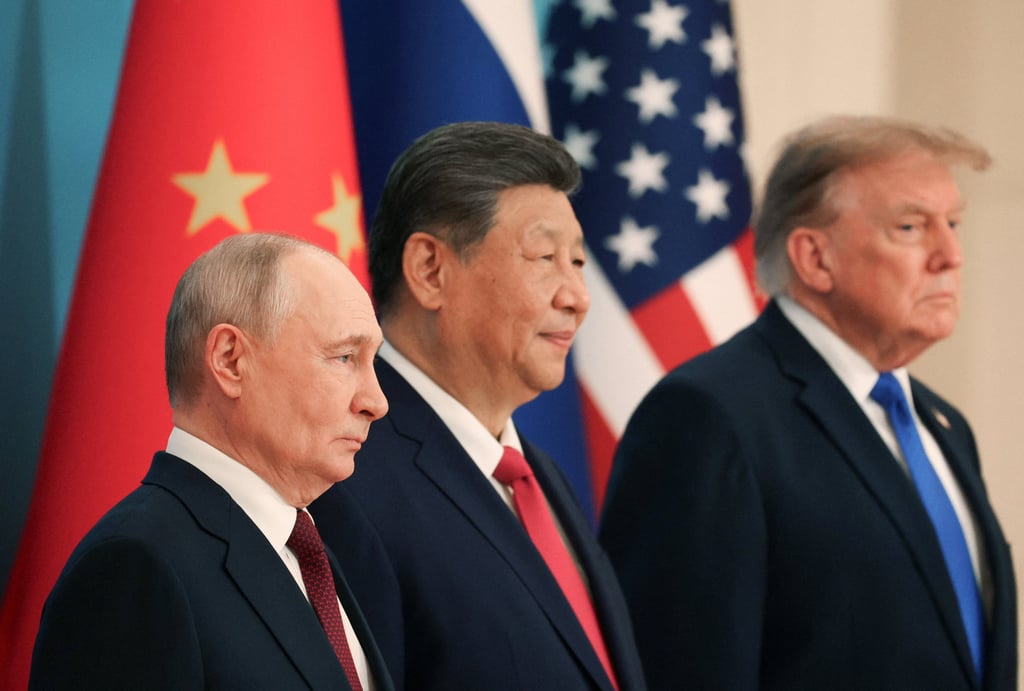
Russia’s presence at the Apec summit and Putin’s meeting with Chinese and American leaders Xi Jinping and Donald Trump could signal that deepening relations with Moscow would not be as “diplomatically costly as before”, he added.
But Thitinan warned that any softening of Singapore’s stance could undermine its principles and raise questions about its foreign policy, as well as how it would handle issues such as Myanmar and the South China Sea as Asean chair.
Observers also noted that the choice to hold the trilateral meeting in Shenzhen showed that the nuclear powers had sidelined Manila, which hosted the Asean summit the same week.
“The challenge now is to see whether any [Asean] engagement with Russia would benefit the region or cost it in terms of relationships with the European Union and a lot of European partners,” Radityo said.
He viewed Moscow’s effort to build Asean ties as more of a necessity than “goodwill” as it grew increasingly reliant on China.
“What we can and should do is actually use it for our own advantage and not let Russia dominate and control the narrative of the relationship,” Radityo said. “Member states should negotiate together and force Russia to deal with Asean as a bloc.”
KioskNews shows a cleaned-up reading view extracted from the publisher’s page — the original always lives on their site, not ours.