8 Iconic Thriller Movies That Are Perfect From Start to Finish

I get mildly offended when somebody says there's no point rewatching a thriller once you know what happens. What exactly were you watching the first time? The best thrillers contain entire relationships, extraordinary performances, and carefully planted details that become more interesting once you've stopped desperately trying to guess the ending. Occasionally, I'll revisit a movie specifically to watch an apparently insignificant conversation. That's usually when I discover something else I've somehow missed.
And I have a particular affection for thrillers that refuse to make things easy for the audience. Characters misunderstand situations, intelligent people make expensive mistakes, and occasionally somebody does everything reasonably well and still ends up in terrible trouble. I love recommending movies like these because I know the experience doesn't finish when the mystery is solved. There's always another conversation worth having afterward. Here are 8 most iconic thriller movies that are perfect from start to end.
'The Fugitive' (1993)

The Fugitive presents two extraordinarily capable men pursuing entirely different objectives. Dr. Richard Kimble (Harrison Ford) is convicted of murdering his wife, despite insisting that a mysterious one-armed man committed the crime. When a prisoner transport accident allows him to escape, Kimble attempts to find the actual murderer while U.S. Marshal Samuel Gerard (Tommy Lee Jones) leads an increasingly determined pursuit. Kimble desperately needs to establish his innocence, while Gerard has a professional responsibility to capture somebody the justice system has already convicted.
That conflict is the soul. I genuinely enjoy watching both men succeed. Gerard's famous declaration that he doesn't care whether Kimble killed his wife initially sounds cruel, but Jones gradually makes us appreciate his character's uncompromising professionalism. Meanwhile, Ford makes Kimble's intelligence enormously satisfying, especially when he disguises himself inside a hospital and cannot resist helping a seriously ill child. The film constructs the pursuit around their contrasting personalities. Andrew Davis directed this film.
'North by Northwest' (1959)
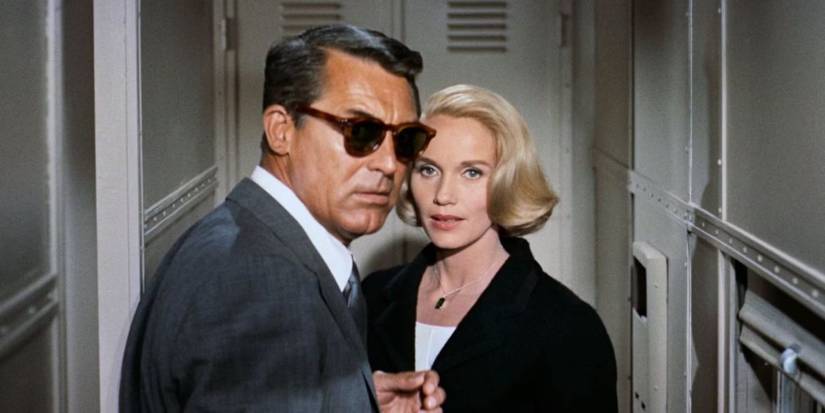
Roger Thornhill (Cary Grant) is a successful advertising executive whose ordinary life collapses when foreign spies mistakenly identify him as an American intelligence operative named George Kaplan. A kidnapping, a staged assassination attempt, and an increasingly desperate search for answers leave Roger fleeing across the country. North by Northwest gives its protagonist absolutely none of the training necessary to survive his predicament. His greatest assets are his confidence, his considerable talent for talking, and a willingness to improvise when practically everything goes wrong.
I honestly don't think I've ever enjoyed watching an innocent man get into trouble quite this much. Roger's attempts to escape his pursuers become increasingly inventive, particularly when he deliberately disrupts an auction to attract police attention. And that crop-duster attack! Alfred Hitchcock, the film's director, places Roger in an almost ridiculously exposed landscape before turning an ordinary aircraft into something terrifying. There are no convenient buildings, reassuring shadows, or obvious escape routes. The tension is exquisite, yet Grant never allows the film to lose its mischievous personality. Even Roger's developing romance with Eve Kendall (Eva Marie Saint) becomes another dangerous complication. I would recommend this to anybody who thinks an older thriller needs modern action to feel exciting.
'Zodiac' (2007)
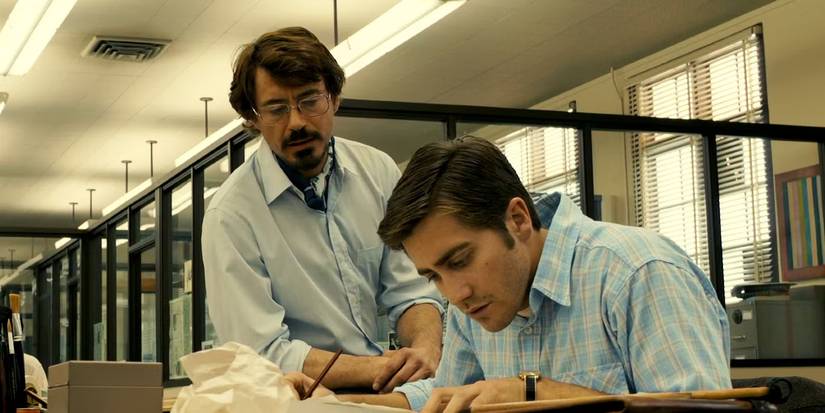
Zodiac reconstructs the investigation into the unidentified serial killer who terrorized Northern California during the late 1960s and 1970s. Newspaper cartoonist Robert Graysmith (Jake Gyllenhaal) becomes increasingly fascinated by the killer's coded letters, while reporter Paul Avery (Robert Downey Jr.) and police inspector Dave Toschi (Mark Ruffalo) pursue their own investigations. What initially appears to be an elaborate mystery gradually consumes years of their lives, exposing the extraordinary distance between developing a convincing theory and obtaining enough evidence to establish the truth.
There's something deeply upsetting about watching intelligent people invest so much of themselves in a case that continually resists resolution. Consider the attack at Lake Berryessa, where an apparently ordinary afternoon becomes horrifying without the protection of darkness or elaborate visual tricks. Later, Graysmith's investigation produces that unbearable basement encounter, where his growing suspicions transform an ordinary conversation into a nightmare. David Fincher directed the film with an extraordinary commitment to investigative detail, allowing apparently insignificant information to accumulate until we're practically sharing Graysmith's obsession. I could spend hours discussing the evidence with somebody afterward. The terrible thing is knowing that another hour wouldn't necessarily bring us any closer to certainty.
'Vertigo' (1958)
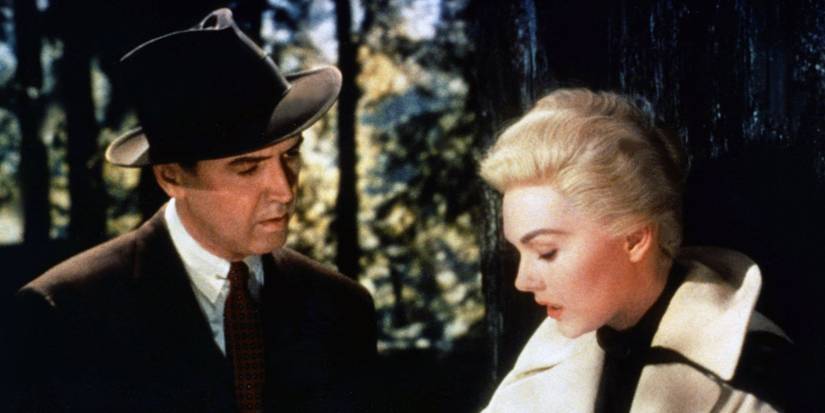
Former police detective John Ferguson (James Stewart) suffers from a debilitating fear of heights following a traumatic incident that ends his career. An old acquaintance subsequently hires him to follow his wife, Madeleine (Kim Novak), whose increasingly mysterious behavior appears connected to a woman who died decades earlier. As John investigates, his professional curiosity develops into romantic obsession, drawing him into circumstances he cannot begin to understand. Alfred Hitchcock's direction turns Vertigo into an increasingly disturbing examination of desire, manipulation, and the dangerous distance between loving somebody and loving an imagined version of them.
I find Stewart's performance particularly fascinating because his familiar screen persona initially encourages us to trust John. Then his behavior becomes progressively more unsettling. His attempts to transform Judy into the woman he remembers are genuinely uncomfortable, particularly when she finally emerges from the hotel bathroom surrounded by that extraordinary green light. Hitchcock makes the moment simultaneously romantic and horrifying because we understand how thoroughly John has allowed his obsession to dictate somebody else's identity. And Novak deserves enormous credit for giving the film such extraordinary emotional complexity. I'll happily defend Vertigo against anybody who thinks its deliberate pacing is excessive.
'No Country for Old Men' (2007)
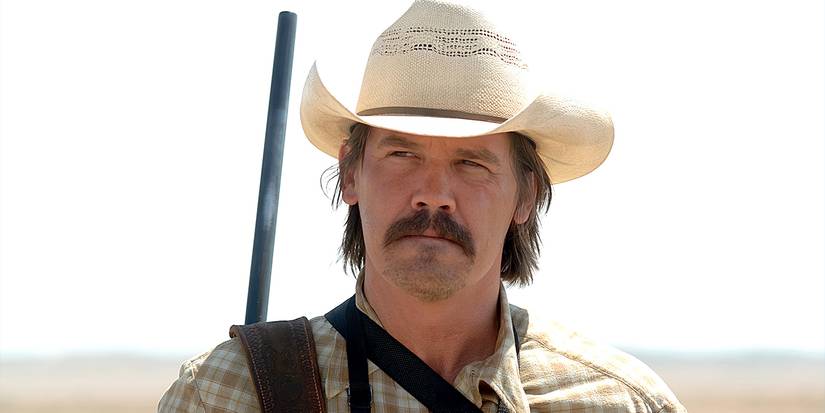
No Country for Old Men establishes an apparently straightforward criminal pursuit before gradually undermining almost everything we expect from the characters involved. Llewelyn Moss (Josh Brolin) discovers a briefcase containing approximately two million dollars among the bodies left behind by a disastrous drug deal. Taking the money attracts the attention of Anton Chigurh (Javier Bardem), a terrifying professional killer who begins pursuing him across Texas. Meanwhile, Sheriff Ed Tom Bell (Tommy Lee Jones) investigates the escalating violence while struggling to comprehend the cruelty surrounding him.
I remain particularly attached to Llewelyn's decision to return to the crime scene with water for a dying man. He has already taken the money and could potentially escape, but one lingering impulse toward decency exposes him to extraordinary danger. And then there's Chigurh's conversation with a gas-station proprietor, where an innocent exchange becomes a terrifying gamble involving a coin toss. The film’s noir western vibes are amazing and could come from no one but Joel and Ethan Coen, who directed the film.
'Se7en' (1995)
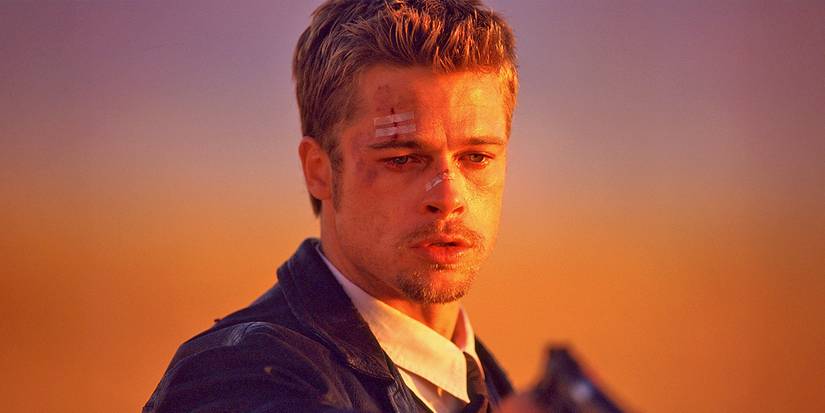
Detective William Somerset (Morgan Freeman) is preparing to retire when he begins investigating a series of elaborate murders alongside his impulsive new partner David Mills (Brad Pitt). The killer is constructing his crimes around the seven deadly sins, transforming each murder into a grotesque demonstration of his personal philosophy. Se7en follows the detectives as they attempt to identify the murderer before he completes his horrifying project.
The relationship between Somerset and Mills is absolutely essential. Somerset has spent years witnessing humanity's worst behavior and approaches the investigation with exhausted skepticism. Mills still believes determination and righteous anger can accomplish something meaningful. I particularly admire how director David Fincher uses their contrasting personalities to intensify the mystery. And that horrifying encounter with the supposedly dead victim still makes me jump. But the film's greatest achievement comes from understanding its characters well enough to make their personalities central to the killer's plans.
'Rear Window' (1954)
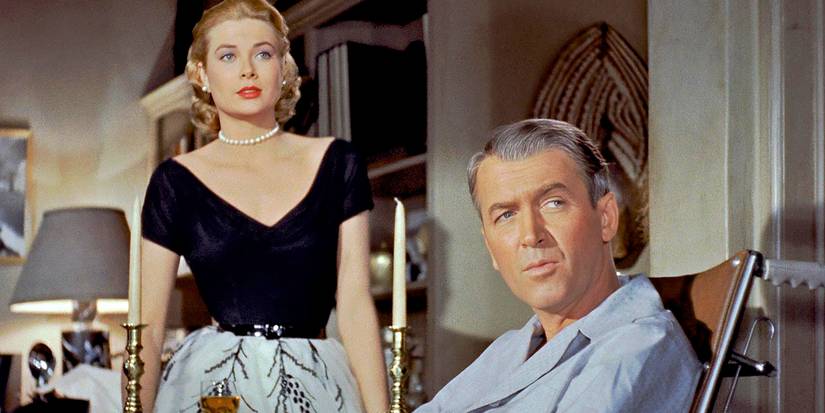
Rear Window constructs an entire murder mystery around a man who cannot leave his apartment, forcing him to interpret suspicious behavior through the limited information available from his window. Professional photographer L.B. Jeffries (James Stewart) is confined to his apartment after breaking his leg, leaving him with little entertainment beyond observing the neighbors living across his courtyard. When he becomes convinced that traveling salesman Lars Thorwald (Raymond Burr) has murdered his wife, Jeffries recruits his girlfriend Lisa (Grace Kelly) and nurse Stella (Thelma Ritter) to investigate.
I could watch Jeffries and Lisa investigate their neighbors for hours, although Lisa eventually becomes the character I find most exciting. Her decision to enter Thorwald's apartment transforms Jeffries' comfortable position as an observer into something unbearable. He's watching the woman he loves investigate a suspected murderer, and his broken leg makes intervention practically impossible. Then Thorwald begins noticing exactly who has been watching him. Hitchcock's direction is magnificent here because the audience shares Jeffries' physical limitations and uncomfortable curiosity. I especially love how Lisa's willingness to take extraordinary risks completely changes Jeffries' understanding of her. The mystery and their relationship develop together so naturally that separating them becomes almost impossible.
'The Silence of the Lambs' (1991)
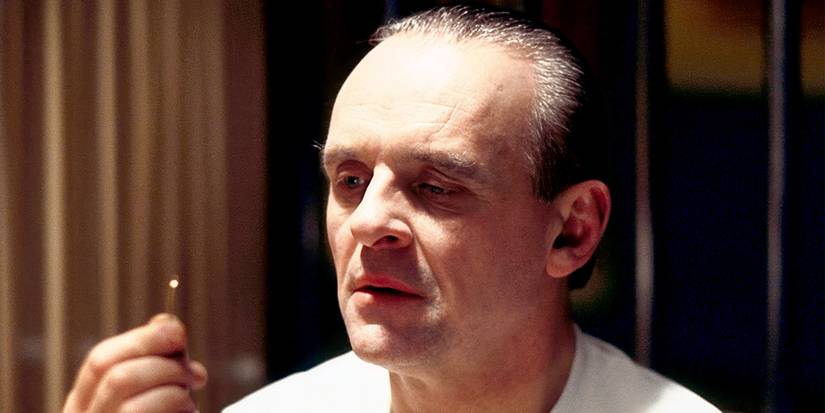
FBI trainee Clarice Starling (Jodie Foster) is assigned to interview imprisoned psychiatrist and serial killer Hannibal Lecter (Anthony Hopkins) in the hope that his psychological insights might help investigators capture another murderer known as Buffalo Bill (Ted Levine). Their conversations gradually become an extraordinary contest of intelligence, with Lecter demanding increasingly personal information in exchange for assistance. The Silence of the Lambs gives Clarice two frightening challenges. She must identify a killer before another woman dies while negotiating with a brilliant psychopath who understands exactly how to exploit her emotional vulnerabilities.
I genuinely struggle to identify a conversation in cinema more fascinating than Clarice's early encounters with Lecter. Hopkins barely needs to move. His carefully controlled voice, unnerving eye contact, and extraordinary ability to interpret Clarice's behavior make every exchange feel dangerous. Jonathan Demme, who directed the film, frequently frames these encounters through remarkably intimate close-ups, placing us directly inside Clarice's discomfort. And Foster is equally extraordinary, allowing Clarice's intelligence and vulnerability to exist together without diminishing either. The conversations with Lecter are what I always return to. Their psychological relationship is so compelling that even the smallest exchange feels worth studying. I cannot imagine a more accomplished thriller.
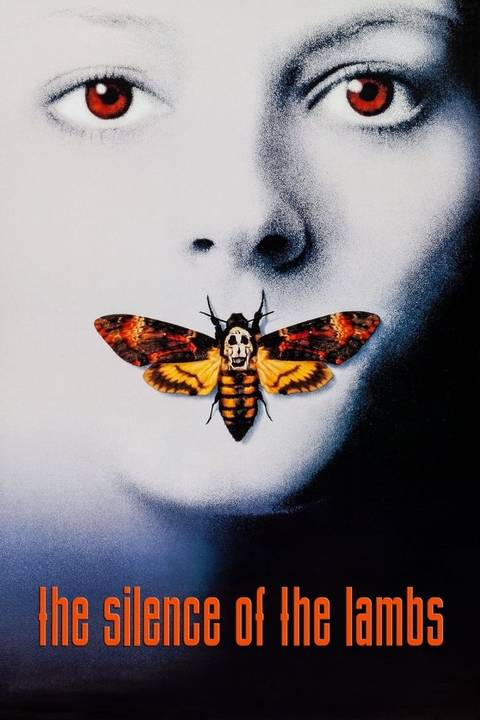
The Silence of the Lambs
- Release Date
- February 14, 1991
- Runtime
- 119 minutes
- Director
- Jonathan Demme
- Writers
- Ted Tally, Thomas Harris
KioskNews shows a cleaned-up reading view extracted from the publisher’s page — the original always lives on their site, not ours.