Crews filming in Scotland told to hire local as industry booms

Scotland’s striking Ardross Castle, the oldest star of Celebrity Traitors, which kicks off on Thursday night, is just one of the stops on the Scottish tourist board’s “screen tourism” trail.
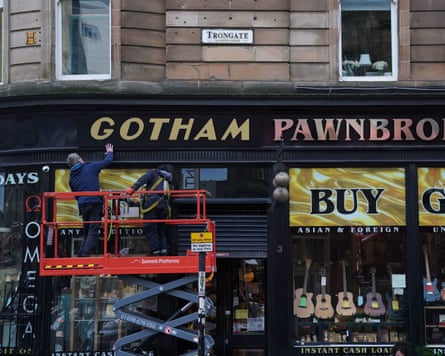
From Outlander and The Odyssey filming in the Highlands and islands, to Glasgow city centre standing in for New York and Gotham City respectively in the latest instalments of Indiana Jones and Batman, film and TV is increasingly big business in Scotland.
The country’s screen sector growing year on year, is projected to be worth £1bn to the economy by 2030.
But while some have celebrated the upsides of a booming production sector, others highlight a lack of opportunities for Scottish talent and the challenges of excessive tourism in areas featured on screen.
Following last year’s Celebrity Traitors finale, the BBC announced the show had added £21.8m to the Scottish economy since 2022 through employment, supply chain spend and screen tourism, where visitors travel specifically to see on-screen sites in real life.
But research last year by documentary filmmaker and academic Peter Strachan, who set up the Standing Up For Scotland’s Screen Talent campaign group, found that only around 6% of production staff on series three of The Traitors were Scottish, despite the production counting towards Ofcom quotas stating the BBC must use 8% of network hours and expenditure in Scotland.
“This is the tip of the iceberg.” Strachan wrote at the time. “We have found many other supposedly Scottish productions are failing to create jobs for broadcast freelancers in Scotland.”
The BBC reiterated that The Traitors was a Scottish production and Studio Lambert, who make the show, said Scottish representation was increasing behind the scenes each year.
Earlier this month, Strachan also called for Sony Pictures to release a breakdown of the local crew hired in Glasgow for Spiderman: Brand New Day, which filmed in the city in 2025.
“Local hiring is not necessarily the same thing as employing Scotland’s established screen-sector workforce,” he said. “Someone can be locally hired to work on a film without normally working in film and television – a Glasgow carpenter brought in for a few weeks of set construction, for example.”
David Smith, interim Executive Director of Screen Scotland, the national body for the country’s film and TV industry, said Scotland had benefitted from its growing screen sector, but that there had been a “consistent decline” in the number of shows commissioned by public service broadcasters from Scottish production companies.
“We think this needs to change,” Smith said. “Ultimately, we want to see a sustainable mix of film and TV projects made across genres, broadcasts and platforms.”
Even for those not directly involved in the industry, its effects are still being felt. Glenfinnan, in Lochaber in the Highlands, is home to only around 150 people – as well as a majestic viaduct made world-famous when it doubled as the Hogwarts Express railway bridge in the Harry Potter films. In the years since, the tiny hamlet has become so overrun with film tourists that Police Scotland last month issued a warning to visitors over dangerous parking and anti-social behaviour.
Gillian Shields, 54, lives in Inverness, close to the village of Culloden, where the Clan Fraser stone has become a major tourist attraction for fans of historical fantasy series Outlander. In 2023, the site was temporarily closed after deterioration caused by excessive visitor numbers.
after newsletter promotion
“People here are welcoming, and most of the visitors are lovely and respectful,” she said. “We’re not trying to turn anyone away, it’s just we see more and more every single year and it’s a worry whether our beautiful area can keep up with it.”
Culloden battlefield, which features heavily in Outlander, saw a 43% increase in visitor numbers last year, according to data from Glasgow Caledonian University and the Association of Scottish Visitor Attractions.
Jenni Steele, film and creative industries manager at VisitScotland, said the benefits of film tourism “are worth millions to the economy, bringing jobs and opportunities, and are felt long after the film or TV series is released”.
But, she said, “we know that success can bring with it challenges in certain locations. Film and TV fans will be drawn to them regardless. That’s why we work with partners and local bodies to understand the challenges so we can educate and inform visitors of where and when they should visit and encourage them to act responsibly and explore beyond the on-screen locations.”
Many Scots, though, are in full support of the country’s booming screen sector. Matthew, 42, lives in Glasgow city centre and has watched on in recent years as the streets around his home have been transformed into everything from 1960s New York (Indiana Jones and the Dial of Destiny) to dystopian America (The Running Man) and Soviet-era Moscow (Tetris).
“Some people moan about road closures and parking, but it’s great to see the city buzzing with excitement when a new show comes to town,” he said, noting that local residents he knew had been employed as extras, and nearby restaurants as on-set catering suppliers. “The city needs those jobs and that money – and, to be frank, a bit of fun and glamour never hurt a Glaswegian either.”
KioskNews shows a cleaned-up reading view extracted from the publisher’s page — the original always lives on their site, not ours.