[Ask the Tax Whiz] When power is inherited, who holds it accountable?
- Democracy is threatened when citizens are held accountable for their earnings while public officials evade scrutiny regarding their wealth, highlighting the need for transparency and accountability in governance.
- The article advocates for seven reforms to combat corruption, including modernizing revenue administration, verifying wealth, separating campaign financing from contracting, and enacting an anti-political dynasty law.
- It emphasizes that public office should be treated as a public trust, requiring officials to be accountable for their wealth and decisions, and calls for a collaborative approach among government agencies to address unexplained wealth and corruption.
This is AI-generated. Read the article for full context. Report any errors.
A democracy is in danger when citizens must account for every peso they earn while those who spend public money treat questions about their wealth as “politicking.”
My recent interview about corruption inside the Bureau of Internal Revenue (BIR) raised a question that reaches beyond the Philippines: Can government enforce accountability when the people exercising power are related to those entrusted to scrutinize them?
![[Ask the Tax Whiz] When power is inherited, who holds it accountable?](https://img.youtube.com/vi/wiosNgMKZEQ/sddefault.jpg)
Congress must investigate abusive BIR audits. But intervention to shield family businesses or campaign donors from legitimate examination would turn oversight into protection. (See related articles below on BIR audits.)
Part 1 | [Ask the Tax Whiz] Why is the BIR auditing your business?
Part 2 | [Ask the Tax Whiz] The BIR sent an audit notice. What now?
Part 3 | [Ask the Tax Whiz] Will the new audit rules protect honest taxpayers?
“Privileged, entitled and convicted” should provoke scrutiny—not become politically acceptable credentials. These descriptions do not apply to every politician. But inherited influence cannot establish competence, and popularity cannot erase proven wrongdoing.
Before entrusting public money to someone without a documented employment or business record, ask how that person acquired their wealth and whether applicable taxes were paid. Claims that someone “never worked” or “never paid taxes” require evidence. So does any satisfactory explanation of materially unexplained wealth.
In my book, Reimagining the World: Without Corruption, I examine the relationship between wealth and power. Lord Acton warned: “Power tends to corrupt, and absolute power corrupts absolutely.”
Consider the institutional risks.
The 20th Congress opened with four sibling pairs occupying one-third of the Senate: the Cayetanos, Tulfos, Villars, and half-brothers Jinggoy Estrada and JV Ejercito.
Former House speaker Martin Romualdez served in the House alongside his wife, Yedda, and son, Andrew Julian, both Tingog representatives. His first cousin, President Ferdinand Marcos Jr., heads the executive branch, while the President’s son, Sandro, also serves in the House. Kinship does not prove corruption. It makes independent checks indispensable.

In Samar, Rappler’s 2025 reporting documented Tan family members holding the governorship, vice governorship and both congressional seats. The Philippine Statistics Authority estimated that 24.9% of Samar’s families were poor in 2023.
In Davao City, Duterte family members won multiple executive and legislative positions in 2025; poverty affected 12.3% of its population in 2023. These figures use different measures and cannot be directly ranked or treated as proof of causation. They do, however, challenge the assumption that entrenched leadership guarantees shared prosperity.

Luxury cars, condominiums and foreign travel do not, by themselves, prove criminality. But material discrepancies between spending and documented lawful resources warrant investigation. “Family money” cannot end the inquiry. Tax authorities should follow the money and pursue lawful remedies, including the principle often associated with the Al Capone case: when direct proof of a broader offense is difficult, tax violations may still establish accountability.
Neither can disaster publicity. Where evidence establishes responsibility for ghost flood-control projects, distributing relief cannot extinguish accountability—especially when there appear to be more cameras than supplies inside the relief bags.
A relief photograph cannot substitute for functioning infrastructure—or explain where its budget went.
Seven reforms and gov’t policy
Seven reforms would turn outrage into policy.
First, modernize revenue administration and protect its professionals. Give the BIR and Bureau of Customs greater fiscal and operational autonomy, with accountability and safeguards against political interference. Record political communications concerning individual audits and independently investigate improper pressure.
Autonomy must include investment in people. A compensation framework comparable in ambition to that of the Bangko Sentral ng Pilipinas should provide financial security, professional fulfillment and credible careers. I propose remuneration substantially above relevant market benchmarks for highly qualified revenue professionals, matched by stricter recruitment, training, integrity checks and sanctions. Reward accurate assessments and fair treatment—not collections at any cost.
Second, verify wealth. Reform bank-secrecy restrictions for authorized investigations and require legally effective financial-access waivers from candidates and officials, subject to appropriate safeguards. Apply risk-based scrutiny to unexplained assets, gifts and inheritances. (READ: [Puso at Diwa] When AMLC’s financial intelligence speaks)
Third, separate campaign financing from contracting. Disclose donors and beneficial owners. Enact clear contracting restrictions covering donors, officials’ family businesses and proxies within the beneficiary official’s authority or influence.
Fourth, expand independent enterprise. Reserve 20% of local procurement value for qualified local micro, small and medium enterprises unaffiliated with officials or covered relatives. Give independent MSMEs with at least two years of operations priority opportunities in national procurement while preserving competition and quality.
Fifth, follow every payment. Require cashless contract payments linked to verified accounts, invoices, subcontractors and confirmed deliveries.
Sixth, make transparency operational. Advance CADENA’s budget-transparency objectives, complemented by appropriate blockchain applications, artificial-intelligence monitoring and independent inspections. Technology cannot certify an imaginary project.
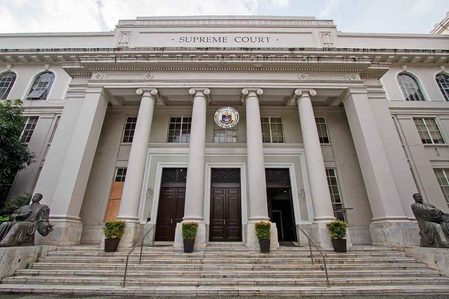
Seventh, enact a genuine anti-political dynasty law. Congress must fulfill the constitutional duty affirmed by the Supreme Court to prohibit political dynasties through legislation. The law should meaningfully address both simultaneous control of public offices and succession designed to preserve family dominance. It needs clear coverage, enforceable disqualifications and safeguards against circumvention—not loopholes that protect the very arrangements it supposedly prohibits.
A law against political dynasties must actually disperse power.
I urge the BIR to launch a nationwide, risk-based audit of unexplained wealth, starting with credible red flags involving political dynasties, their families, donors and contractors. Follow the money and prosecute tax evasion wherever the evidence leads—including cases linked to corruption, smuggling and money laundering. Strengthen the law to permanently bar convicted tax evaders from elected or appointed public office. No surname should shield wrongdoing. No public office should shelter it.
Leave compliant MSMEs, registered business enterprises, online sellers and content creators free to build their businesses. Audit them when credible information or material tax risks justify examination—not simply because they are visible, accessible or easier to pressure.
Enforcement should follow the risk, not the easiest taxpayer to audit.
Start with a group chat, if that is what it takes to get the agencies talking: BIR, the Anti-Money Laundering Council, Bureau of Customs, Securities and Exchange Commission, Land Registration Authority and Ombudsman. Then turn that conversation into a formal inter-agency mechanism with designated investigators, secure and lawful information sharing, documented referrals and clear deadlines. Confidential records belong in protected systems, not informal chats.
The objective is straightforward: connect income, ownership, property, financial intelligence and public-accountability records so that unexplained wealth does not remain unexplained simply because agencies work in isolation.
For investors, reform means fairer competition. For citizens, it means healthcare, education and infrastructure delivered without political indebtedness.
Fighting corruption is fighting poverty when it protects resources and opportunity.
Public office is a public trust—not a family business.
Those seeking power must accept scrutiny of their wealth, donors, interests and decisions. The people owe no dynasty a political future. Every official owes the people accountability.
Our children deserve to inherit a country of opportunity—not a government already reserved for someone else’s children. – Rappler.com
Mon Abrea, CPA, MBA, MPA (Harvard), is a global tax policy expert and Chief Tax Advisor of Asian Consulting Group (ACGlobal). He advises governments, multinational enterprises, and international organizations on tax policy, investment competitiveness, and fiscal reform. He is the author of Reimagining the World Without Corruption and Why Invest in the Philippines? CREATE MORE Edition, and has represented the Philippines in policy dialogues at the OECD, World Bank, and other international forums.
Below are some Ask the Tax Whiz columns related to this issue:
KioskNews shows a cleaned-up reading view extracted from the publisher’s page — the original always lives on their site, not ours.