FIRST READING: B.C. NDP hints at lawsuits if Conservatives win the election they called

First Reading is a Canadian politics newsletter curated by the National Post’s own Tristin Hopper. To get an early version sent directly to your inbox, sign up here.
Sign In or Create an Account
After the B.C. Conservatives immediately took the lead in an election called by NDP Premier David Eby, one of Eby’s deputies suggested that a future Conservative premier could be rendered illegitimate by a lawsuit.
Last week, NDP candidate Niki Sharma – who served as the province’s attorney general until the Sept. 25 election call – told a digital news conference that since Lorne Doerkson is an interim leader of the B.C. Conservatives, any premiership he wins could be contested in B.C. Supreme Court.

Columnist Jesse Kline keeps you up to date with what’s happening in Israel and the effects of antisemitism on life here in Canada. Friday mornings.
By signing up you consent to receive the above newsletter from Postmedia Network Inc.
A welcome email is on its way. If you don't see it, please check your junk folder.
The next issue of Channel Israel will soon be in your inbox.
We encountered an issue signing you up. Please try again
As Sharma explained in an email to Business in Vancouver, “(the B.C. Conservative) constitution is legally binding, and it cannot simply be ignored or rewritten behind closed doors — that would break the law.”
She added that party membership would “likely win” any challenge of Doerkson’s position.
The B.C. Conservative constitution is indeed clear that any leader must undergo a formal process of nomination and election by party membership.
But the entire reason that an interim leader is representing the B.C. Conservatives in a general election is because Eby called said election at the precise moment the party became leaderless.
The Conservatives’ last elected leader, Kerry-Lynne Findlay, resigned on Sept. 20 in the wake of more than a dozen defections from her caucus.
Less than 48 hours later, Eby called a snap election for Oct. 24.
Although it’s not explicitly forbidden to call a snap election when one’s opposition is leaderless, it’s not conventionally done.
Just two days before Eby’s election call, former Alberta premier Jason Kenney wrote on social media of “an iron clad constitutional convention in Canada’s Parliamentary system” under which elections are not called while “one of the major parties is choosing a Leader.”
Given that the process to formally elect a new leader takes at least 42 days, the B.C. Conservatives were subsequently forced into the campaign with Doerkson, who was appointed interim leader shortly after Findlay’s resignation.
What Sharma appears to be referring to, however, is a clause in the B.C. Conservative constitution mandating that the interim leader “may not be a Leadership Candidate” in any selection of a permanent leader.
Thus, if Doerkson wins the election and is sworn in as premier, his party’s governing documents technically hold that he must step aside as soon as another leader is selected.
But even so, none of that would conflict with his ability to remain first minister of B.C.
According to the B.C. Legislative Assembly’s official guidebook, the B.C. premier is whoever commands the confidence of the assembly.
“A Premier and Cabinet hold office as long as they have the support of a majority of the Legislative Assembly’s Members,” reads the most recent edition of Parliament Practice in British Columbia.
To do this, a premier doesn’t need to be an MLA, or even a B.C. resident.
And B.C., unlike most provinces, has some experience stretching the usual conventions of who is allowed to serve as premier.
In B.C.’s first years as a province of Canada, it had the rare distinction of its premier, Amor de Cosmos, simultaneously serving as an MP in the federal of House of Commons.
So, if the B.C. Conservative Party were indeed to remove Doerkson as leader, that would not affect his standing as premier – provided he still had the support of his elected caucus.
If every rule is followed to the letter, the result could be that there is a B.C. Conservative leader who just happens to be different from the B.C. Conservative premier.
At the time of the election call, polls showed the B.C. NDP leading the leaderless Conservatives by about 10 points.
This lead immediately evaporated following the beginning of the campaign, with Doerkson’s Conservatives pulling out ahead.
On Tuesday, a Liaison Strategies survey of 1,000 randomly selected British Columbians had the B.C. Conservatives at 40 per cent, to the B.C. NDP’s 39 per cent.

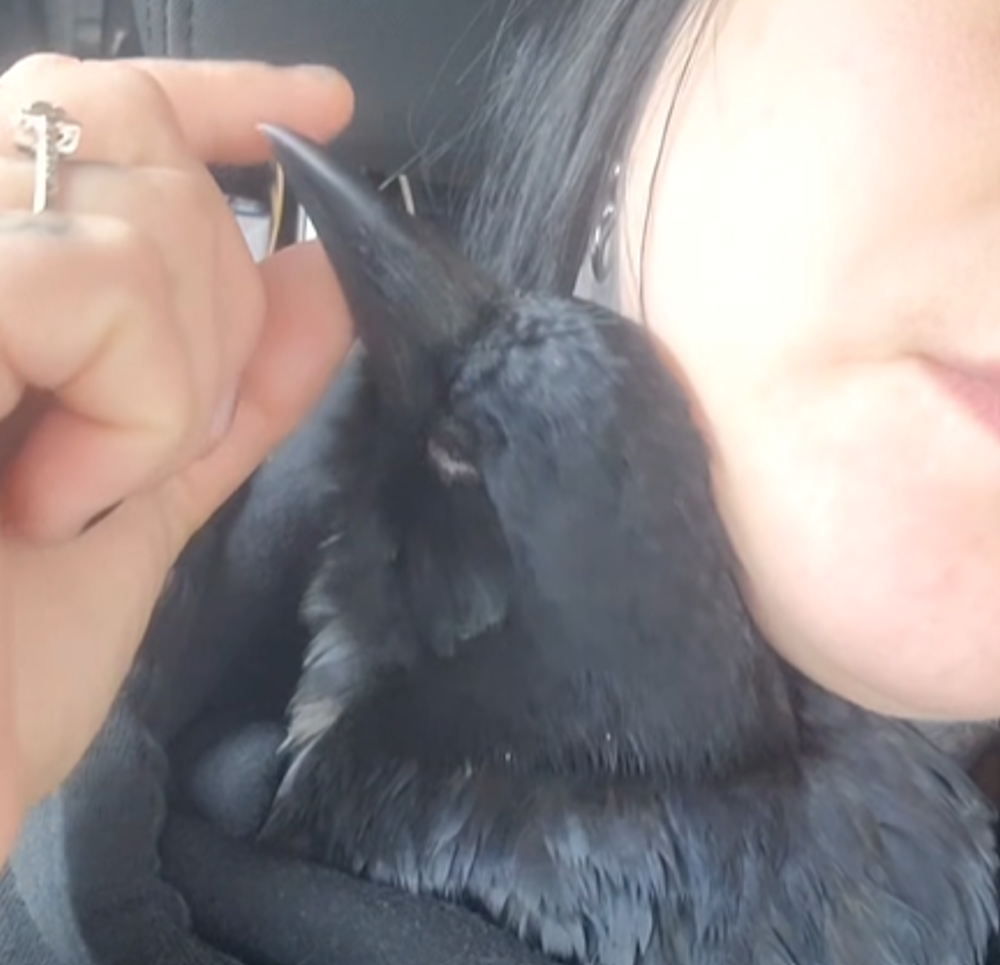
B.C. is now so full of fentanyl that crows are overdosing. In Prince George, B.C., the Good Caws Crow Rescue Society recently reported on its Facebook page that it has had to provide overdose treatment to more than a dozen crows this year. The birds are believed to be getting the dosages by chance encounters with Prince George garbage laden with drug paraphernalia. And this isn’t the first bird-related drug abnormality to occur in B.C. In 2017, the Vancouver Police posted a photo from a low-barrier shelter appearing to show a bird’s nest constructed entirely of used needles.
First Reading is a Canadian politics newsletter curated by the National Post’s own Tristin Hopper. To get an early version sent directly to your inbox, sign up here.
Join the Conversation
This website uses cookies to personalize your content (including ads), and allows us to analyze our traffic. Read more about cookies here. By continuing to use our site, you agree to our Terms of Use and Privacy Policy.
KioskNews shows a cleaned-up reading view extracted from the publisher’s page — the original always lives on their site, not ours.