Refugee claimants strike out after Federal Court says their legal claim is AI fakery
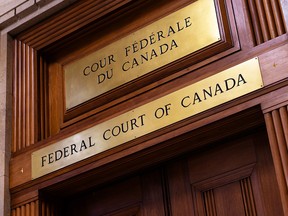
A claim for refugee protection in Canada by a family of three has been rejected because their appeal was apparently generated by artificial intelligence tools and riddled with fake cases and false legal arguments.
Sign In or Create an Account
The Federal Court issued a sharp rebuke of a court filing that challenges an Immigration and Refugee Board (IRB) decision that refused asylum to the trio, with Justice Roger Lafrenière saying the appeal is riddled with nonsense and calling it “an abusive document.”
A lawyer representing the failed refugee claimants had requested the court accept the late filing of its documentation in their appeal. The IRB had previously found the asylum claim “manifestly unfounded.”

Get a dash of perspective along with the trending news of the day in a very readable format.
By signing up you consent to receive the above newsletter from Postmedia Network Inc.
A welcome email is on its way. If you don't see it, please check your junk folder.
The next issue of NP Posted will soon be in your inbox.
We encountered an issue signing you up. Please try again
Lafrenière said the mistake over the filing date might have been excused until he saw the arguments relied on “fictitious citations” and “wholly inaccurate references to legal precedents.”
Lafrenière said the lawyer’s arguments cited case law from five prior Federal Court cases. The “cases,” however, cannot be found at the citations provided, nor do the citations to real cases make the argument the filing claims.
“The Applicants’ Memorandum of Argument is replete with inaccurate and, dare one say, misleading arguments,” Lafrenière wrote in a decision released Monday. In some of the cases, the precedent cited says the opposite of what the filing claims.
For example, the document cites two cases in support of an argument over judicial discretion. “However, nothing of the sort is stated in either of the two cases,” wrote Lafrenière. The document also gives one citation as being found in paragraphs 28–33 of a judgment that has only 10 paragraphs, and it is on an irrelevant subject.
“Citing fake cases in court filings is an abuse of process and is tantamount to making a false statement to the Court,” Lafrenière wrote in his judgment. “In addition, making misleading arguments to the Court violates professional ethics and counsel’s fundamental legal duty of candor.”
Government lawyers flagged concerns over the written material of the three applicants. The parties were given an opportunity to answer the allegations but failed to respond, court said.
“I can only conclude that AI was used in the drafting of the Applicants’ Memorandum of Argument without careful human judgment being applied to the output,” said Lafrenière.
“AI tools promise efficiency; however, their indiscriminate use in drafting legal arguments constitutes a pernicious threat to the integrity of the judicial process. Fabricated case citations distort and corrupt the case law. Superficial fluency also creates an illusion of competence and genuine legal reasoning that masks underlying inaccuracies. In addition, inaccurate legal arguments shaped by AI also results in the waste of scarce resources, both judicial and those of the opposing party.
“Whether accidental or deliberate, reliance on false citations and advancing misleading arguments on matters of substance cannot be condoned by this Court. For these reasons, I decline to exercise my discretion in favour of the Applicants.”
Washim Ahmed, a lawyer with OWS Law in Toronto, is listed as the lawyer of record in the case. He said he is investigating what happened.
“I was shocked to see it,” Ahmed told National Post. He said filings are sometimes made by others at the firm in his name.
“Based on my preliminary review and discussion with the associate lawyer who worked on the file it appears that an earlier draft was inadvertently included when the applicant’s record was compiled. A revised version had been prepared but was not included in the compiled record. This was an inadvertent error,” he said.
Ahmed said his office also did not receive the government’s reply that originally flagged the citations, and was unaware of the court’s concern.
He is preparing a motion asking the court to reconsider the decision on the refugee appeal, to allow him to provide a new version of the document and explain how the error occurred, he said.
Lafrenière’s ruling suggests that even if he had allowed the motion to accept the late filing, it would not have made much difference to the claimants’ prospects of being granted asylum in Canada.
“The determinative issue before the (IRB’s Refugee Protection Division known as the RPD) was credibility. The panel also found that the Applicants’ claim was clearly fraudulent given the repeated reliance by the principal claimant… on fraudulent documents to mislead the RPD on central components of his claim,” Lafrenière wrote on the substance of the applicants’ complaint.
“The result reached (by the RPD) was transparent, intelligible and among the alternatives available to the panel on the evidence and arguments before it.”
Our website is the place for the latest breaking news, exclusive scoops, longreads and provocative commentary. Please bookmark nationalpost.com and sign up for our newsletters here.
Join the Conversation
This website uses cookies to personalize your content (including ads), and allows us to analyze our traffic. Read more about cookies here. By continuing to use our site, you agree to our Terms of Use and Privacy Policy.
KioskNews shows a cleaned-up reading view extracted from the publisher’s page — the original always lives on their site, not ours.