Pope Francis saw ‘gates of hell’ during clerical sexual abuse scandal, diary excerpts reveal
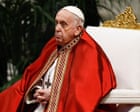
Pope Francis wrote in his diary of encountering the devil and said he saw the “gates of hell” when he realised how serious a clerical sexual abuse scandal was, according to excerpts published on Tuesday.
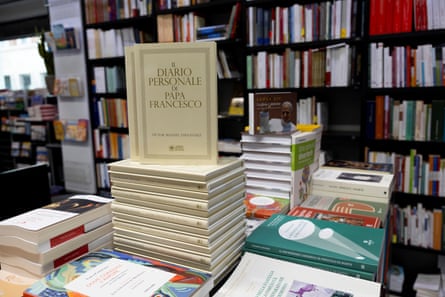
The late Argentinian pontiff’s innermost thoughts, reflections and fears have been revealed in The Private Diary of Pope Francis, a book curated by his close aide cardinal Victor Manuel Fernández and being published globally in several languages.
The passages were taken from the black plastic diary that Francis, formerly Jorge Bergoglio, kept between 1992 and 2024.
In one of the most riveting passages, written in January 2021, Francis wrote that he had experienced “spiritual visions”, including of the devil.
“I clearly heard the voice of the devil,” he wrote, adding that he had seen him once “from the car” and again “in the choir loft” during mass about 15 years earlier when he was archbishop of Buenos Aires. Francis wrote in the published excerpts that he could not forget the devil’s “menacing eyes”.
He said he also felt the devil’s presence during his overseas trips as pontiff, including his visit to Chile in 2018, when he caused uproar by discrediting victims of the country’s clerical sexual abuse scandal during an in-flight press conference.
Francis apologised after his return to Rome, commissioned an investigation and said he realised that the victims were right and that he had been misled by the Chilean church’s hierarchy. He also called an unprecedented summit of cardinals at the Vatican in 2019 to address widespread clerical sexual abuse around the world.
“Devastated because of the situation in Chile and the dialogue with the journalists on the aeroplane,” he wrote after the trip. “I became aware of how serious the problem was … It was hard for me to admit what happened in Chile; I didn’t think it was so serious.”
A few months later in Rome, he wrote that he had a vision of the “entrance to hell” and “pagan seduction in full force” in the Chile scandal.
“I peeked in to look a little, and it terrified me,” the diary entry said. “I grabbed the rosary as a weapon. I thank the Lord for this help.”
The excerpts have been published after Fernández, head of the Vatican’s Dicastery for the Doctrine of the Faith, said he had been asked by Francis, who died in April 2025, to make his personal diary known to the world.
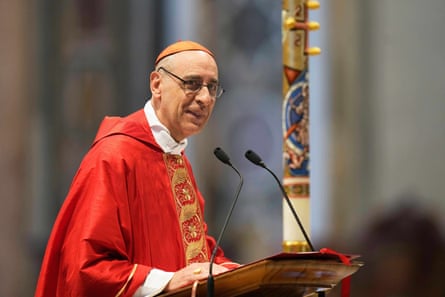
Upon Francis’ death, Fernández said he expressed concern to his successor, Pope Leo, that the book would be “left forgotten in some storage”, and he was permitted to publish passages, writing in the book that “the spiritual concerns present in his [Francis’s] heart are very clear and can do us good”.
The book does not contain the full diary and its excerpts are contextualised with comments by Fernández. Francis wrote his most confidential thoughts in an indecipherable code, according to Fernández, which is not included.
In another passage, Francis writes about suffering a two-year spiritual crisis, beginning in 2021 when he felt tempted by the devil and struggled to exert power over the Catholic church. The crisis came as his health deteriorated. He referred to fighting against not wanting to be someone who “used others like puppets”.
“It was all mixed with governance issues, pressure regarding decisions to make, and aridity and desolation,” he wrote in a December 2022 entry.
In his diary entries, Francis is also self-critical over his occasional feelings of “disdain, envy, pride”, and for having ignored a drunk man in the street who addressed him “because I wanted to walk in peace and quiet”.
“The arrogant, self-sufficient, cynical Jorge who lies to himself,” is how Francis described himself in an entry on 30 December 2022.
On 15 January 2017, he confessed that “for the past three or four days, I’ve been really angry and upset”.
In the book, Fernández also recounts Francis commenting on some senior officials, including US Cardinal Robert Prevost, who became Pope Leo in May 2025.
Francis called Prevost “a great pastor, a generous missionary, and an irreproachable man”, Fernández states.
Francis also offered kind thoughts about two of his most vocal critics – Guinean Cardinal Robert Sarah and German Cardinal Gerhard Muller. He said Sarah had “a refined spiritual sensitivity” and that Muller “seems aggressive, but he’s a good man”, according to Fernandez.
As for his own election as pope, Francis made one simple entry in July 2013, more than four months after he became pontiff. “They elected me pope on 13 March,” he wrote.
KioskNews shows a cleaned-up reading view extracted from the publisher’s page — the original always lives on their site, not ours.