‘I went into Boots Opticians for a routine eye test and was rushed to hospital’
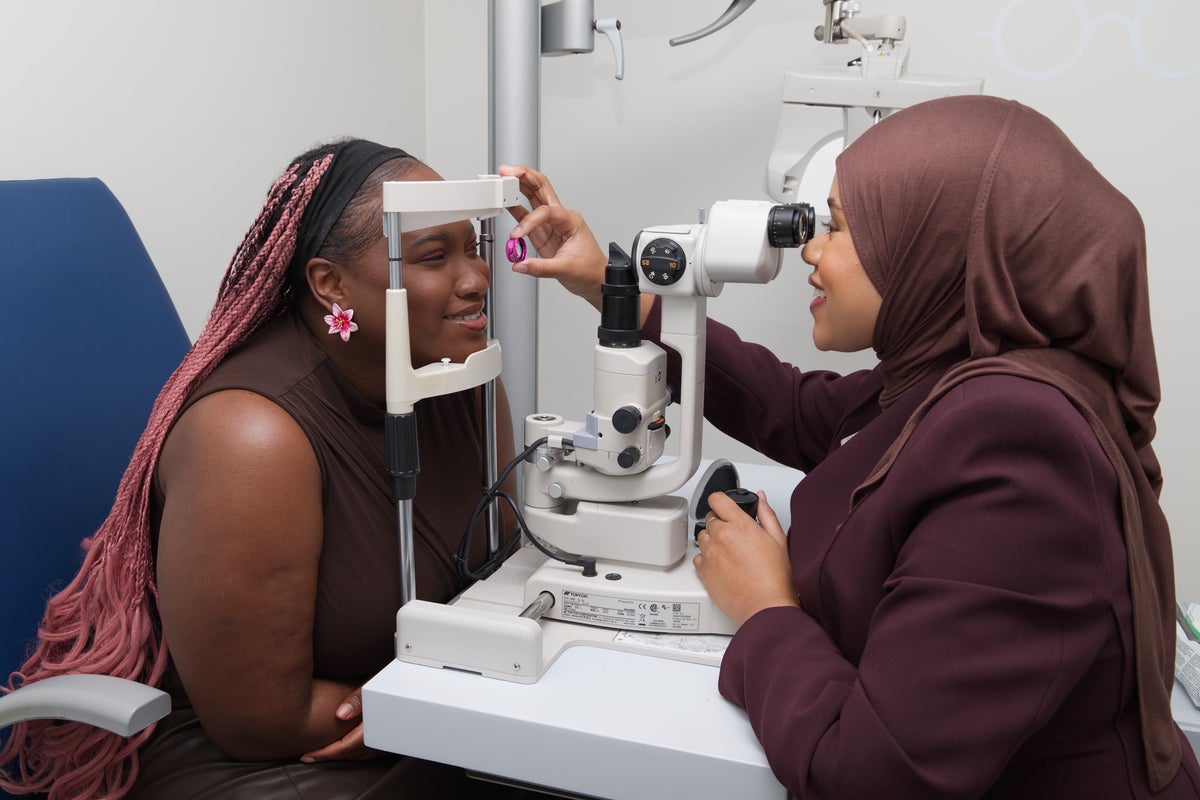
Dami Amoo visited her local Boots Opticians branch for a routine eye test in August, thinking she’d be sent home with some eye drops.
Instead, she was rushed to hospital with an emergency condition that could leave her blind.
The 28-year-old from West Bromwich, Birmingham, says it is terrifying to think that if she had not gone to the opticians that day, she could have permanently lost her eyesight.
Dami did not routinely go for eye tests, but had decided to go in after she was accidentally hit in the eye by a ball, thinking she would be sent on her way with “eye drops or something”.
“She kept scanning (my eye) multiple times, and asking when was the last time I had an eye checkup, and then she went out of the room at some point to talk to someone, and I was like: ‘Surely nothing serious is going on,” Dami said.
“Then she came back and she told me that there’s swelling behind my eyes, on my optic nerve, and it was as a result of papilloedema.
“I was like, what the heck? That is so random! I said: ‘But it’s not serious, right?’ And she said: ‘It’s actually quite serious; you need to go to the eye hospital immediately’.
“It was just all a bit shocking, to be honest.”
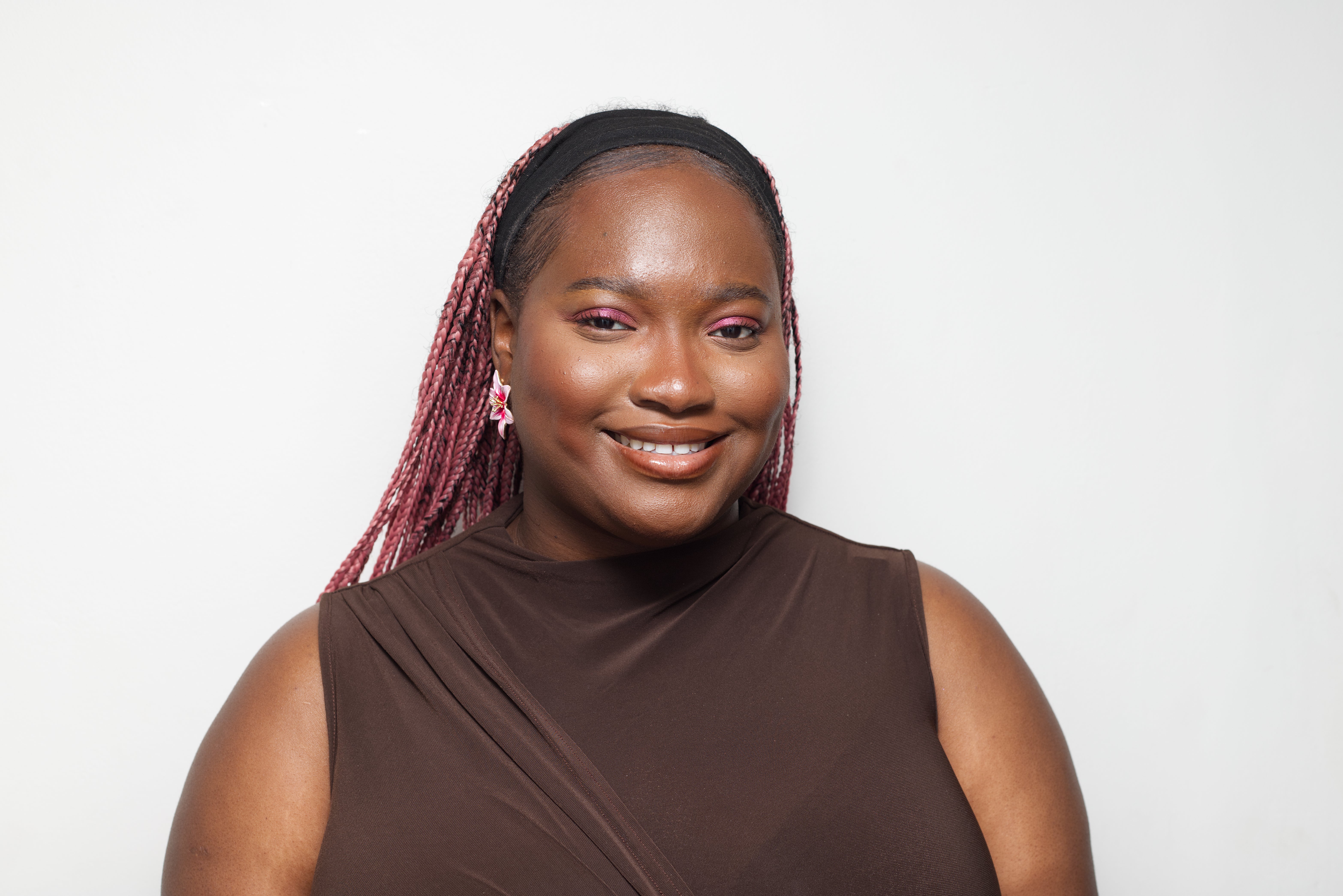
Dami made her way to Birmingham & Midland Eye Centre, where a doctor confirmed her optic nerve was swollen, and she was sent to A&E, where she was advised that she would need a CT scan, an MRI, and a lumbar puncture to officially diagnose the condition.
Doctors said the results of her CT scan were “not too concerning”, but “they could see a lot of fluid in (her) brain”, and she went on to have a lumbar puncture to measure the pressure of her cerebrospinal fluid. Doctors found her pressure to be 29 cm H₂O – significantly higher than the normal range of between 10 and 18 cm H₂O.
Some of the fluid was drained during her lumbar puncture, bringing the pressure down to 22 cm H₂O – still higher than it should be, but significantly closer to the normal range.
Dami was then formally diagnosed with papilloedema, swelling of the optic disc caused by increased pressure inside the skull, and was told that it was due to idiopathic intracranial hypertension (IIH) – a condition where the pressure around the brain (intracranial pressure) becomes too high for no known reason, and can cause symptoms like severe headaches, vision changes, and pain behind the eyes.
Dami had been having bad headaches since she was at university, and her family would often joke about how she was always on painkillers – though she said she “thought it was normal, (that) everyone went through this – I thought it was just part of life”. Nevertheless, she never thought her headaches could have been caused by a condition as extreme as this.

Shaniah Dacosta-Palmer, optometrist at Boots Opticians West Bromwich, said: “When Dami came in for her eye test, it was obvious that something wasn’t quite right.
“Despite her vision not being impacted, it was evident that she had signs of papilloedema, prompting me to refer her to the hospital.
“I’m so glad that Dami came in that day as this experience highlights why regular eye tests are so important, even when your vision seems perfectly fine. Eye tests have the ability to uncover serious conditions and potentially save your sight and, on rare occasions, even your life.”
Following her diagnosis, Dami was referred to a neuro-ophthalmologist who gave her a few options for ongoing treatment.
She was offered a prescription for acetazolamide, a drug sold under the name Diamox, which increases the amount of urine the body produces and is used to treat IIH among other conditions, according to the NHS.
She was also advised to try and lose some weight as, according to the NHS, the most common risk factor for IIH is being overweight.
Alongside this, Dami was enrolled on a clinical trial that Professor Sinclair is conducting at the University of Birmingham – IIH Advance – which is exploring how the use of weight loss medication could help people with IIH, and is overseen by doctors specialising in IIH and weight management who see Dami every month to monitor her.
Symptoms of intracranial hypertension
NHS
Symptoms of intracranial hypertension (IH) can include:
- a constant throbbing headache which may be worse in the morning, or when coughing or straining; it may improve when standing up
- temporary loss of vision – your vision may become dark or "greyed out" for a few seconds at a time; this can be triggered by coughing, sneezing or bending down
- feeling and being sick
- feeling sleepy
- feeling irritable
- finding it difficult or painful to look at bright lights (photophobia)
- hearing a pulsing rhythmic noise in your ears (pulsatile tinnitus)
- problems with co-ordination and balance
- mental confusion
- loss of feeling or weakness
The trial compares the impact on IIH in those taking the weight loss medication Tirzepatide (Mounjaro) to those not receiving the drug, and all patients in the trial have usual NHS care often with a drug – acetazolamide – alongside advice to lose weight and management of headaches as needed.
Dami is still in the early stages of her involvement in the trial, with the clinicians monitoring her papilloedema, weight, sleep and movement through a smartwatch and analysing her headache diary, where she keeps note of her headaches and their severity, among other tests. She has been randomly allocated to receive the weight loss medication, which she will take for the next six months before being reassessed.
In the meantime, Dami has been diagnosed with sleep apnoea and anxiety, and said she is still experiencing “really, really, really terrible headaches”, blurred vision, and tinnitus, though she hopes to find relief as she moves further through the clinical trial.
“The doctor said that if I’d left this untreated, that I could potentially lose my eyesight permanently,” Dami reflected.
“I’m just trying to think of a situation where I would have gone to the eye clinic naturally, just be like: ‘oh, let me check my eyes today’. That wouldn’t have happened at all.
“So I’m really grateful that I got hit in the eye with a ball.”
“I’ve just been so misinformed about the importance of the eyes and the importance of regular checkups and things like that,” she added.
“Every single person in my family, except me, wears glasses, so they go for regular checkups and they know what’s going on in their eyes. But I’m the only one that doesn’t wear glasses, and I’ve never gone…
“It’s so easy to take things for granted, and I just think we (should) be more responsible when it comes to our health, and obviously I’m not one to talk! You just never really know.
“It’s been a crazy, crazy few months.”
To find out more about eye testing at Boots Opticians, visit: bootsopticians.com/eye-tests.
KioskNews shows a cleaned-up reading view extracted from the publisher’s page — the original always lives on their site, not ours.