The West’s double standard on global unrest
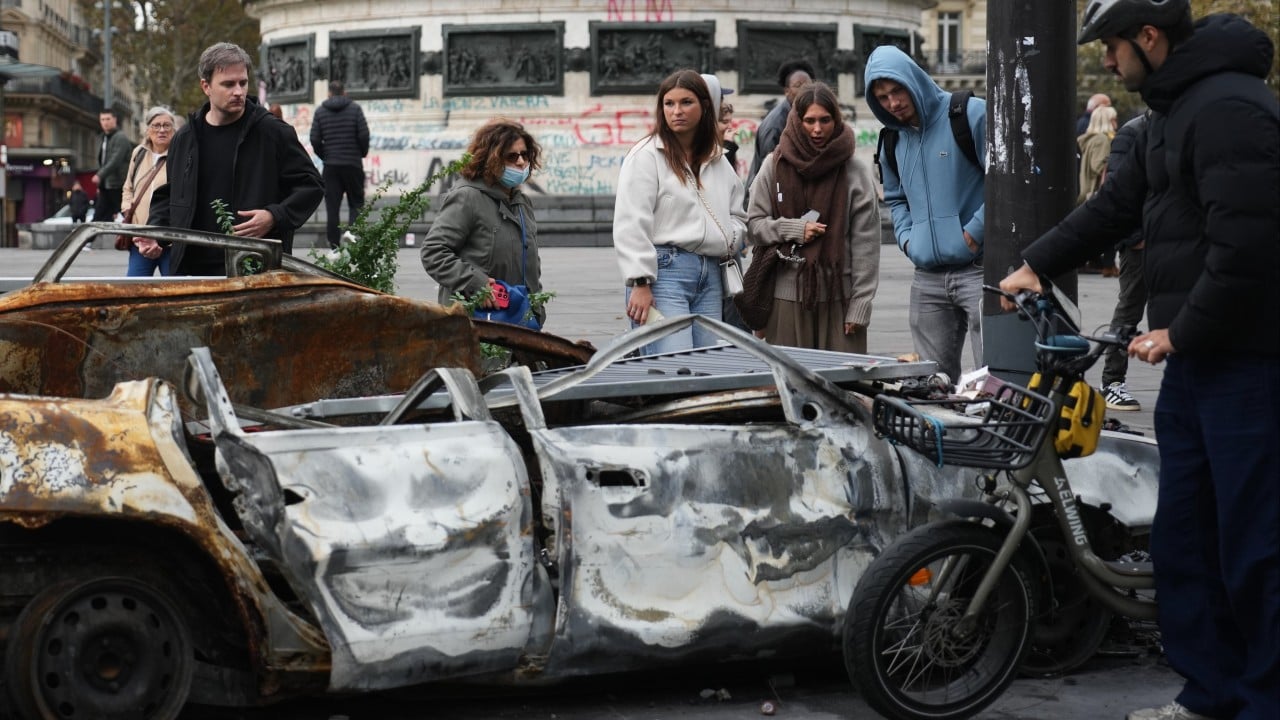
In the early days of the student protests in France, mainstream Western media took the protesters’ claims about poor school facilities and declining resources at face value. Only when the violence spread across the country, and to some of its European neighbours, did people begin to ask whether deeper causes were at play.
Leftists blame social problems, from the cost-of-living pressures linked to the war in Ukraine to rising unemployment, especially among the young. Right-wing critics blame Islamists, antifascists, radical environmentalists and, of course, immigrants.
A Financial Times report said: “EU regulators are examining possible foreign interference and disinformation campaigns around the French riots and outbursts of violence and looting in other European countries. According to security officials, pro-Russian and far-right social media accounts linked to previous disinformation campaigns have spread violent videos in an attempt to sow more chaos. Iran and Algeria are also suspected of being behind some of the messaging, experts said.”
As I follow the unrest unfolding in Europe, I find it uncanny how closely it parallels the 2019 anti-government riots in Hong Kong. Such mass disturbances almost always have many causes, including underlying social malaise and long-standing grievances. There is no single causal factor, only, perhaps, a single trigger.
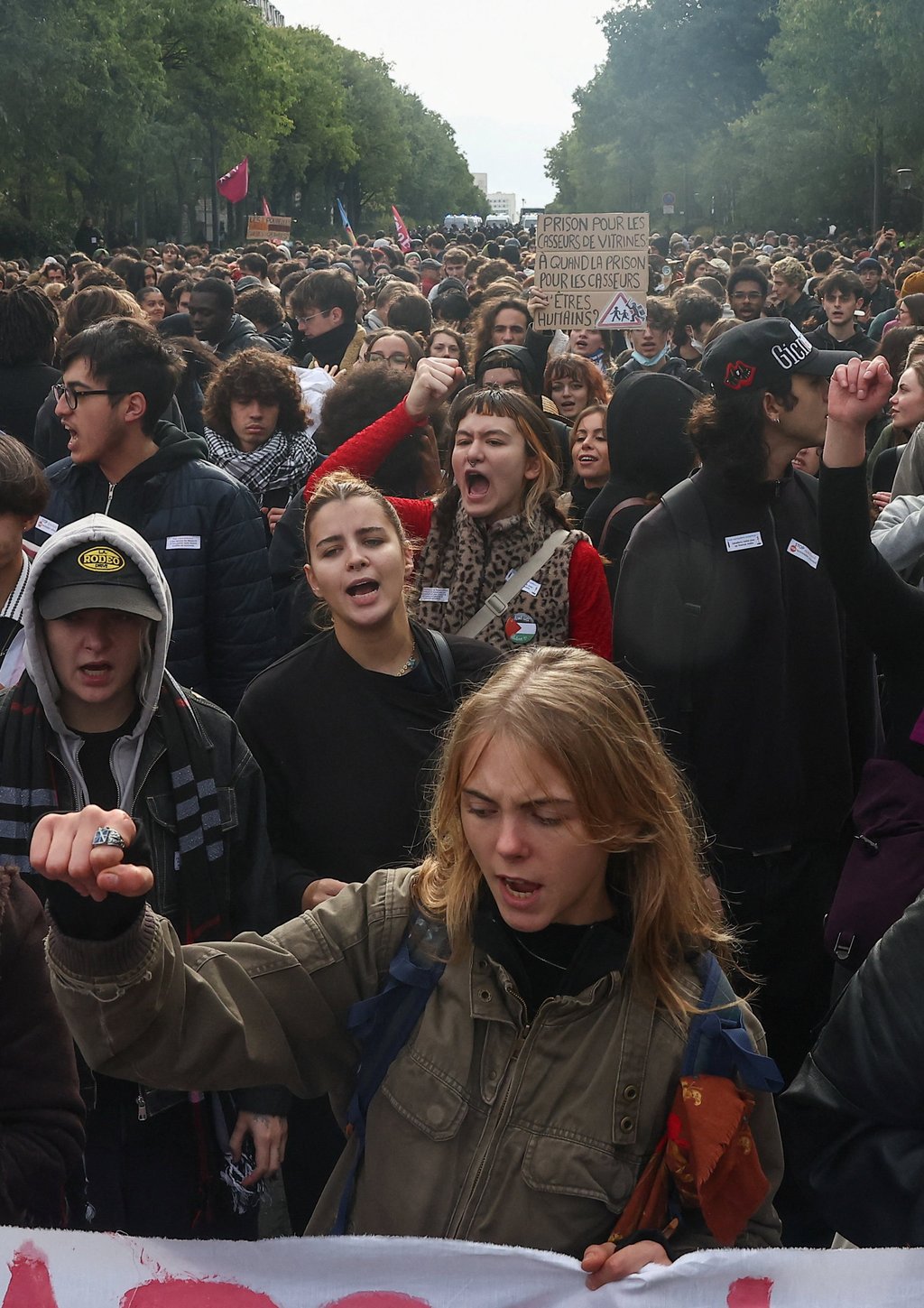
In Hong Kong, the trigger was a proposed extradition bill. The protests then broadened into demands for immediate democratic transition. I, and many others, have extensively documented foreign government and semi-government involvement. The players included the US Congress, the US National Endowment for Democracy, the National Democratic Institute for International Affairs, the US Agency for Global Media and the Open Technology Fund.
In fact, we didn’t have to dig much. They were rather proud of their handiwork, with some testifying in Congress that they could not continue because of funding cuts by the first Trump administration.
To this day, many Western media outlets still claim it was all a fight for democracy, later suppressed by the national security law.
I don’t deny that democratic demands played a significant role in the 2019 riots. But they were not the sole or even the underlying cause, just as poor facilities alone cannot explain the social breakdown we are witnessing in France, even though they first led high school students into the streets.
Yet mainstream Western media instinctively reach for mono-causal explanations, usually a struggle for democracy, however they define it, when mass unrest breaks out in non-Western countries. Only when similar breakdowns happen in allied or friendly countries do they allow for nuance and deeper social analysis.
One reason is, of course, simple ignorance of those other societies. “Democracy” is the one-size-fits-all explanation when you need to write a column about an unfriendly country you know nothing about.
13:20
Hong Kong protests – China’s Rebel City: Part 1 – Marching into the Unknown
I recently watched an amusing French TV news programme in which the moderator asked professional pundits to name two other living Chinese persons besides Xi Jinping, and they all had difficulty doing so. It was reminiscent of George W. Bush, while running for president, being embarrassingly unable to identify foreign leaders.
Ukraine was similar to Hong Kong in this respect. The so-called Maidan revolution of 2014 is seen in the West, especially now, as a democratic revolution. Never mind that the governments that followed were as corrupt as the pro-Moscow one before. The rest of the world mostly sees it as a coup, or is at least neutral about it.
At the very least, it triggered the Russian aggression that has continued ever since. Many Ukrainians may now be rethinking the wisdom of poking the bear and – for heaven’s sake – of trying to join Nato.
A recorded telephone conversation between Victoria Nuland, then US assistant secretary of state, and Geoffrey Pyatt, then US ambassador to Ukraine, was leaked in February 2014. They discussed political strategy, which leaders to support and the composition of a post-Yanukovych government amid the Euromaidan protests. In the leak, she famously said, “F*** the EU”, signalling a readiness to act unilaterally.
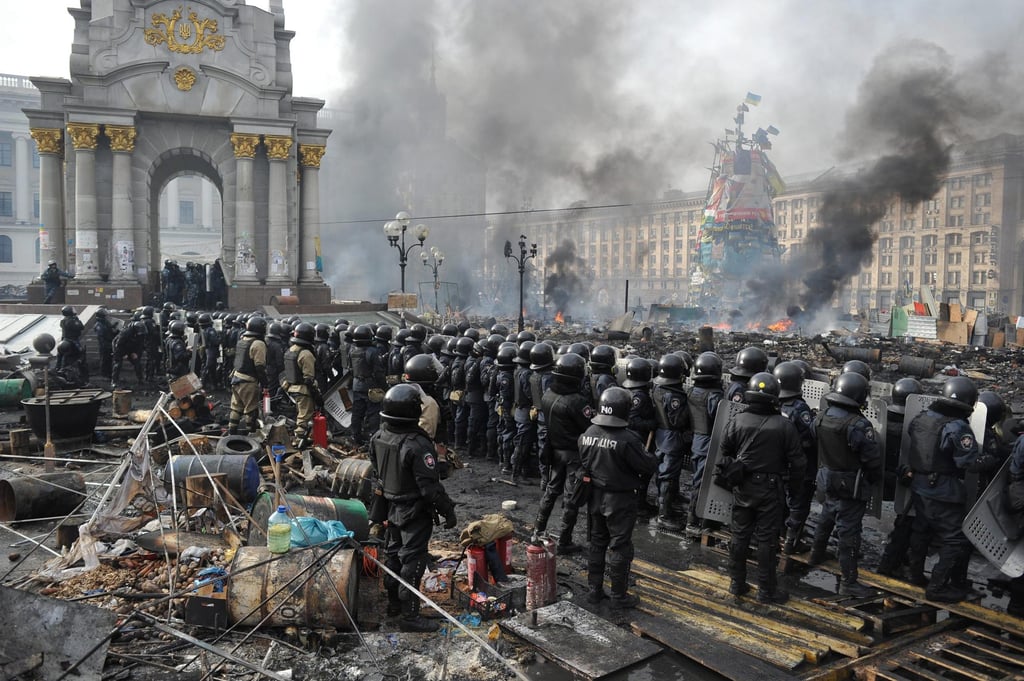
Indeed, American scholars such as John Mearsheimer and Jeffrey Sachs have argued that the 2014 uprising was a coup. Of course, everyone knows there were many causes. But everyone has an ideological axe to grind.
I, for one, would argue that the world would be more peaceful today without the 2014 coup. But to each their own.
While ignorance and strategic opportunism helped explain how social unrest is portrayed differently in mainstream Western media, the biggest motivation is probably ideological.
What happened to Hong Kong now seems almost comical, though quite tragic for the Hongkongers who left
Between 2010 and 2020, data-tracking projects recorded nearly 7,000 protests across 153 countries, at least 900 of them major, each involving more than 10,000 participants.
Naturally, Western pundits and politicians, especially those in Washington, would focus on those affecting antagonistic China and Russia. Exploiting internal opposition and unrest in unfriendly countries has long been Washington’s default playbook, followed sometimes, but not always, by its Western counterparts.
But it is short-sighted. An unstable Hong Kong or China would be terrible for the world economy and, by extension, for the US. A successor state to the current Putin regime – should it collapse from losing the war in Ukraine – would probably be neither pro-Western nor democratic, but even more bent on revanchism.
13:02
A Hong Kong journalist’s difficult decision to leave the city
What happened to Hong Kong now seems almost comical, though quite tragic for the Hongkongers who left. Several Western governments bought into their own propaganda and, from 2020, offered them exits, as if they were fleeing persecution like Ukrainians and Yemenis. Many have had difficulty adjusting to their new lives; some have returned to Hong Kong.
Those same Western countries are now beset by anti-migrant populism, resulting in a brutal migrant crackdown, as in the US, or the rollback of easy access in the migrant application process, as in Canada and Australia.
Meanwhile, some Hong Kong and mainland officials remain under US sanctions. Perhaps Beijing should sanction some top officials in Washington and Paris for their own brutal domestic police and military crackdowns.
KioskNews shows a cleaned-up reading view extracted from the publisher’s page — the original always lives on their site, not ours.