Judge to appoint special master in California voting case in setback to Trump admin
The judge appeared skeptical of the DOJ's request for a restraining order.
The federal district judge overseeing the Justice Department's lawsuit asking California to segregate roughly 20,000 ballot belonging to individuals it claims are "likely" noncitizens appeared skeptical of the DOJ's efforts to seek emergency action just a week from the state's election.
U.S. District Judge David O. Carter said in court Tuesday he intends to appoint a special master to probe DOJ's process that led it to compile the list of alleged 20,000 likely non-citizens, dealing a setback to the Trump administration's attempt to quickly intervene in the election.
Judge Carter did not rule by the conclusion of the hearing on the DOJ request for a temporary restraining order against the state, though he appeared skeptical of the department's late-stage attempt to force what he described as a "monumental change" in California's ongoing administration of its election.
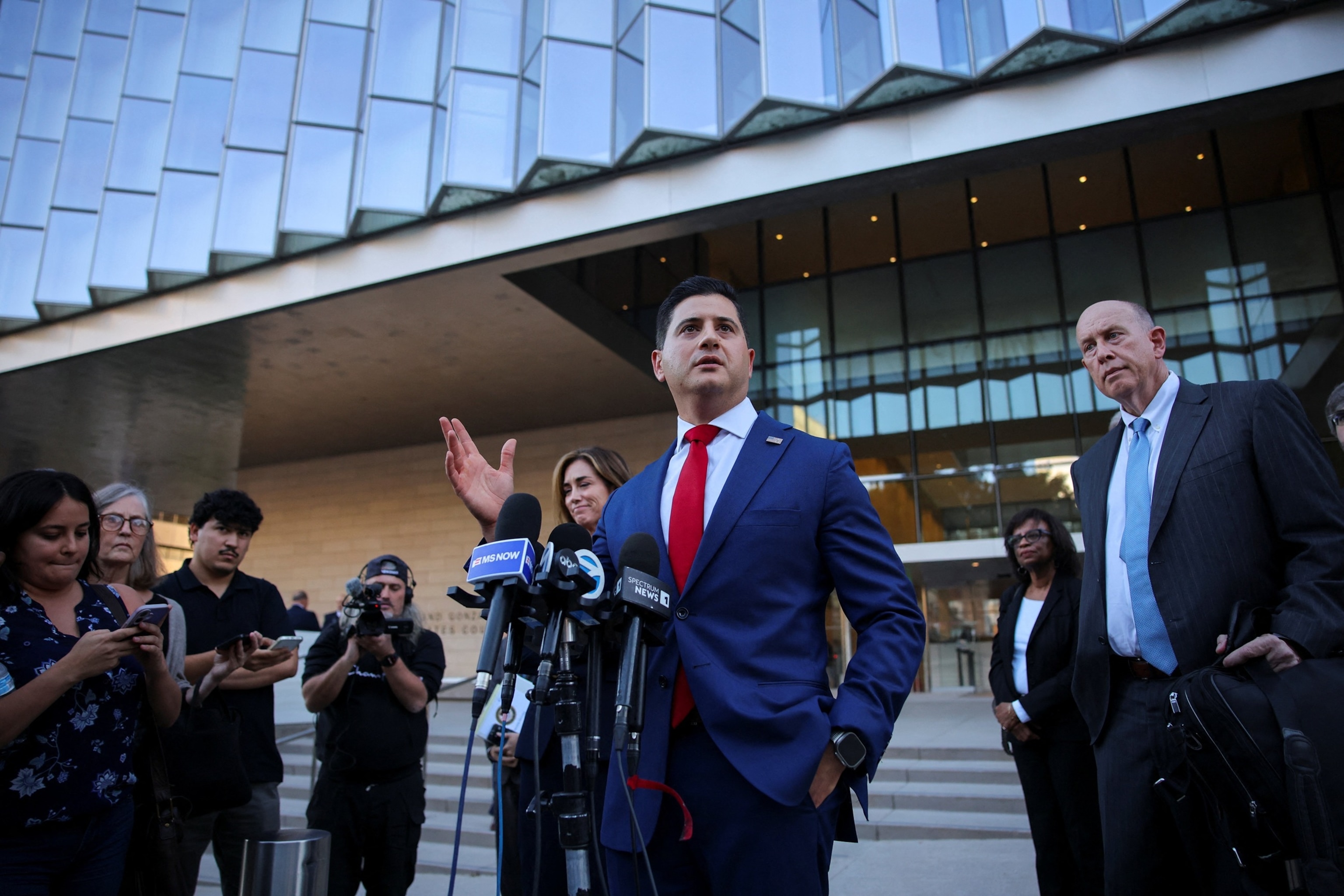
First Assistant United States Attorney for the Central District of California Bill Essayli speaks with the media after a court hearing held by US District Judge David Carter to hear arguments in a Justice Department's lawsuit that seeks to block California from counting any mail ballots for the November 3 midterm elections from more than 20,000 registered voters the Trump administration alleges are likely noncitizens in Los Angeles, California, US, October 27, 2026.
Daniel Cole/Reuters
Carter told the parties he intends to issue some kind of ruling governing proceedings on the case moving forward by tomorrow.
Bill Essayli, a controversial Trump-installed leader of the U.S. Attorney's Office in the Central District of California, argued in the hearing that the administration was simply pushing for the state to be in compliance with federal law barring non-citizens from casting votes.
But state officials and other legal advocates opposing the DOJ lawsuit countered that the litigation violated longstanding Constitutional principles mandating that states have control over their elections -- and could have chaotic consequences for the state in tabulating final vote counts in the weeks ahead.
Notably in closing out the hearing, Judge Carter appeared to admonish the administration over its recent letters to state officials around California suggesting it could prosecute them if they are involved in tabulating ballots that could be from the list of alleged likely noncitizens.
"This court believes it would be wise that any threats to state and county elected employees cease immediately," Carter said. "Good night."
On Monday, a federal appeals court rejected a request from the DOJ to issue an order requiring California to set aside the 20,000 ballots from its list, kicking the back to the district court.
Earlier this month, the DOJ filed suit against California, accusing the state of failing to review the list of alleged noncitizens that the Trump administration claimed were sent mail-in ballots for next week's midterm election.
In court papers filed earlier last week, Los Angeles officials said a preliminary analysis of 200 of the names on the 20,000-person list, included a "high percentage" of individuals who say they were born in the U.S. and many more who have no voting history at all.
KioskNews shows a cleaned-up reading view extracted from the publisher’s page — the original always lives on their site, not ours.