‘Trust your gut’: Parents’ plea after toddler’s sepsis death
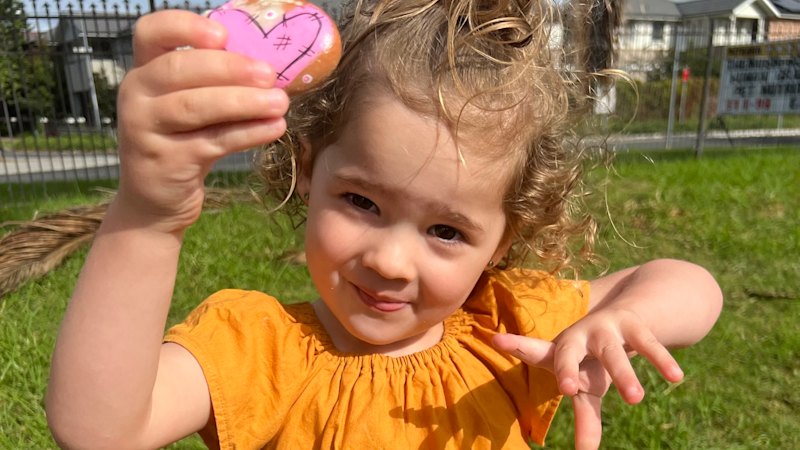
The death of a two-year-old girl in a regional NSW hospital was “wholly preventable” and was caused by multiple failings in her care, an inquest has found.
Deputy State Coroner Joan Baptie found Pippa Mae White died of sepsis following delayed diagnosis and treatment at Cowra and Orange hospitals in 2022. In findings delivered on Tuesday, Baptie outlined multiple instances of inadequate clinician assessments, missed opportunities to identify the child’s condition had deteriorated, and failures to escalate care in a timely manner.
The coroner noted material provided by Pippa’s family – including timestamped videos and texts documenting the toddler’s deteriorating condition – were critical to her findings. She said without those materials, the inquest would have reached a different conclusion.
Pippa’s mother, Annah White, said outside the NSW Coroners Court in Lidcombe the inquest had highlighted the need for parents to “trust your gut” and raise concerns.
“Pippa should have wholeheartedly survived. It’s a pretty hard, tough pill to swallow, and I wish that it wasn’t our family and our daughter that had to suffer,” she said.
“But she won’t just be a sad story … although the inquest has ended, our fight for change and better healthcare standards in our state won’t end now.”
White took Pippa to Cowra hospital’s emergency department about 1.30pm on June 12, 2022, after four days of fever and lethargy.
The hospital was treating another seriously unwell child – a 10-year-old who required resuscitation – about the same time, and was staffed with just two nurses and a doctor.
When triaged, Pippa recorded a heart rate of 171 beats per minute, which is considered in the “red zone” for potential sepsis, a medical emergency which occurs when the body’s immune response to an infection causes damage to its own organs and tissues.
The inquest heard that a protocol known as a septic pathway – which requires a rapid response – should have been initiated, and Pippa should have been given a more urgent triage category. This could have flagged she was a seriously ill child, and changed the whole trajectory of her treatment.
Pippa was not assessed by a doctor until 6.20pm, which Baptie noted was “not an appropriate time frame”. Her symptoms were assumed to have stemmed from viral infection, which contributed to “diagnostic anchoring” – where a doctor fixates on an initial diagnosis even when contradictory symptoms emerge – that characterised the rest of her treatment, and led clinicians to not consider other explanations.
Videos taken by White throughout Pippa’s stay at Cowra hospital showed her either having difficulty breathing or exhibiting grunting sounds, which are serious symptoms of sepsis. The coroner noted that the “videos indicate a child that is clearly a septic child”.
Doctors decided Pippa should be transferred to the larger hospital at Orange. When paramedics arrived, they observed a further escalation in symptoms, which doctors at both hospitals said they were not made aware of. The coroner called this a “missed opportunity to identify that Pippa’s condition had deteriorated”.
When Pippa arrived at Orange hospital at about 9pm, she had difficulty breathing, audible crackles in her chest, and her mother was increasingly concerned.
Baptie found that her symptoms should have resulted in a review by a senior clinician within 30 minutes, and a blood test, but diagnostic anchoring had likely caused clinicians not to consider the possibility of sepsis.
She said when Pippa’s condition had failed to improve with hydration by 1am, a rapid response should have been initiated and antibiotics considered.
When Pippa was observed with grunting, difficulty breathing and a heart rate in the 196 beats per minute “red zone” at 2.35am, Baptie found there was not an adequate escalation of care, and that delays caused by awaiting the results of a blood test were inappropriate.
The Newborn & Paediatric Emergency Transport Service (NETS) was called about 6am, but wasn’t able to send a team to Orange quickly due to weather conditions.
At 11.54am Pippa suffered a cardiac arrest which responded to treatment. However, she had a second cardiac arrest at 12.39pm, and could not be resuscitated.
Baptie recommended changes to Western NSW Local Health District’s hospital transfer policy, to require patient observations before transport – including any deterioration – to be brought to the attention of the referring and receiving doctors.
She also proposed a policy change which would require a child’s carer to be asked if their condition was getting worse when observations were taken. She also said the LHD should consider whether alternative technologies like mobile phones could be used by on-call doctors to review patients remotely.
Baptie urged training for junior doctors in emergency departments and paediatric wards about the circumstances surrounding Pippa’s death, which could incorporate the videos White recorded.
White was relieved the inquest had ended, but she planned to “continue the fight”.
With other families, she successfully advocated for an overhaul of the REACH emergency response system, which allowed families to raise issues within a hospital using a localised phone number.
The program was replaced earlier this year by a statewide phone line called Raise It, which relatives can call to escalate concerns about the worsening condition of a family member to an independent senior health worker.
“We were willing to be [Pippa’s] parents for the rest of her living life, and unfortunately, that ended very soon,” White said.
“Now we can parent her beyond the grave [through] advocacy and by leading the change for other parents and girls.”
With Angus Thomson
Start the day with a summary of the day’s most important and interesting stories, analysis and insights. Sign up for our Morning Edition newsletter.
KioskNews shows a cleaned-up reading view extracted from the publisher’s page — the original always lives on their site, not ours.