Trump Took A Political Hit. US Stocks Hit A 3-Month High

Stock Market News: Wall Street is celebrating a result that, at first glance, seems counterintuitive.
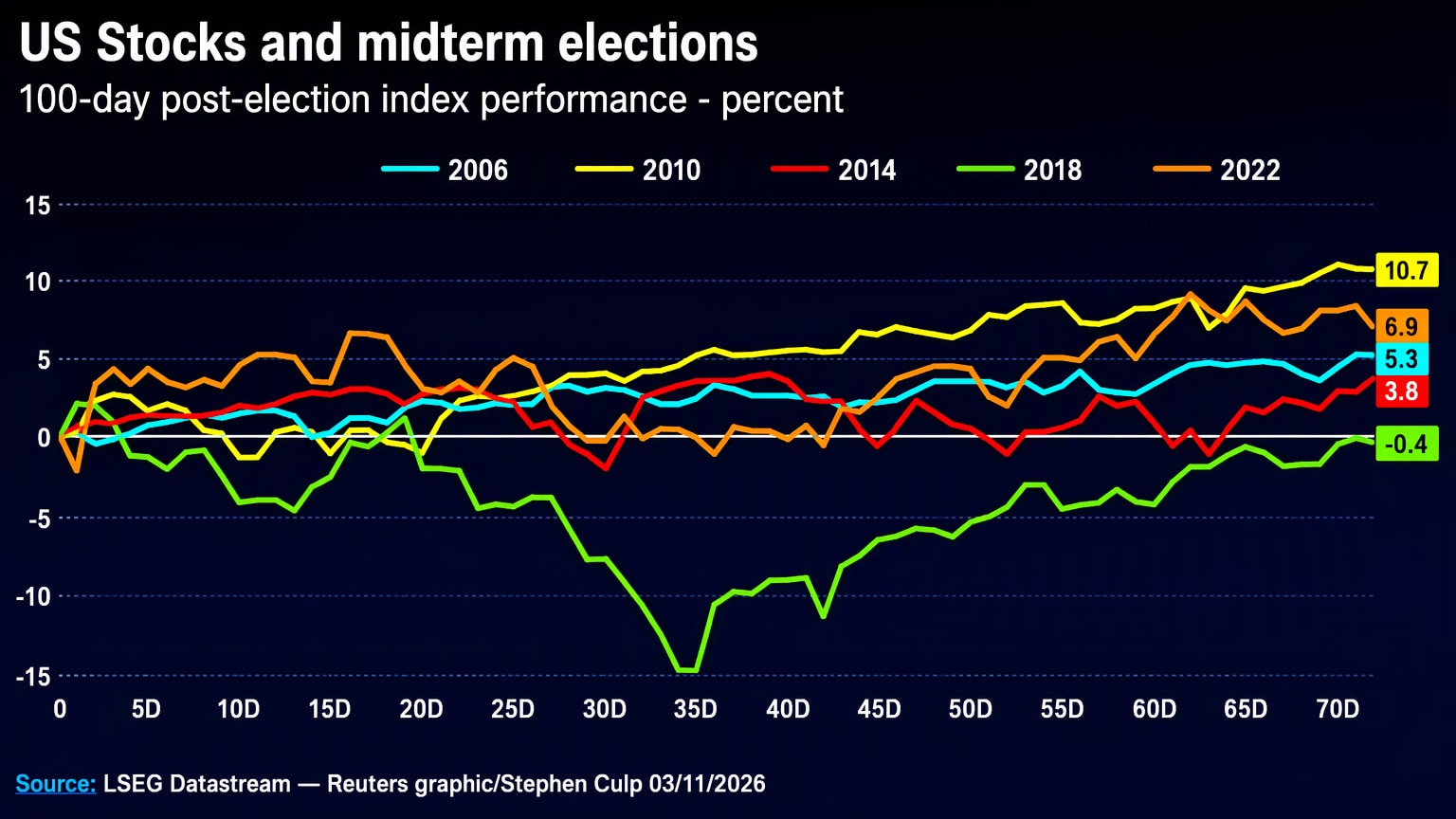
US President Donald Trump has long been viewed as the more market-friendly candidate, favouring tax cuts, deregulation and business-friendly policies. Yet after Democrats swept both chambers of Congress in a major midterm rebuke to Trump, US stocks surged to a three-month high, oil prices tumbled and Treasury bonds rallied.
Investors are betting that a Democratic-controlled Congress could act as a check on some of Trump's more unpredictable policies, from tariffs and deficit-funded spending to the Iran conflict. In other words, markets may be cheering not a shift to the left, but the prospect of greater constraints on presidential power and fewer policy shocks.
Also Read | Layoffs Are Rising In Tech, But These Skills Are Helping People Unlock Better Pay
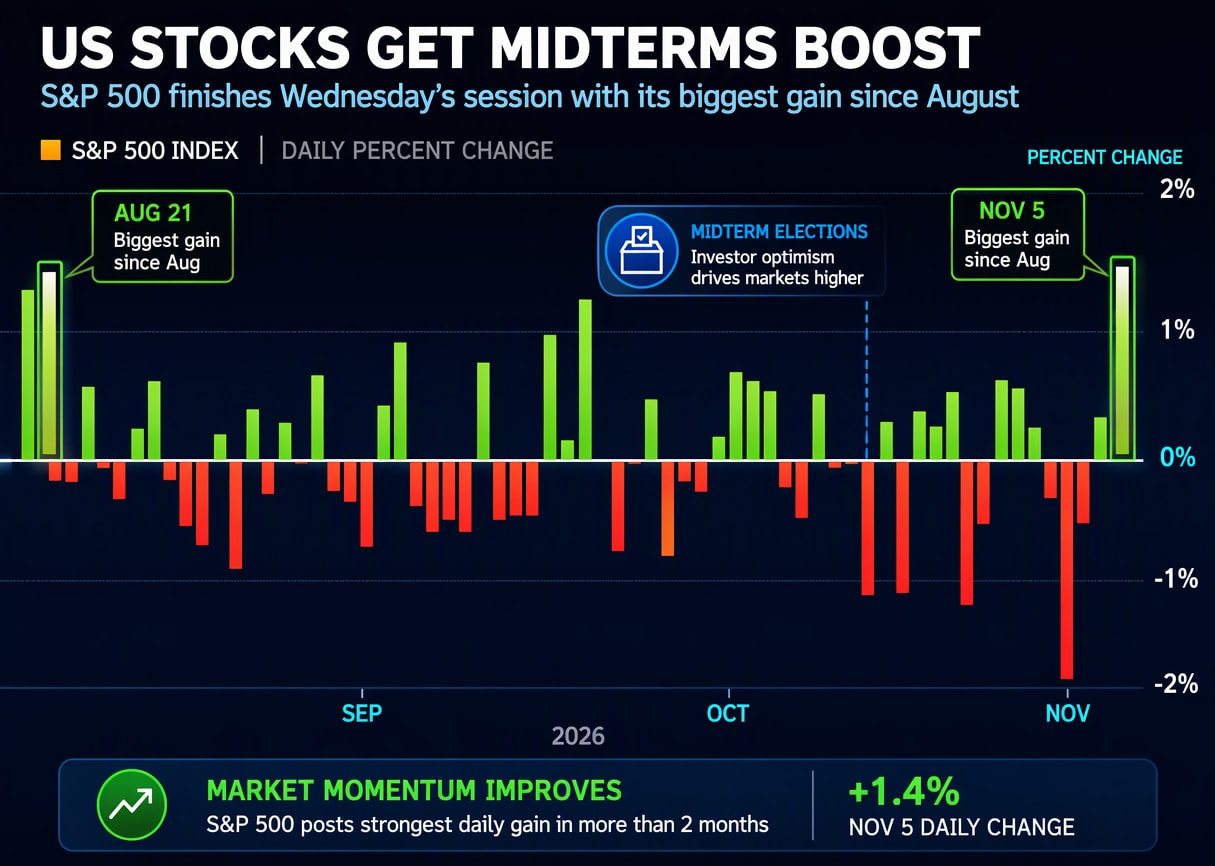
On Wednesday (November 4), the Dow Jones Industrial Average jumped more than 1,500 points while the S&P 500 and Nasdaq Composite gained 1.58 per cent and 1.44 per cent, respectively. The rally followed an initial bout of selling, as investors reconsidered what a Democratic-controlled Congress could mean for Trump's economic agenda. FOLLOW LIVE UPDATES
Significantly, the S&P 500 recorded its strongest daily gain in three months, while the Dow advanced around 3 per cent. Investors are betting that a divided government could limit policy shocks, temper spending and potentially reduce some of the economic risks that have weighed on markets.
Why Investors Are Watching Washington Closely
A Democratic Congress could make it harder for Trump to push through major tax, spending and regulatory changes. That prospect has encouraged investors who worry about the administration's unpredictable policy moves.
However, the implications are far from straightforward. Democrats are expected to push for tighter oversight of artificial intelligence, technology companies, and digital assets -- all of this could complicate the investment plans of companies pouring billions of dollars into AI infrastructure.
The election also raises questions about Trump's tariff policies, defence spending and the future of the Iran conflict. Investors will be watching how the White House responds to the political setback and whether Congress can influence the administration's foreign policy.
AI Stocks Face A New Regulatory Risk
Artificial intelligence remains one of Wall Street's biggest investment themes. But the Democratic victory has brought fresh scrutiny to the industry's enormous data-centre spending.
Investors fear that tighter rules, restrictions on data-centre construction or greater scrutiny of energy consumption could slow the expansion of AI infrastructure.
The reaction has been uneven. Microsoft, Amazon, Alphabet and Meta advanced as investors considered whether slower infrastructure expansion could benefit established cloud-computing businesses. Meanwhile, data-centre operators such as Hut 8, IREN, Core Scientific and Applied Digital came under pressure.
The semiconductor index fell 3.1 per cent, hitting a six-month low. Tesla also declined, while defence contractors faced concerns that Trump's proposed $1.5 trillion defence budget could encounter resistance in Congress.
Oil Prices Crash As Iran Hopes Lift Sentiment
Oil was among the biggest movers after the election. Brent crude fell more than 8 per cent on Wednesday, settling around $95 a barrel. US crude also recorded a sharp decline.
The sell-off reflected hopes that the Democratic victory could increase pressure on Trump to seek an end to the Iran war. The conflict has kept energy prices elevated and fuelled concerns about inflation.
Trump himself acknowledged that the war played a role in the Republican defeat. Lower oil prices could provide relief to consumers and businesses. Cheaper energy may ease inflationary pressures, reduce transportation costs and give central banks more room to consider interest-rate cuts.
But the rally in oil-sensitive markets rests partly on expectations of a geopolitical breakthrough. Any escalation in the Middle East could quickly reverse those gains.
Why Treasury Bonds Are Rallying
US government bonds also attracted investors after the election.
The yield on the benchmark 10-year Treasury fell to around 4.89 per cent, reflecting stronger demand for bonds. Bond prices move inversely to yields.
Investors see a Democratic-controlled Congress as a potential check on further deficit-expanding legislation. That could reduce the amount of additional borrowing required by the US government.
The US debt burden, already around $40 trillion, remains a major concern for bond investors. Any reduction in spending pressures could ease worries about future Treasury supply and borrowing costs.
There is another factor at play. Tighter AI regulation could slow investment and economic growth, potentially reducing inflationary pressure and the need for further Federal Reserve rate increases.
KioskNews shows a cleaned-up reading view extracted from the publisher’s page — the original always lives on their site, not ours.