The women of Ramayana make Rama and Ravana realise their fate and potential
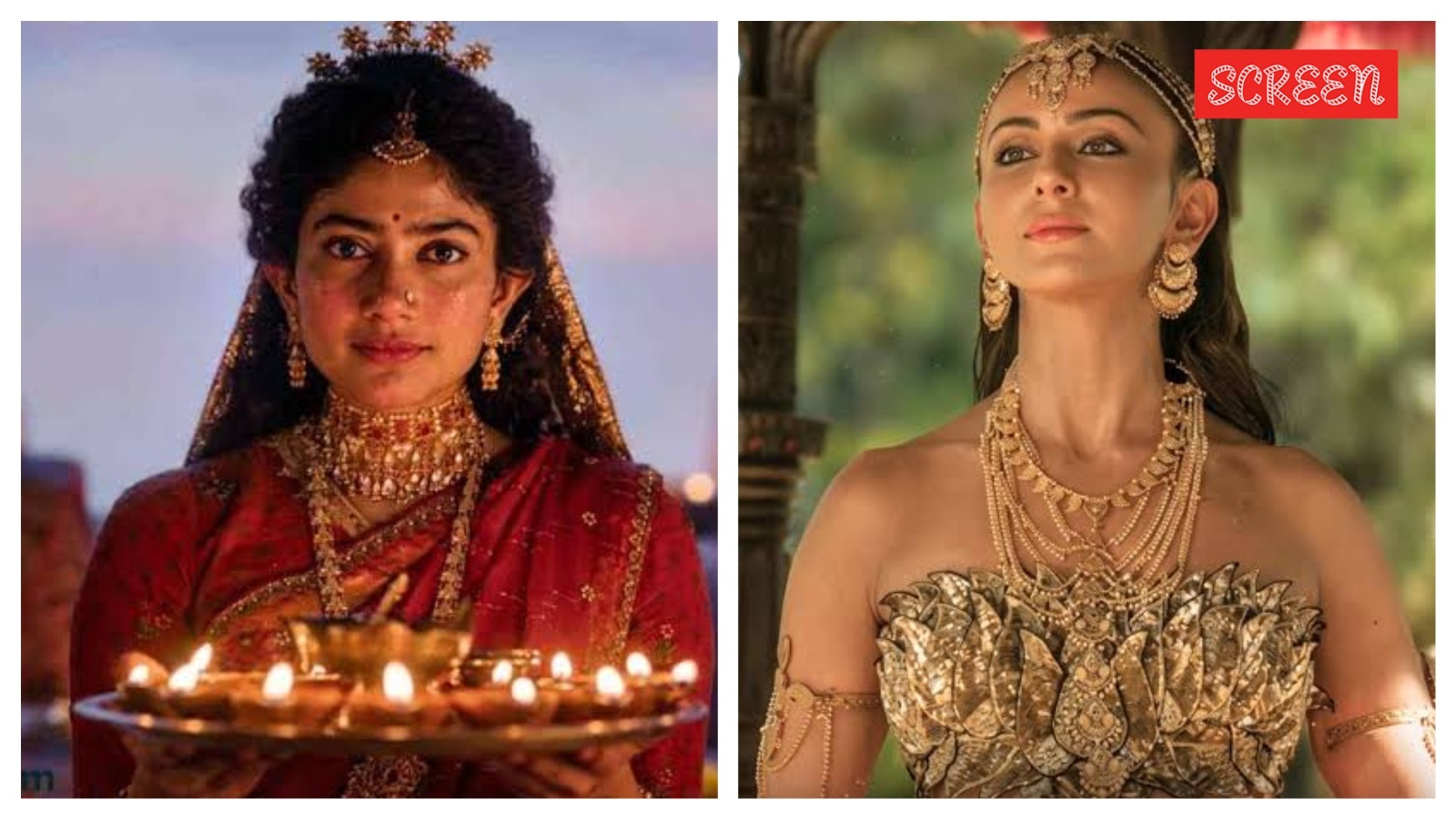
It’s a man’s world. But the women of Ramayana never took their fate lying down. They bounced back, reclaimed their agency, and fought, conspired, and persisted to make cosmos-altering moves, for the better or the worse. The Indian epic may have always been billed as the ultimate clash between the good and the evil, between Rama and Ravana, but it wouldn’t have shaped as it did, had it not been for the women on both sides. They not only shaped the men who went on to wage war against each other, but also moved the strings with their heads always held up high. Nitesh Tiwari’s recent adaptation puts the women of Ramayana in focus, not by changing the course of the narrative, but by embellishing it in a course-corrective light, which debunks the common misconceptions that a large section of the Indian audience have harboured, having grown up on reductive interpretations of the original text.
Mothers maketh man
Director Nitesh Tiwari and screenwriter Shridhar Raghavan don’t start Ramayana in Ayodhya. Anupam Kher’s Jatayu paints the world as a battlefield between the good and the evil, the devas and the asuras, as the wise old guard of time. After facing a humiliating defeat at the hands of Indra (Kunal Kapoor), Kaikesi (Shobana) slowly and surely begins to work towards retribution by raising her son, Dashanan, with constant reminders of the asuras’ deprivation and fall from prosperity. “What’s the point of this blood if it isn’t spilt for the sake of our clan?” she says, holding her son’s finger, split open by the relentless recital of the veena. Her quest to reclaim superiority from the devas doesn’t start with spotting her elder son’s devotion and obsession, but years before that, by forging a marriage with sage Vishrava, from whom Ravana (Yash) inherits the boundless propensity for knowledge and penance.
So, when Ravana returns to Lanka all grown up, with Brahma’s boon of immortality intact, and sounds the conch shell upon his arrival, we see Kaikesi turn around with a knowing smile — as if like a divine pawn handpicked by the higher powers, she saw this homecoming coming from a mile away. As her son claims the throne of Lanka, she takes a backseat not because she’s been stripped of her powers, but because her role in shaping his journey is done with. She remains a mute yet unfazed spectator when Ravana kills her son-in-law Vidyuthjiva (Vivek Oberoi) in a friendly duel years later, betting big on the latter spilling “even one drop of blood” from his body.
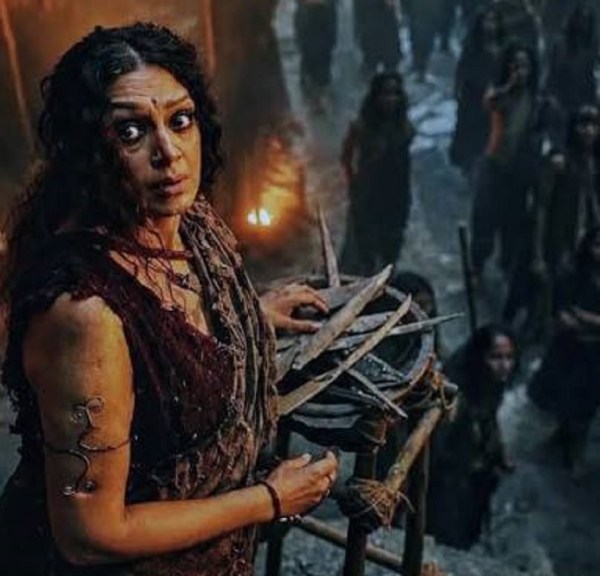 Shobana as Kaikesi in Ramayana. Photo Courtesy: Trailer screengrab.
Meanwhile, in Ayodhya, another mother — Kaikeyi (Lara Dutta) — raises Rama like he’s her own son. Even though he witnesses his biological mother Kausalya’s pain at watching her husband Dasharatha (Arun Govil) get intimate with a much younger wife, Rama continues to get pampered by his stepmother. She feeds him the first bite of every meal, much to the dismay of her biological son, Bharat. It takes another woman, her long-faithful daasi Manthara (Sheeba Chaddha) — to step in and poison Kaikeyi’s mind against Dasharatha, who promises his throne to Rama, much against his initial word to her. She stages a disarray in Kop Bhawan, in turn setting the stage for Rama and Ayodhya’s fate.
Even though guilt and remorse strike her soon after Rama leaves for vanvas (exile) and Dasharatha gets to his death bed, but she knows that like Ravana’s mother who set the wheels in motion (in Kaikeyi’s case, quite literally), the steps can no longer be retraced. As much as she enjoyed her agency — even with Manthara as the catalyst — her job in the larger scheme of things was complete by then. By distancing Rama from Ayodhya, she not only pushed his wife Sita (Sai Pallavi) towards Ravana’s clutches, but also nudged her stepson one step closer to claiming his destiny. It’s the ancient equivalent of sending a privileged son to a boarding school, in this case literally the wild west.
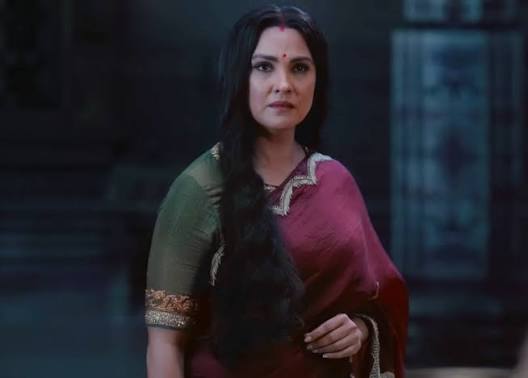 Lara Dutta as Kaikeyi in Ramayana. Photo Courtesy: Trailer screengrab.
Sita’s loyalty to Shurpanakha’s revenge
If it was Kaikesi and Kaikeyi’s generation that put Ravana and Rama on their destined paths, it’s the next generation of Sita and Shurpanakha (Rakul Preet Singh) who make the two men embrace their karmic purpose. Ravana — who starts as a benevolent ruler turning his subjects’ homes into gold and invoking “sayyam” (self-control) when provoked by Maricha (Saurabh Sachdeva) to kill the infant Rama — shows his first sign of unchecked arrogance when he squeezes his brother-in-law to death for challenging his ego. Shurpanakha uses exactly that ego to instigate her brother to avenge the slashing of her nose by Lakshman (Ravie Dubey). She could’ve easily targeted Rama’s loyal, yet volatile brother instead, but he’d have been too menial a reason to stoke her brother’s ego. Mix it with a pinch of guilt (“This happened because of you, bhaiya!”), and voila, all 10 heads of Ravana align to scream revenge.
Similarly, Sita knows Rama too well to let her resign to her fate. Minutes after he declares vachan (giving his word) as the holy grail of a king’s existence instead of inheriting his father’s throne, she reminds him that he also gave his word to her at their wedding, one to always stay together. We don’t see Sita ask her husband for permission, but we only see her relinquish her jewellery to follow in Rama’s footsteps. That’s not because she’s subservient, but because she exercises her agency to go against her husband’s initial hesitation. The boldest aspect of this film’s Sita is not that she wields a sword and slashes the asuras to death, but that whether it’s Rama or Ravana, she doesn’t mind looking the man in the eye and tell her exactly what she wants to.
Story continues below this ad
Nitesh Tiwari chooses well when he chooses not to show Ravana pull Sita aggressively to Pushpak Viman like any abductor would. Sita also doesn’t show resistance or scream for Jatayu’s help, because like the other characters in the film, she’s also resigned to her fate by then. That’s different from being stripped of her agency. She doesn’t pick up weapons because she’s weak, but because she’s arrived exactly where she was meant to — to make Rama surrender the idea of always having to resign to his fate, rise to the occasion, and take matters into his own hands. Him coming to terms with his agency and purpose coincides with the death of Jatayu, who served as the film’s narrator till that point. Thanks to Sita, who leads by example and then invokes the power of manifestation, Rama decides to write his own story, instead of letting the wise and the old narrate it to him. Because it would take a human — not a deva or an asura — to slay Ravana, as per Brahma’s prophecy. Rama was already an incarnation of god, but it’s only by the end of Ramayana: Part 1 that he decides to become a human and take charge of his destiny.
KioskNews shows a cleaned-up reading view extracted from the publisher’s page — the original always lives on their site, not ours.