Japan’s Sumitomo Bakelite expands China chip packaging materials output amid AI boom
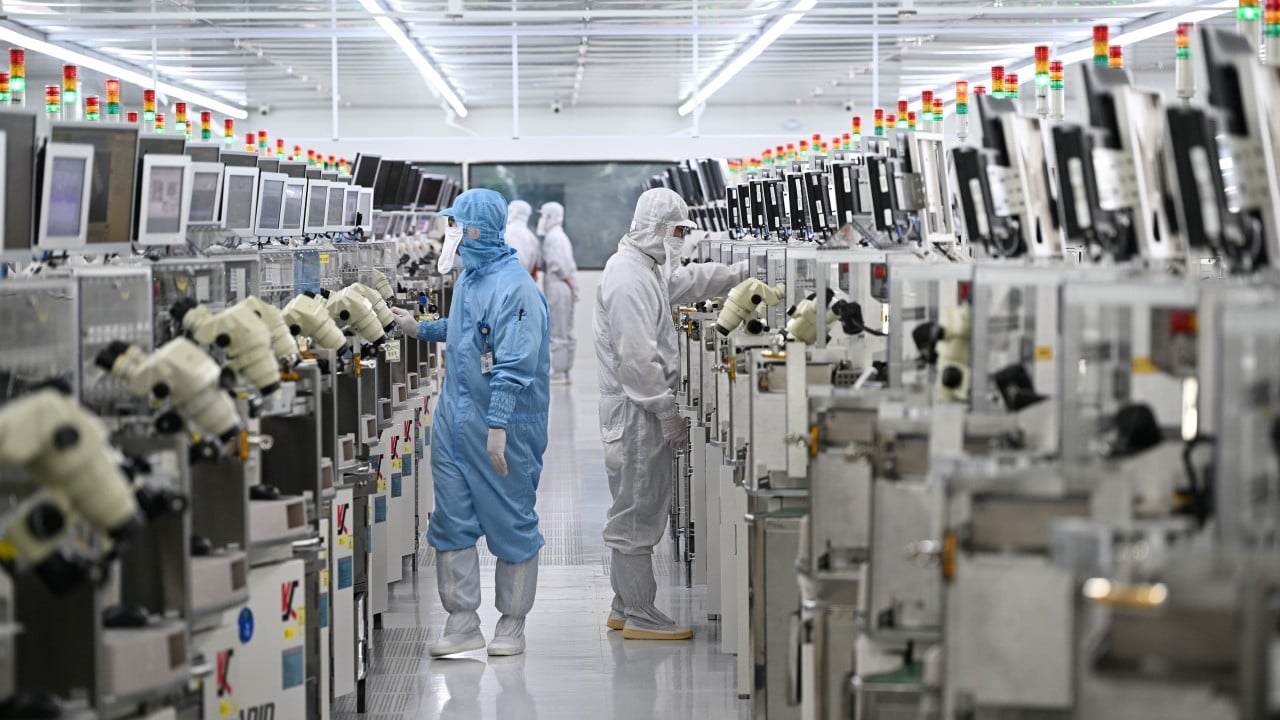
Japanese semiconductor materials giant Sumitomo Bakelite plans to expand production of advanced chip packaging materials in China and Singapore, marking the second such announcement for its Chinese operations in less than four months as artificial intelligence drives demand for more sophisticated semiconductors.
The Tokyo-based company said on Friday that it would add production lines for mould underfill (MUF) materials and compression-moulding granules at its facilities in Suzhou, eastern China’s Jiangsu province, and Singapore. The company did not disclose an investment amount.
The expansion is expected to roughly double the company’s production capacity for MUF materials and triple that for compression-moulding granules compared with current levels, according to its statement.
The Suzhou lines will be installed as part of an expansion of an existing factory completed in 2024, with production scheduled to begin in fiscal 2030. The Singapore lines, also to be added to an existing facility, are expected to begin operations at the end of fiscal 2028.
The investment underscores the growing importance of advanced packaging materials in the semiconductor supply chain, as the AI boom drives demand for more powerful chips with increasingly complex packaging structures.
Sumitomo Bakelite said demand for advanced semiconductors used in generative AI and communications satellites was growing rapidly, particularly in China and Southeast Asia, requiring packaging technologies capable of accommodating larger, thinner and more densely integrated chips.
MUF materials are used to fill microscopic gaps around semiconductor connections while encapsulating the package, helping improve reliability and manufacturing efficiency. Compression-moulding granules allow manufacturers to produce larger packages with reduced warpage to improve chip reliability.
Global revenues for semiconductor packaging materials rose 9.3 per cent to US$27.4 billion in 2025, according to industry association Semiconductor Equipment and Materials International, known more as Semi. China is the world’s second-largest market for semiconductor materials, which include wafer fabrication materials, with revenue of US$15.6 billion, behind Taiwan’s US$21.7 billion.
Chinese semiconductor makers are also stepping up investments in advanced packaging. In September, Shanghai-listed Biwin Storage announced plans to invest 4.5 billion yuan (US$672 million) in a new phase of its wafer-level advanced packaging and testing project, building on earlier investments in technologies including 2.5D packaging and redistribution layers.
The latest announcement comes less than four months after Sumitomo Bakelite disclosed a separate expansion plan for its Suzhou facility, when it said new production lines would increase its semiconductor encapsulation materials capacity in China by about 30 per cent, with operations expected to begin around December 2028.
The Japanese company has manufactured semiconductor packaging materials in China since 1997, gradually expanding its production footprint to meet growing local demand.
Sumitomo Bakelite is one of the world’s largest suppliers of semiconductor encapsulation materials, with an estimated global market share of about 40 per cent, according to figures previously disclosed by the company.
The expansion also comes as the Japanese materials maker seeks to strengthen its position in the global advanced packaging market through acquisitions.
In January, it agreed to acquire part of Japanese electronics manufacturer Kyocera’s chemical materials business for around 30 billion yen (US$189.6 million), including operations producing semiconductor encapsulation materials and bonding pastes.
The transaction, expected to be completed by the end of October, also covers chemical materials operations in Wuxi, another manufacturing hub in China’s Jiangsu province.
Sumitomo Bakelite said the acquisition would add further MUF and compression-moulding materials capacity to its existing operations, strengthening its supply network across Japan, China and Southeast Asia.
KioskNews shows a cleaned-up reading view extracted from the publisher’s page — the original always lives on their site, not ours.