WHAT WE’RE WATCHING: Fractured nation, fractured family: The politics and precarity of fatherhood in turbulent times
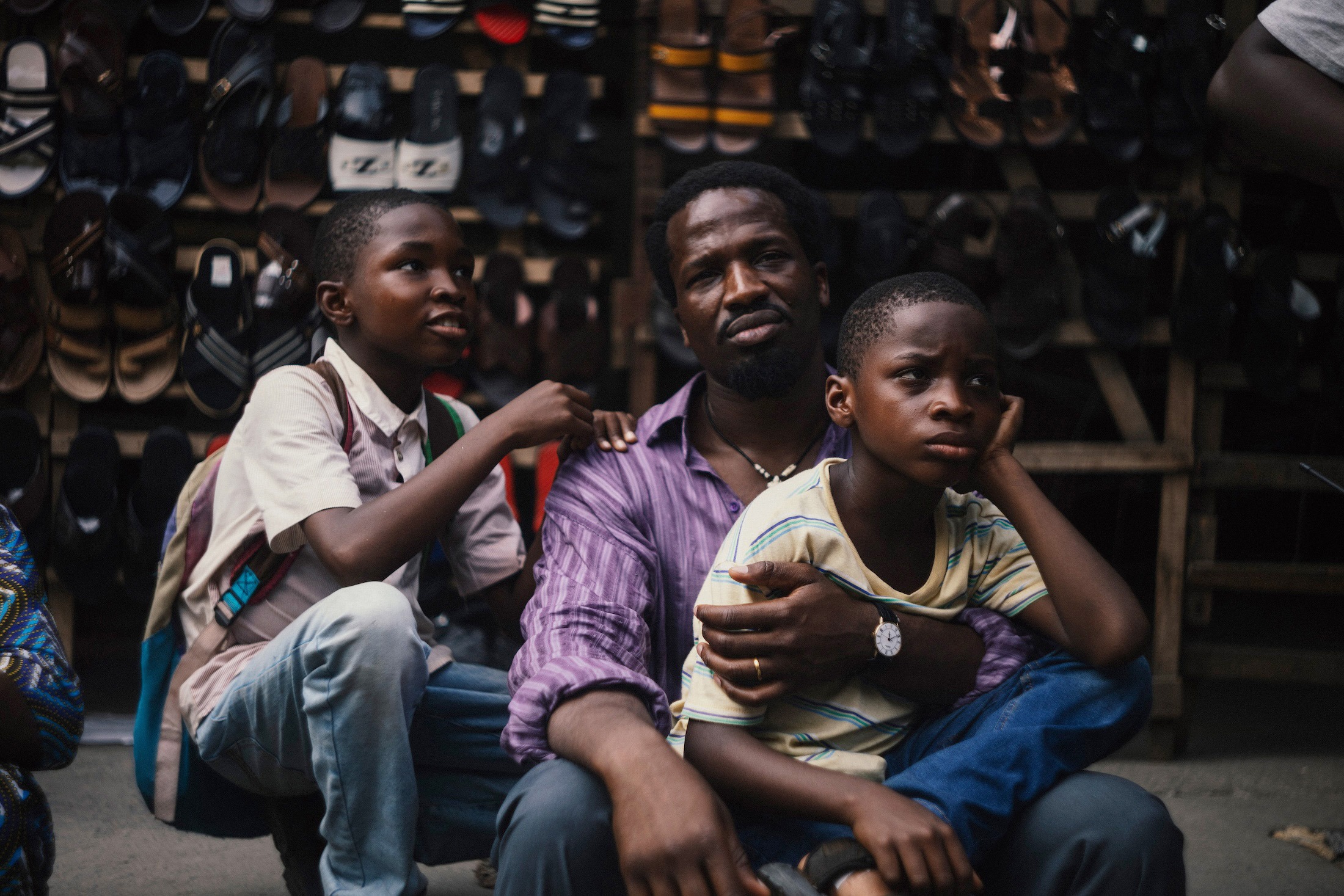
In 2023, a reported 35.6% of South African children lived with their biological fathers in the same household. A total of 40.3% lived with men who were not their biological fathers.
These figures were published in the third and latest State of South Africa’s Fathers report in 2024. But fathers, and consequently the various states of fatherhood, are not unique to South Africa.
No relationship – no parenting or family dynamic – exists in a vacuum. They brush up against their societal and political environments, and not without collisions.
This reality comes to the fore in the curation of the 2026 European Film Festival South Africa, where the theme is families: “The families we’re born into, the families we create, the histories we carry, and the connections that shape who we become.”
While the programme showcases titles from several countries exploring a range of family structures – from young motherhood in Belgium and children of divorced parents in the Netherlands to a quest for ancestral history in France – three films in particular stand out in their converging conversations around fatherhood in times of social and political strain.
Fatherhood in an abandoned state
Set in 1990s Nigeria, My Father’s Shadow follows two young brothers (played by real-life siblings Chibuike Marvellous Egbo and Godwin Egbo) over the course of a day spent in Lagos with their estranged father (Ṣọpẹ́ Dìrísù), who is determined to receive his long-overdue wages from his work supervisor.
Stagnation lingers in the air at the film’s onset. The corners of wooden doorframes have been eaten away by time. Sun streaks are the only presence in a seemingly abandoned house.
Outside, meanwhile, a car stands out of action, decayed nearly as much as the rotten fruit discarded by the trees. Black birds circle in the sky far above the heads of the two boys playing outside. Until, as if by conjuring, their father appears like he’s been home all this time.
But something is amiss.
Like the encircling black birds, which become an omen throughout the family’s day, the rupture of Nigeria’s 1993 elections trembles beneath the surface of their trip. The downfall of a people’s hope for their nation becomes both a parallel to, and the reason for, the downfall of a family.
Co-written by director Akinola Davies Jnr and his brother Wale Davies, My Father’s Shadow is inspired by their personal experiences of growing up without their father.
“It was important for us to tell this story because we wanted to create something that spoke about generational grief,” Davies Jnr told the European Film Festival South Africa. “Because we feel as Africans, especially black Africans, we don’t talk about our experiences when someone dies.”
The remains of a faltering (father)land
Travelling about 50 years earlier to 1949 Germany, Nobel Prize-winning writer Thomas Mann (Hanns Zischler) and his adult daughter Erika (Sandra Hüller) travel across a Germany in ruins after their 16-year-long exile in the US.
Fatherland stays true to director Paweł Pawlikowski’s characteristically understated, black-and-white style that accompanies his concise probing into the human realities of post-World War 2 Europe.
On a similar, yet situationally distinct, thematic impulse to My Father’s Shadow, Fatherland sheds light on the futility of detangling the political and historical from the personal. The film draws a parallel between a divided nation and its people, who are both making sense of what remains of their fractured homeland and families.
The notion of home – of fatherland – is at the film’s heart. If Mann is not being interrogated about his political and national alignments by the press, he’s confronting the question of belonging behind closed doors.
“Let’s go home,” his daughter says during a moment of emotional surrender about the news the family had received – and repressed.
“Where is that?” he responds.
Family is not built on blood alone
Unlike the contextual specificities of Fatherland and My Father’s Shadow, Aquí exists somewhere between reality and myth, set in a time that belongs to neither the present nor the past or future.
Tiago Guedes’ Aquí is an adaptation of JM Coetzee’s Jesus trilogy: The Childhood of Jesus, The Schooldays of Jesus and The Death of Jesus. The saga tells the story of David, a boy who gets separated from his mother during an unnamed, dystopian-like crossing into a “new life”, and Simón, the man who finds the child and incidentally becomes his father.
Although the story can be read through its biblical allegory, the adaptation finds its grounding through its portrayal of surrogate kinship.
David habitually asserts that David is not his name nor Simón his father, but, at the end of the day, Simón is the man who secures them shelter, answers the “whys” of life, and even finds the child an “adoptive” mother.
“A family can take many forms,” Simón tells the child. “Ours is one of them.”
Like Fatherland, the question of belonging permeates: Is it found in a shared language, even if it’s not your native tongue? Or perhaps it’s in abiding by ideologies that might not be one’s own.
/file/attachments/orphans/fatherhood-euffsa2026c_578157.jpg "Manolo Solo and Álex Peláez in Aquí. (Photo: European Film Festival South Africa)")
/file/attachments/orphans/fatherhood-euffsa2026b_719771.jpg "Sandra Hüller and Hanns Zischler in Fatherland. (Photo: European Film Festival South Africa)")
By bringing these films together, the 13th edition of the European Film Festival South Africa ignites a discourse around the nuances of fatherhood.
In Nigeria, a father’s parental duties cannot break free from the bared teeth of government corruption, which tears not only into the hope for a nation’s future but also into that of a family’s fate.
A famed father in Germany is on a road trip with his grown daughter as they navigate the collapse of both their family and the country that they’re no longer sure they can call home.
In a surreal time and place, a family with no blood relation do whatever it takes to protect a child from a governing system to which he resists conforming.
Through a mutual curiosity about the role of a father and what it takes for that fatherhood to endure its circumstances, these films raise questions that reach far beyond the fictional realm.
What does it mean to protect a child amid national uncertainty? How does a child survive an absent father? And can a father survive his country’s undoing? DM
My Father’s Shadow, Fatherland and Aquí are screening at the European Film Festival South Africa that takes place from 17 to 27 September 2026.
KioskNews shows a cleaned-up reading view extracted from the publisher’s page — the original always lives on their site, not ours.