Country diary: A dreadful den of murder and thievery – or is it? | Merryn Glover
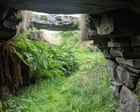
The word “cave” is full of possibility. It speaks of darkness, secrets, treasures and escapees, all of which can be found in the stories of Raitts Cave, which lies in a field near the hamlet of Lynchat, Inverness-shire.
Its Gaelic name is An Uaimh Mhor, “the great cave”, and one legend claims it was built by giants, the females hollowing out the earth and carrying the soil in their aprons to dump in the River Spey, while the males cut its massive stone slabs from the hills above. Because, in fact, it is not a natural cave, but a subterranean passage, shaped like a horseshoe and lined with stone.
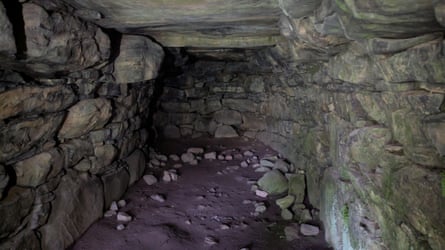
Another tale attributes it to the 11 strapping sons of a local freebooter from the powerful 13th-century Clan Cumming (or MacNiven), who used it to stash their loot and hide from the law (or the laird, who tricked them by disguising himself as a beggar). Justice, or vengeance, eventually caught up with them, and the brothers were hauled out and executed at the cave’s entrance.
Or, it could have been the hiding place of escaping Jacobites after Culloden, who were burned alive inside. Or indeed a shelter for persecuted worshippers.
The identities of the builders, the hiders and the avengers and their various fates change with each version of the story, but the evidence is scant. Officially, archaeologists first excavated the site in 1835, and called it an erd house – “earth shelter” – and later a souterrain, an underground space constructed by humans. At some point, the central roof was removed, giving access to steps and a narrow tunnel on one side, and a large covered chamber at the other.
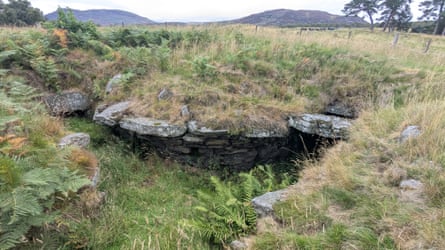
Further digs have dated it to the late iron age (100-400 AD) and the conclusion is that it was a storeroom, probably for food, serving a roundhouse above. Bother. What about all the magic and calamity? I hearten myself that the academic’s mundane deductions do not rule out other thrilling escapades, and I explore the cave in the vivid company of giantesses, thieves, fugitives and murderers – who are, of course, much more fun in folklore than reality.
KioskNews shows a cleaned-up reading view extracted from the publisher’s page — the original always lives on their site, not ours.