Data centres should stop riding roughshod over locals
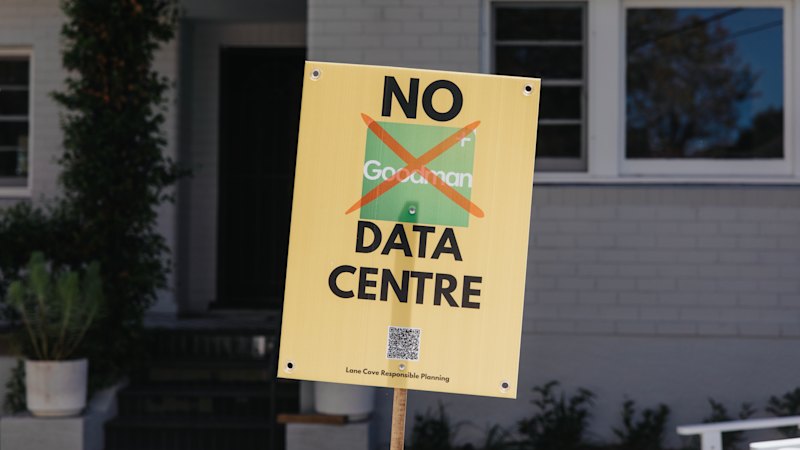
Data centres promise jobs and economic development but as the AI-driven fourth industrial revolution spreads across Sydney, tech titans need to take local communities along with them.
That is the clear lesson from the industrial property giant Goodman Group’s decision to back away from building an $800 million, 24/7 data centre at Lane Cove amid resident protests and concerns by utility providers Sydney Water and Ausgrid that the development would strain existing infrastructure and increase electrocution and fire risks.
It is not the only pushback to hit the booming industry: a proposal to build a data centre in North Katoomba was knocked back last June after local opposition, and Kogarah residents are protesting a data centre on the banks of the Cooks River as part of the redevelopment of the old Kogarah Golf Course.
The Lane Cove retreat should ring alarm bells among advocates and those politicians who see data centres as a cargo cult that Australia must embrace or risk being left behind. On the eve of the state budget in May, Treasurer Daniel Mookhey said if not for strong investment in data centres and renewable energy projects, the NSW economy may be in recession.
Australia already ranks fifth as a data centre hub behind the United States, Europe, China and Japan, with Sydney and Melbourne in a race to be the data capital of the Asia-Pacific. Up to $42 billion is expected to be invested in Australian data centres over the next five years, more than doubling capacity from about 1500 megawatts now to 3700 megawatts. Australia has about 165 data centres in operation and 225 in development.
NSW government guidelines require the needs of communities, households and businesses to be protected, and for centres to pay for the energy and water they require and to manage the environmental impacts of their operations.
Data centres are certainly a welcome addition to NSW to ensure our state maintains its economic and technological lead. Our abundant renewable resources, stable governance and Asia-Pacific location make it a natural hub for trusted AI services.
The benefits of the boom must outweigh the costs.
Investment in data centres has eclipsed the value of residential construction. ABS figures show that in the first quarter of 2026 the value of residential construction fell to $27 billion while most of the $83.4 billion spent on commercial property was on data centres. The data centre boom sits awkwardly beside the inability of both private enterprise and the government to deliver enough homes and flats to address the continuing and worsening housing crisis in Sydney.
It should not be a case of one or the other. But government must get its priorities right. Thought must be given to the impact on water supply and infrastructure to ensure benefits to communities, businesses and the broader economy from this important infrastructure are not outweighed by a drain on essential resources.
As the AI data centre boom sweeps Sydney suburbs a growing revolt is gathering pace. Lane Cove is a canary in a coal mine and tech companies would do well to recognise the scale of public opposition, and ensure they listen to and act upon public concerns.
Start the day with a summary of the day’s most important and interesting stories, analysis and insights. Sign up for our Morning Edition newsletter.

KioskNews shows a cleaned-up reading view extracted from the publisher’s page — the original always lives on their site, not ours.