Pagadian opens banana tissue culture laboratory
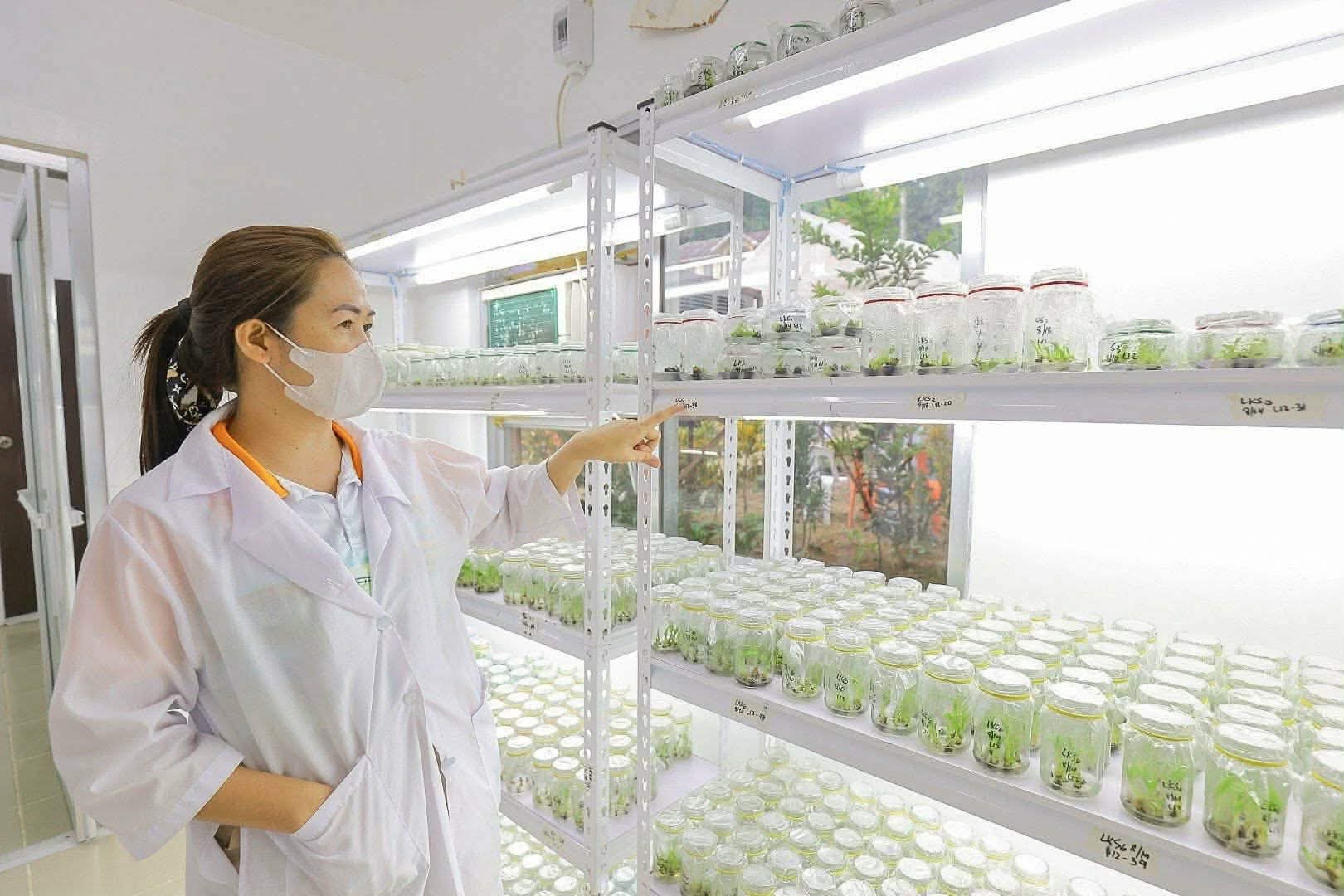

PAGADIAN CITY, Zamboanga del Sur – Local banana growers here are set to benefit from disease-free planting materials with the opening of a local government unit (LGU)-owned banana tissue culture laboratory on Wednesday.
The facility, located in Barangay Macasing, marks a major agricultural milestone as the first fully functional banana tissue culture laboratory in the Zamboanga Peninsula (Region 9). While similar ventures were attempted previously across the region, Pagadian City is the first LGU to sustain operational culture production successfully.
“Many have tried and started similar laboratories, but so far, we are the only one who sustained it,” said city agriculturist Engr. Ramon Rodrigo Jr. “We hope to continuously propagate tissue-cultured seedlings through this facility.”
Article continues after this advertisement
READ: DA invests P6M in labs to support bananas, other crops
FEATURED STORIES
NEWSINFO
NEWSINFO
NEWSINFO
Designed to uplift rural livelihoods, the laboratory directly supports City Mayor Samuel Co’s initiative to convert idle city lands into productive agricultural areas.
The facility will primarily produce high-yielding Lakatan banana seedlings to address the city’s persistent local market deficit.
“Currently, our local market lacks a steady supply of locally grown bananas,” Rodrigo noted, adding that existing produce from upland barangays like Lison Valley remains insufficient.
Bananas offer immediate benefits—first for household consumption, and second for commercial sale. “If production scales up significantly, we will prepare market linkages outside Pagadian, such as Manila and Cebu,” he added.
Article continues after this advertisement
The laboratory eliminates the financial burden on smallholder farmers, who previously had to buy expensive seedlings brought in from other regions.
To encourage adoption, Co announced that initial distributions of Lakatan seedlings will be free of charge to small-scale and backyard growers, alongside technical monitoring from the City Agriculture Office.
Article continues after this advertisement
READ: PH slips to No. 4 in banana export ranking
“For those doing backyard farming, we will provide the seedlings for free,” Co stated. “However, for large-scale commercial plantations requiring hundreds or thousands of seedlings, planting materials will be offered at a minimal cost.”
Your subscription could not be saved. Please try again.
Your subscription has been successful.
The Macasing laboratory currently yields 5,000 to 10,000 seedlings per cycle, with a maximum capacity to produce up to 15,000 tissue-cultured plantlets. /coa
KioskNews shows a cleaned-up reading view extracted from the publisher’s page — the original always lives on their site, not ours.