Beyond GDP Debate: Why India's Real Economic Story Isn't About Numbers
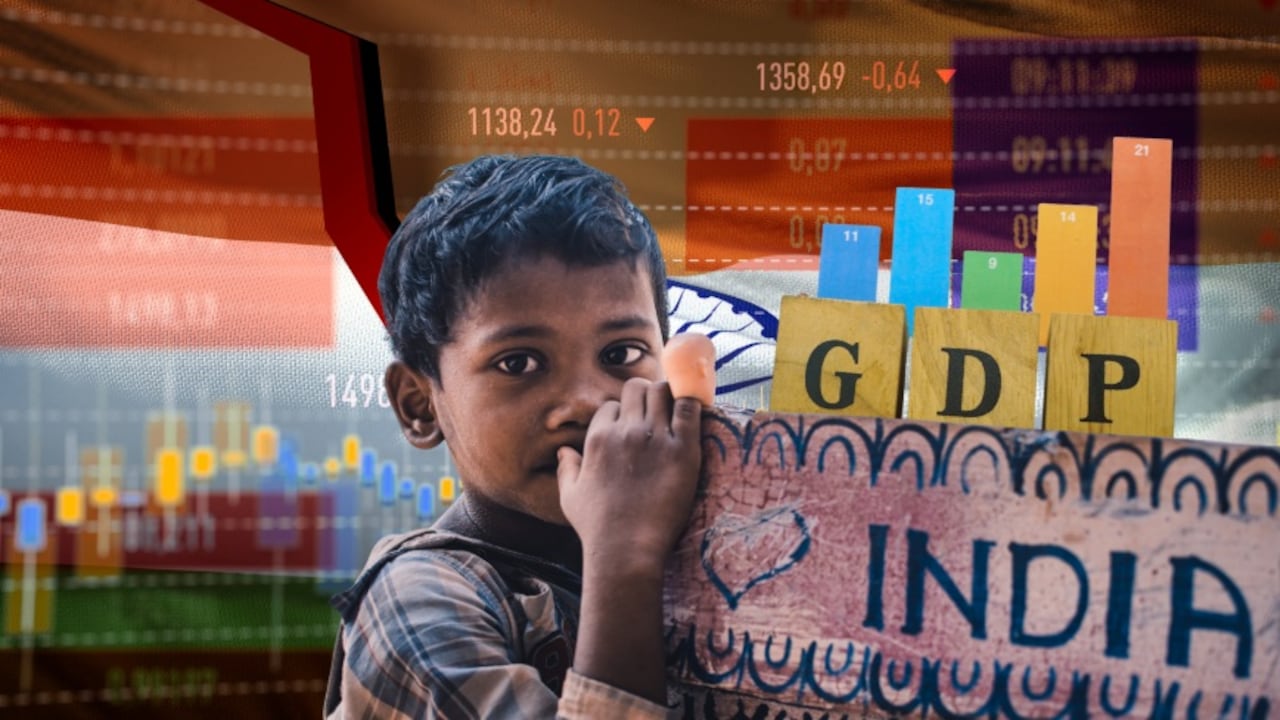
Numbers make headlines. But they rarely tell the whole story.
Every few months, a fresh set of GDP growth figures lands. Economists argue. Political camps trade barbs. TV panels get loud. And somewhere in the noise, the real question gets lost.
Is GDP even the right yardstick anymore?
Vivek Singhal, Founder and CEO of Strategic Business Management Co, thinks the debate itself is missing the point. In his view, the fight over statistics is a distraction from a much bigger conversation about what a modern economy should actually be trying to achieve.
"The recent debate over India's GDP numbers should be understood as more than a statistical controversy," Singhal says. "It raises a deeper question for 21st-century economics: what exactly are we trying to maximise?"
Two Things Can Be True At Once
Here's the thing about India's growth story right now. It's strong. But it's also under scrutiny.
"A confident India should be able to recognise strong economic momentum and, at the same time, welcome rigorous scrutiny of methodology, revisions and transparency," Singhal told NDTV. "These are not contradictory positions. Trust in economic statistics is itself a form of national capital."
To understand where India is headed, it helps to look at where the world has been.
Industrial-age capitalism grew up on opposites. Capital versus labour. Producer versus consumer. Market versus state. Growth versus equality. Pick a side, win the argument.
This "Either/Or" thinking built enormous wealth. Nobody disputes that. But it also left scars -- concentration of wealth, exclusion of the many, and decades of conflict over who actually gets to keep what's created.
Singhal calls this "Dominion Capitalism". Its core question is: how much can we produce, own and capture?
It's an old operating system. And India, he argues, doesn't need to run on it anymore.
Enter 'Dharma Capitalism'
Instead of asking how much can be captured, Singhal proposes a different question entirely -- one rooted in an old Indian idea, applied to a very modern economy.
"Dharma asks: How can capital, markets and technology expand human capability while creating sustainable prosperity?"
Notice what's missing here. No mention of rejecting markets. No anti-capitalism angle. Singhal is careful about that. "This does not mean rejecting capitalism," he clarifies.
Capital and consumption were never enemies. Here's a myth worth busting. A lot of economic commentary treats capital and consumption as rivals -- as if a rupee spent on infrastructure competes with a rupee spent on a family's groceries.
Singhal doesn't see it that way. Capital builds the roads, the factories, the power grids, the data centres, the innovation pipelines. Consumption is what turns rising incomes into demand for all of it. One feeds the other.
But there's a piece often left out of that equation -- the bridge connecting the two: human capability.
Capital, in this framework, isn't just meant to build assets. It's meant to build people -- turning them into sharper creators, entrepreneurs, workers, savers and investors. Not passive consumers waiting for the next paycheck.
So, What Happens To GDP?
Nobody's saying scrap it. GDP still matters. It measures output, and output matters. But Singhal's argument is that GDP should be one dial on the dashboard -- not the entire dashboard.
An economy can grow on paper while people underneath feel stuck. A single number can't capture dignity, capability, or trust. Those need their own gauges too.
As India chases its Viksit Bharat ambitions, the temptation is to obsess over rankings -- who's the third-largest economy, who overtakes whom, who climbs where.
Singhal thinks that's aiming too low. "The larger opportunity is not merely to climb global GDP rankings," he says. "It is to demonstrate that economic scale can coexist with human flourishing."
KioskNews shows a cleaned-up reading view extracted from the publisher’s page — the original always lives on their site, not ours.