Gurugram groundwater extraction hits 213% of limit, ban proposed
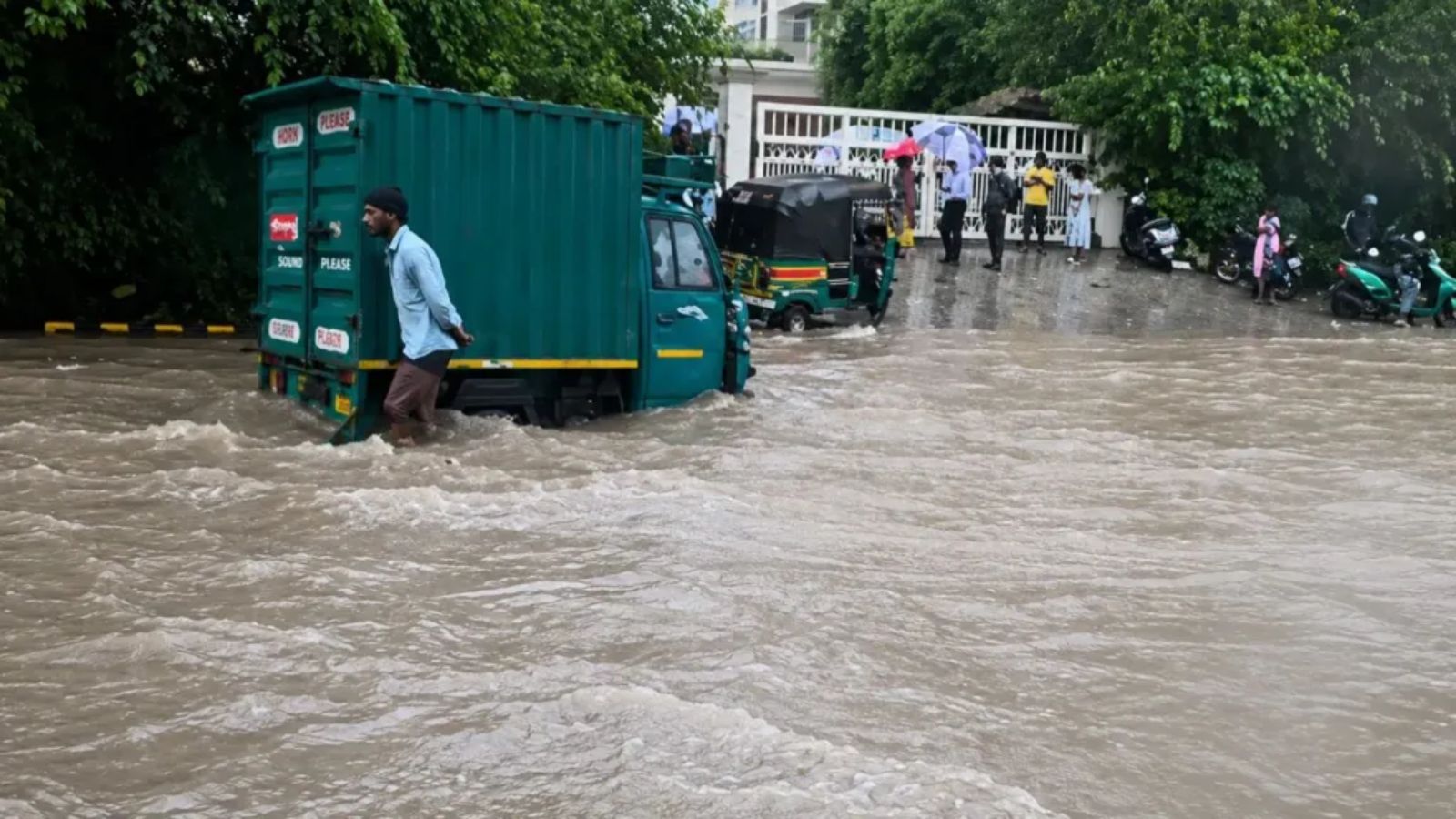
The submission called for restoration of identified water bodies, their catchments and feeder channels. (File Photo)
Gurugram is extracting 43,263 hectare metres of groundwater a year against an extractable limit of 20,333 ha m – 212.77% of the limit. In view of this, environmental activist and lead petitioner Sunil Singh has proposed before the Punjab and Haryana High Court a complete ban on groundwater extraction, a freeze on new construction without an assured surface water supply and judicial oversight for restoring water bodies.
The proposals are part of a case that has been before the HC for nearly two decades. Singh had approached the court in 2008 against alleged rampant and unauthorised tubewell extraction by builders in developing sectors. The case has since involved the wider issue of groundwater depletion and restoration of water bodies in Gurugram.
The latest proposals come ahead of an administrative review on October 5 — to be attended by members of the GMDA, HSVP and MCG as well as the petitioners, among others — after a division bench of Chief Justice Ashwani Kumar Mishra and Justice Rohit Kapoor described the groundwater situation in Gurugram as “grim” on October 1. After the court was told that groundwater had plunged to 40 to 50 m across Gurugram, it had noted that annual groundwater extraction in the district was twice the replenishable resource.
“We expect the authorities to examine the issues threadbare and to suggest appropriate measures as would ameliorate the worsening situation of ground water in Gurugram. It is to be kept in mind that the present generation is only a trustee for the futures to come and if we loose natural resources like groundwater in the manner like it is happening, the future generation would have to face disastrous consequences,” the HC had said.
In his submission, Singh has said, “It is suggested that all groundwater extraction through borewells in Gurugram, whether registered, permitted or unregistered, should be prohibited. All existing borewells should be identified, geo-tagged and sealed in a time-bound manner, and all existing permissions/NOCs for groundwater abstraction should remain suspended during this period. No fresh borewell, renewal of permission or enhancement of the permitted quantity should be allowed.”
Singh also proposed that no fresh construction be permitted unless authorities demonstrate an assured and sustainable source of water other than groundwater.
The submission called for restoration of identified water bodies, their catchments and feeder channels.
Story continues below this ad
Citing a GMDA survey that has found 826 of 1,216 water bodies to be retrievable, the affidavit highlighted that “305 existing public water bodies covering about 393 acres and more than 140 natural low-lying water-collection areas covering about 412 acres, which have substantial potential for restoration and groundwater recharge”.
To overcome administrative delays, Singh proposed that restoration of the water bodies identified in the GMDA inventory be carried out under the supervision of a former judge of the highest judiciary.
Further, he proposed a ‘Zero Discharge / Maximum Reuse’ system. Maintaining that a 300 MLD irrigation network remains underutilised because of sewage treatment shortfalls, the affidavit suggested that “no untreated sewage or industrial effluent should be permitted to enter stormwater drains, natural water bodies, open land or groundwater”.
At present, against a working demand of 770 MLD, GMDA supplies 670 MLD. The remaining 100 MLD is drawn through tubewells operated by the municipal corporation and private builders.
Story continues below this ad
The October 5 meeting will examine discontinuing groundwater extraction in areas where GMDA canal supply is available. The administration is to file a compliance affidavit before the HC on October 8.

Abhimanyu Hazarika is a Senior Correspondent with The Indian Express, based in Gurgaon. He covers southern Haryana. Education - Post-Graduate Diploma in Print Media, Asian College of Journalism (Class of 2020) - B.A. (Hons) Liberal Arts with a major in Political Science, Symbiosis School for Liberal Arts (Class of 2019) Professional Experience Before joining The Indian Express, he worked with Bar & Bench (legal journalism) and Frontline magazine, where he developed experience in court reporting, legal analysis, and long-form investigative features. Reporting Interests His work centres on civic accountability, environmental policy, urban infrastructure and culture, crime and law enforcement, and their intersections with politics and governance in and around Gurgaon. Recent Coverage (2025) - Crime: Reported on the recovery of 350 kg of explosives and an AK-47 from a rented house in Faridabad, linked to the 2025 Red Fort car explosion case (November 11, 2025). - Environmental policy: Covered protests outside a Haryana minister’s residence against a Supreme Court order that environmentalists argue could allow mining and real estate development on large parts of the Aravalli hills (December 21, 2025). - Pollution control measures: Co-authored coverage of the Rekha Gupta government’s enforcement of vehicle restrictions at Delhi-NCR borders (December 21, 2025). - Road safety and infrastructure: Examined response lapses in the Delhi-Mumbai Expressway hit-and-run case and ongoing investigations into high-speed road crimes in Gurugram. - Animal welfare policy: Reported on concerns regarding the low budget allocated for stray dog sterilization by the Municipal Corporation of Gurugram (November 30, 2025). - Urban culture: Featured the social media-driven popularity of a new Magnolia Bakery outlet in Gurugram (December 15, 2025). Contact X (Twitter): @AB_Hazardous ... Read More
KioskNews shows a cleaned-up reading view extracted from the publisher’s page — the original always lives on their site, not ours.