Meta’s Muse Charm AI device to cost $300, offer 12 months of free 5G data: Report
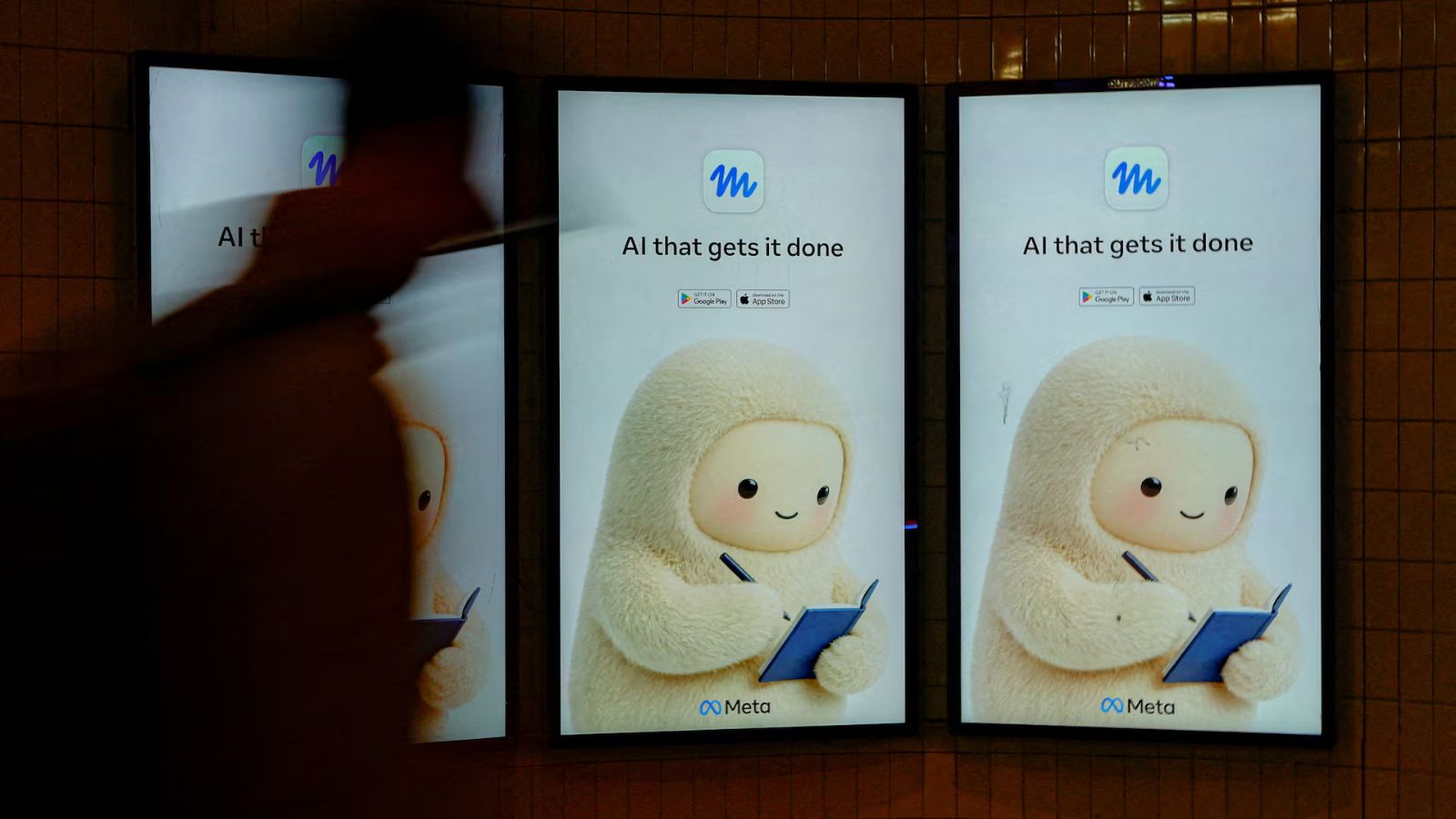
A commuter walks past Meta Muse ads displayed on screens at a subway station in New York City, US, on October 29, 2026. (File Image: Reuters/Jeenah Moon)
Meta Platforms is reportedly planning to price its pocket-sized AI device, Muse Charm, at $300 and offer buyers up to 12 months of free 5G data from Verizon, The Information reported on Thursday, citing a person familiar with the matter.
The device, which carries the viral Muse AI agent into the real world, was unveiled in September by chief executive Mark Zuckerberg during the company’s annual conference. Meta is expected to launch Charm in time for the holiday shopping season in December, according to Zuckerberg’s comments at the company’s Connect event.
A built-in 5G modem allows users to access Muse even without Wi-Fi. The device features a roughly 2-inch (5-cm) screen that can be navigated with a thumb, with a customisable Muse character at its centre. Users can tap the gadget to access Muse directly, bypassing AI apps on their smartphones. However, the device cannot make calls.
Verizon did not immediately respond to Reuters‘ requests for comment, while a Meta spokesperson said, “We’re charmed by the interest in our AI devices, and we’ll have more to share soon”.
Muse Charm underscores Meta’s broader push to reduce its reliance on Apple and Google’s operating systems by building its own AI platform. By offering users direct access to its AI assistant through a dedicated device, Meta is looking to make Muse a more widely used consumer service.
Muse has gained traction among users as Meta expands its push to make its AI assistant a more widely used consumer service. The AI agent allows users to delegate tasks such as shopping, travel booking and form-filling to an AI agent.
The reported $300 price and the inclusion of up to 12 months of free 5G data could help Meta position Muse Charm as a standalone AI companion rather than an accessory that depends entirely on a smartphone’s internet connection.
KioskNews shows a cleaned-up reading view extracted from the publisher’s page — the original always lives on their site, not ours.