Hong Kong Legco to review tighter rules on access to land records amid concerns
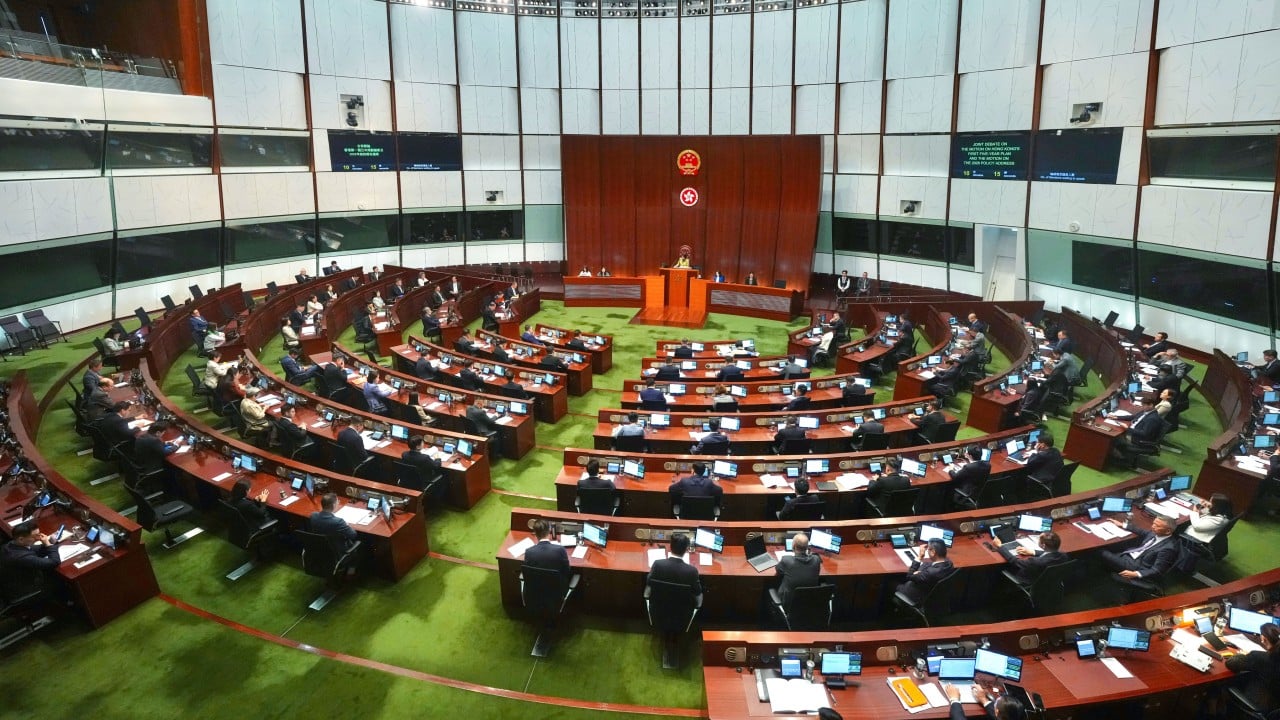
Hong Kong’s legislature will set up a subcommittee to examine proposed restrictions on access to land records following widespread public concern.
At the Legislative Council’s house committee meeting on Friday, lawmakers endorsed establishing the subcommittee to study proposed requirements and procedures under the Land Titles Regulation.
The move came after some legislators and the Hong Kong Journalists Association voiced objections on Wednesday after the government tabled eight pieces of subsidiary legislation – including the Land Titles Regulation covering land record search arrangements – at the Legco for negative vetting.
Under negative vetting, subsidiary legislation is first gazetted and then vetted by lawmakers later.
Most of the provisions, including the tightened search arrangements, are scheduled to take effect in the first half of next year.
On Friday, Legco legal adviser Timothy Tso recommended setting up a subcommittee on subsidiary legislation, noting that his team was still examining the details of the changes.
At least five legislators raised their hands in support, including Election Committee constituency members Rebecca Chan Hoi-yan, Andrew Lam Siu-lo and Thomas So Shiu-tsung, alongside Christine Fong Kwok-shan and Mark Chong Ho-fung.
“I also have concerns over whether referencing specific cases during legislative questioning could inadvertently breach the law [if my team has conducted land searches],” Roundtable lawmaker Chong told the South China Morning Post.
He added that when lawmakers conducted research or gathered real-life cases to address policy issues or assist enforcement – such as targeting public housing tenants who illegally own private property – there were fears of unwittingly crossing legal boundaries.
He noted that while the public previously relied on the media to investigate such matters, uncertainty remained over how individuals or lawmakers should proceed if they performed searches themselves.
He also said that no timeline has been set for when the subcommittee would meet, though the Legco secretariat was expected to issue a notice inviting interested lawmakers to join.

The new search arrangements represent the government’s latest step to tighten public access to information, following similar restrictions imposed on the vehicle and companies registries.
The government has maintained that the city currently does not restrict who can access land records and argued that the new arrangements aim to protect privacy while maintaining system transparency and efficiency.
Under the proposed regime, applicants must select from nine specified purposes to obtain essential property information, such as the names of current and former owners, purchase prices, registration dates, encumbrances, application forms and supporting documents for active entries.
These specific purposes include property valuation, due diligence for transactions, building management, legal proceedings, conducting academic and market research and conducting inspections in the public interest.
Applications filed on public interest grounds will be assessed individually by the registrar, who will consider whether the societal benefit outweighs privacy rights and whether the documents might be misused.
Meanwhile, access to historical records – such as past property transfers or complied building orders – will be restricted to 15 categories of applicants.
While the list does not explicitly include journalists, it permits applications from individuals declaring a public interest purpose, current or former property owners, and professionals.
Lawmaker Christine Fong Kwok-shan said she backed forming a subcommittee because many details remained unresolved, adding that the government needed to clarify the criteria and definition used to approve applications.
The Hong Kong Journalists Association previously criticised the proposals, stating that authorities had failed to justify the changes or consult the public, while warning that the restrictions would undermine society’s ability to monitor the property market.
KioskNews shows a cleaned-up reading view extracted from the publisher’s page — the original always lives on their site, not ours.