For SCO meet, Purana Qila opens cultural walk through 2,000 years of Delhi history
Almost a century ago, a Sanskrit stone epigraph written in the Nāgarī script was recovered from a stepwell in the erstwhile village of Sarban, near the present-day Raisina Road in Delhi. It has since been preserved by the Archaeological Survey of India (ASI).
The inscription referring to Delhi as Indraprastha, which is said to correspond with references in the Mahabharata text, is being rolled out for a specially curated display at Purana Qila, the venue for the first SCO Civilisational Dialogue Forum being hosted by India.
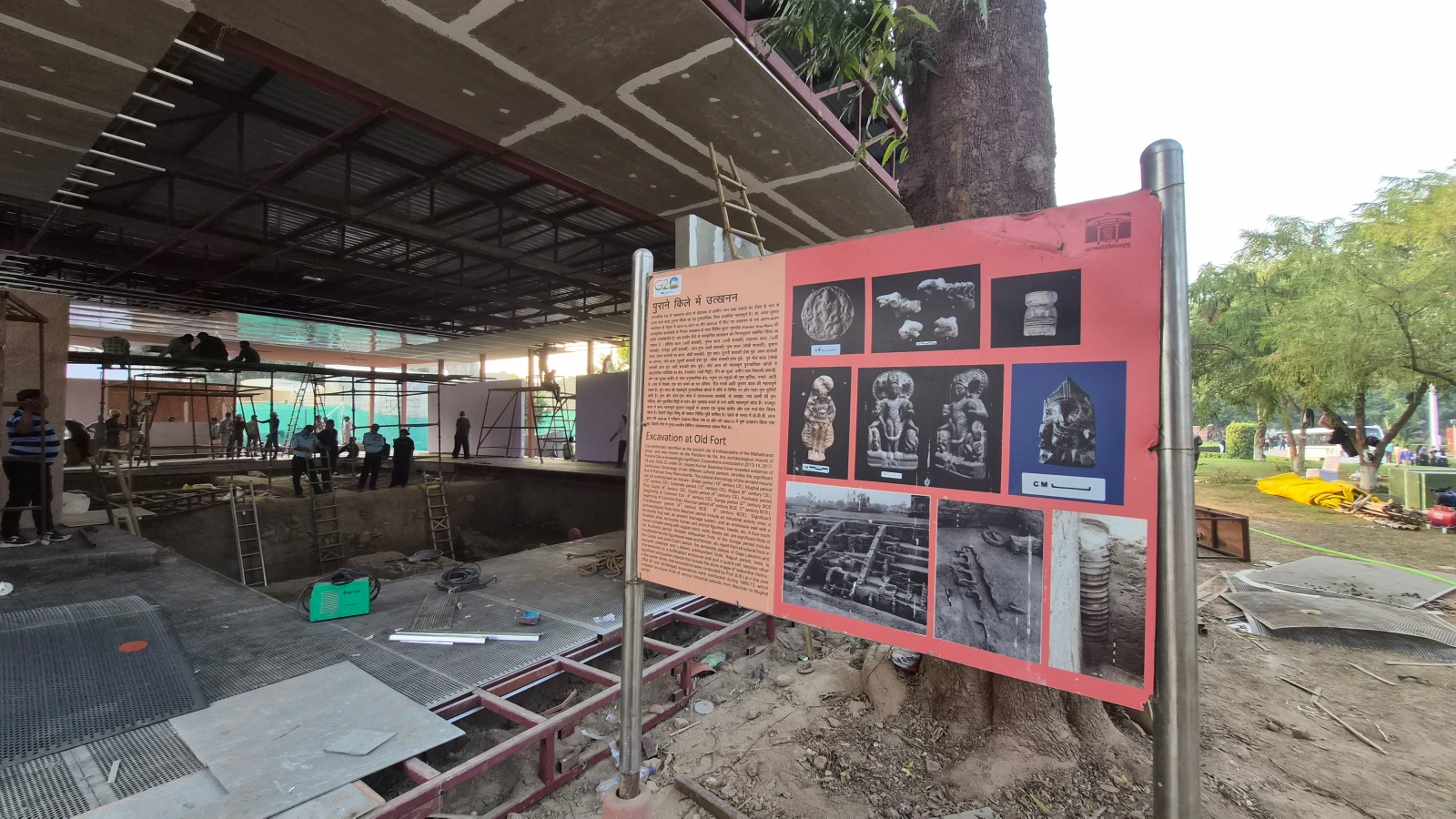
Besides the inscription dating back to the year 1328, delegates for the SCO event will get to see painted grey ware pottery pieces found during earlier rounds of excavation at the site, and an installation of “ashwamegh” (horse sacrifice ritual). These will be displayed around a 10mx10m live excavation site, showcasing over 2,000 years of culture in Delhi.
Called Astitva, the site will be inaugurated by Prime Minister Narendra Modi on Friday and showcased to SCO delegates over the weekend in an effort to highlight India’s cultural and civilisational identity. The first-of-its-kind cultural walkthrough will later be opened to the public.
On Tuesday, the site was the scene of hectic activity, with workers giving the final touches ahead of the Friday deadline, and ASI officials and archaeologists supervising the work.
Vasant Swarnkar, ASI’s Director (Museum), who is leading the present round of excavation at the site, said, “The present digging has reached up to 6.5 metres deep, exposing 2,100 years of continuous history, right from the Mauryan period to the Mughal period. This will be ready for showcase to the public once the SCO forum event is over.”
Swarnkar, who has led earlier seasons of excavation at Purana Qila, said, “At other corners excavated on the same mound previously, we have reached deeper down, finding continuous civilisational traces for 3,000 years.”
Story continues below this ad
The present citadel at Purana Qila is believed to have been built under Sher Shah Suri, but, according to Swarnkar, the excavations point to traces from around the 3rd century BC, the pre-Mauryan period.
On the ASI website, the description for Purana Qila says, “Sher Shah Suri seems to have razed to the ground the city of Dinpanah built by Humayun, and on the same site, which was also perhaps the site of Indraprastha, believed to be the capital of the Pandavas, he raised the citadel of Purana-Qal’a with an extensive city-area sprawling around it.”
The then ASI director B B Lal had unearthed traces of painted grey ware under the mound in the first two rounds of excavations, in 1954-55 and 1969-72. Lal had embarked on a mission to excavate sites mentioned in the Mahabharata text and claimed to have found such traces as a common feature.
Apart from the excavated trench with its story told through special laser effects, a temporary exhibition is being set up for the SCO Forum. Officials said pieces of pottery found here and at other sites relating to the same culture, including Hastinapur, will be on display.
Story continues below this ad
According to Swarnkar, evidence of “ashwamegh” was found here during an earlier excavation, so an installation recreating that will also be created. A model of a four-room house complex from the Kushan period will be on display, besides coins belonging to traders, officials said.
The delegates from SCO countries visiting India, including China, Pakistan and Iran, will get a first-hand experience of India’s civilisational history, officials from the Ministry had said at a press conference announcing the event last week.
KioskNews shows a cleaned-up reading view extracted from the publisher’s page — the original always lives on their site, not ours.