Country diary: From Mexico’s Day of the Dead to a Shropshire allotment | Paul Evans
Gardeners are a deviant lot. Despite our passion for wildlife gardening and the drive to be sustained by, and share, our own fruit and veg, our appetite for novelty, aberrancy and even the spectacularly monstrous is insatiable.
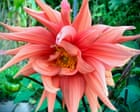
Take a look at this. The flower is the size of a plate and the brightest orange, like Mark Rothko’s painting No. 210/No. 211 (Orange), with a kind of vibrating stillness, maybe the colour of a sugar maple in autumn sunlight. The ray florets are a mass of long, pointed, half‑curled petals, wildly dancing, writhing away from the central boss of golden disc florets.
This exotic vision is a dahlia. We bought a bag of dahlia tubers from the supermarket and planted them in the allotment back in May. We lost the label and, anyway, they grew into three different varieties together, so we’d be none the wiser. One was a small white-tinged pink pompom that flowered in the heatwave, another was a larger white-orange-yellow ball and now this, a semi-cactus in audacious orange.
These flower shapes are part of a dahlia culture that has flourished since their introduction from Mexico in the 18th century. The semi-cactus type originated from a single tuber of Dahlia juarezii sent to Holland in 1872. Since then, hybridisation from all forms of dahlia seeds has resulted in 50,000 varieties.
Although the dahlia’s position in gardening fashions waxes and wanes, dahlias are respectable again, but they have long been an allotment favourite as a cut-flower crop or grown competitively for shows. Our allotment neighbour has rows of gorgeous blooms and immaculate veg in the vernacular tradition.
The stories dahlias have travelled with add to their exoticism. Their symbolic role as the flower of Día de los Muertos (Day of the Dead) has made them the national flower of Mexico, and the festival’s link to Halloween is a potent folklore connection. Even so, the marigold is more historically correct as the primary flower of los Muertos.
Much of what we read about dahlia history from the Aztec and Inca periods is myth, curated by European imperialists. Nevertheless, just like tomatoes, also from Mexico, funky and transgressive dahlias now have a special place in the traditions of British allotments and in our deviant little hearts.
Under the Changing Skies: The Best of the Guardian’s Country Diary, 2018-2024, is available now at guardianbookshop.com
KioskNews shows a cleaned-up reading view extracted from the publisher’s page — the original always lives on their site, not ours.