The 10 Darkest Books of All Time, Ranked

Jeremy has more than 2800 published articles on Collider to his name, and has been writing for the site since February 2022. He's an omnivore when it comes to his movie-watching diet, so will gladly watch and write about almost anything, from old Godzilla films to gangster flicks to samurai movies to classic musicals to the French New Wave to the MCU... well, maybe not the Disney+ shows.
His favorite directors include Martin Scorsese, Sergio Leone, Akira Kurosawa, Quentin Tarantino, Werner Herzog, John Woo, Bob Fosse, Fritz Lang, Guillermo del Toro, and Yoji Yamada. He's also very proud of the fact that he's seen every single Nicolas Cage movie released before 2022, even though doing so often felt like a tremendous waste of time. He's plagued by the question of whether or not The Room is genuinely terrible or some kind of accidental masterpiece, and has been for more than 12 years (and a similar number of viewings).
When he's not writing lists - and the occasional feature article - for Collider, he also likes to upload film reviews to his Letterboxd profile (username: Jeremy Urquhart) and Instagram account.
He has achieved his 2025 goal of reading all 13,467 novels written by Stephen King, and plans to spend the next year or two getting through the author's 82,756 short stories and 105,433 novellas.
Sign in to your Collider account
With a book, you can describe almost anything. Like, not everyone will want to read everything, but there are things that are deemed too obscene to show on screen, even if a movie is accepting that it'll get the highest rating possible. Without visuals, or at least with visuals less intense and realistic than live-action footage, books can get away with having almost anything happen, because you're not really seeing it.
You are probably feeling it, though. The darkest books of all time are a lot to handle, especially if they're also well-written like the ones below, meaning the author always succeeds in painting horrific images in one’s mind, while they're reading. Basically, if you're looking for a comfort read, or something to fall asleep to, maybe give these ones a skip for now.
10 'Nineteen Eighty-Four' (1949)

Nineteen Eighty-Four kind of has to be here, so might as well get it over and done with. If anything, people might be like, “Hey, why isn't it higher?” Maybe it’s just numbing at a point, or maybe it’s got something to do with Nineteen Eighty-Four having a reputation for being bleak, meaning that bleakness isn't really surprising once you get around to it. Maybe a bit of both.
Then again, the numbing effect might be the point, getting you, as the reader, to feel weighed down by the awful dystopia that a few people rebel against to some extent, albeit unsuccessfully. Nineteen Eighty-Four is therefore a hard sell, and harder still because people probably think they know all about it without actually reading the whole thing, though if you can muster up enough emotional fortitude, it is worth taking in, in full.
9 'Gravity's Rainbow' (1973)

Pretty close to apocalyptic fiction without technically being about a definite apocalypse, Gravity’s Rainbow is instead a little easier to summarize as a book about World War II, but emphasis on the “little” part of “little easier.” This is not easy to summarize in any way. Gravity’s Rainbow is absurd, nihilistic, and paranoia-inducing, and it goes out of its way to mess with your head for what’s ultimately a lengthy and dense read.
Returning to that apocalyptic feel, it’s not clear what exactly has ended by the end of Gravity’s Rainbow, or how close things are to ending, maybe, but whatever this book has to say about humanity, war, the future, weapons of mass destruction, and reality itself… it’s not sunny. That much can be said. And that’s before getting to how disturbing Gravity’s Rainbow gets with some of its content, with a lot here that, once read, can never be unread (as a warning).
8 'IT' (1986)

All the bad and disturbing things that could happen in a horror movie probably happen, in one way or another, in IT. It’s Stephen King going for broke in terms of throwing all sorts of horrors at the reader, since the main antagonist here is a shape-shifting being who does little else but inspire fear and hurt people, and then also, IT is extremely long, so it has ample room to cover a great deal of horrific territory.
The only reason it’s not ranking a bit higher is that there are moments of triumph and catharsis in IT, but they don’t come easy and they're also somewhat infrequent against the miserable moments. Still, for what it’s worth, there technically isn't constant misery (and nothing else) here, so if you’ve got the time and aren’t too squeamish, it is very much an essential read.
7 'Underworld' (1997)

The title “Underworld” probably makes this sound horror-related, in some way, but it’s not, or it isn't in the traditional sense, at least. This is more of a… actually, what is Underworld? It’s hard to describe. You could call it a drama, but books don’t really get labeled dramas the same way TV shows and movies do, and even if they did, it wouldn’t feel entirely accurate here.
So, maybe it’s best to say Underworld is about what’s still fairly recent history, done in a structurally inventive manner, all with a bunch of tangents that go off in cynical and despairing directions along the way. Lump it in with Gravity’s Rainbow in the sense that it’s hard to know exactly what to make of it, and it also takes a while to get through, but one thing’s for sure: you won’t be feeling good (or any sort of positive emotion) while you are in the middle of all that reading.
6 'The Big Nowhere' (1988)

It felt a little strange to include non-fiction books here, but for what it’s worth, James Ellroy did write one very heavy-going and brutally introspective memoir/true crime book called My Dark Places. It’s worth an honorable mention here, and then on the topic of true crime, a fair few novels of his do feature real-life cases and/or some supporting characters who were actual people, but those books are still considered fiction, at least broadly.
The Big Nowhere is one such book, with the main characters being fictional police officers (or ex-cops), though their experiences are colored by certain things that did happen in Los Angeles around the middle of the 20th century. Ellroy can be relied on to go dark and get cynical, but even by his standards, The Big Nowhere really lays a sense of despondency on thick.
5 'Trainspotting' (1993)

If you’ve seen the film adaptation, you'll know at least a bit of what you're in for with Trainspotting (1993), yet not everything, since the book does go to darker, dingier, and more confronting places. The premise and some of the style are shared between the two, since the book is about addiction and the dramatic highs and lows for those caught up – and stuck – in such a lifestyle.
The only way you'll be spared from some of the details is if you struggle with reading some of the language used throughout Trainspotting, because the narration and dialogue are written in a way that suggests the characters are speaking with thick accents (and the characters use lots of slang, too). So, that might work as an inadvertent censor, but otherwise, this novel’s undoubtedly a lot to take in throughout.
4 'Pet Sematary' (1983)

Since it’s not as long, and doesn’t have as many characters, there isn't quite the variety of horror in Pet Sematary that you find in IT, but it’s a quality-over-quantity kind of thing, and the quality of the dark material here is truly potent, even overwhelming. It’s a book about grief, and a pet cemetery that seems as though it can bring dead pets back to life, raising the question of whether it might be able to do the same for people.
That whole “wish gone wrong” premise has popped up – and continues to pop up – in the horror genre time and again, but for good reason: when done well, it just works. Stephen King undeniably does it well here, putting his spin on the short story “The Monkey's Paw” in a very unapologetically old-school Stephen King sort of way (back when his stories were a little rawer and ever so slightly more willing to genuinely shock).

Pet Sematary
- Release Date
- April 21, 1989
- Runtime
- 102 minutes
- Director
- Mary Lambert
- Writers
- Stephen King
-

Dale Midkiff
Louis Creed
-
Fred Gwynne
Jud Crandall
3 'From Hell' (1999)

From Hell is a graphic novel that feels too disturbing not to mention, even if the rest of the books here aren’t graphic novels. This one has some incredibly distressing artwork, and it’s also heavier with text than a good many graphic novels, and it’s of a length that takes about as long as a shorter book to get through, so all that’s contributing to it being seen as includable here.
Oh, and there’s also the content, of course. From Hell is about Jack the Ripper, both the inability of most people to find the real killer’s identity, and a troubling theory presented as to who might've been behind the murders, and why they were committed. You will feel dirty reading this at just about every turn, which makes From Hell both impressive and quite hard to sincerely recommend.
2 'A Little Life' (2015)

A character-focused story where all the characters are going through tough times, to put it mildly, A Little Life pretty much instantly had a reputation for being a must-read in some ways but also a must-not-read if you're not feeling up for something challenging. It deals with a bit of everything, in terms of abuse, addiction, mental health struggles, and a range of other things.
It does have to be how it is, because it’s about difficult things. That’s the point, and on that front, A Little Life is successful, doing what it set out to do, just brutally well, and therein lies the reason why it’s both easy and hard to recommend. Everyone says this is heavy, and it is one of those rare cases where, it turns out, just about everyone seems to be right.
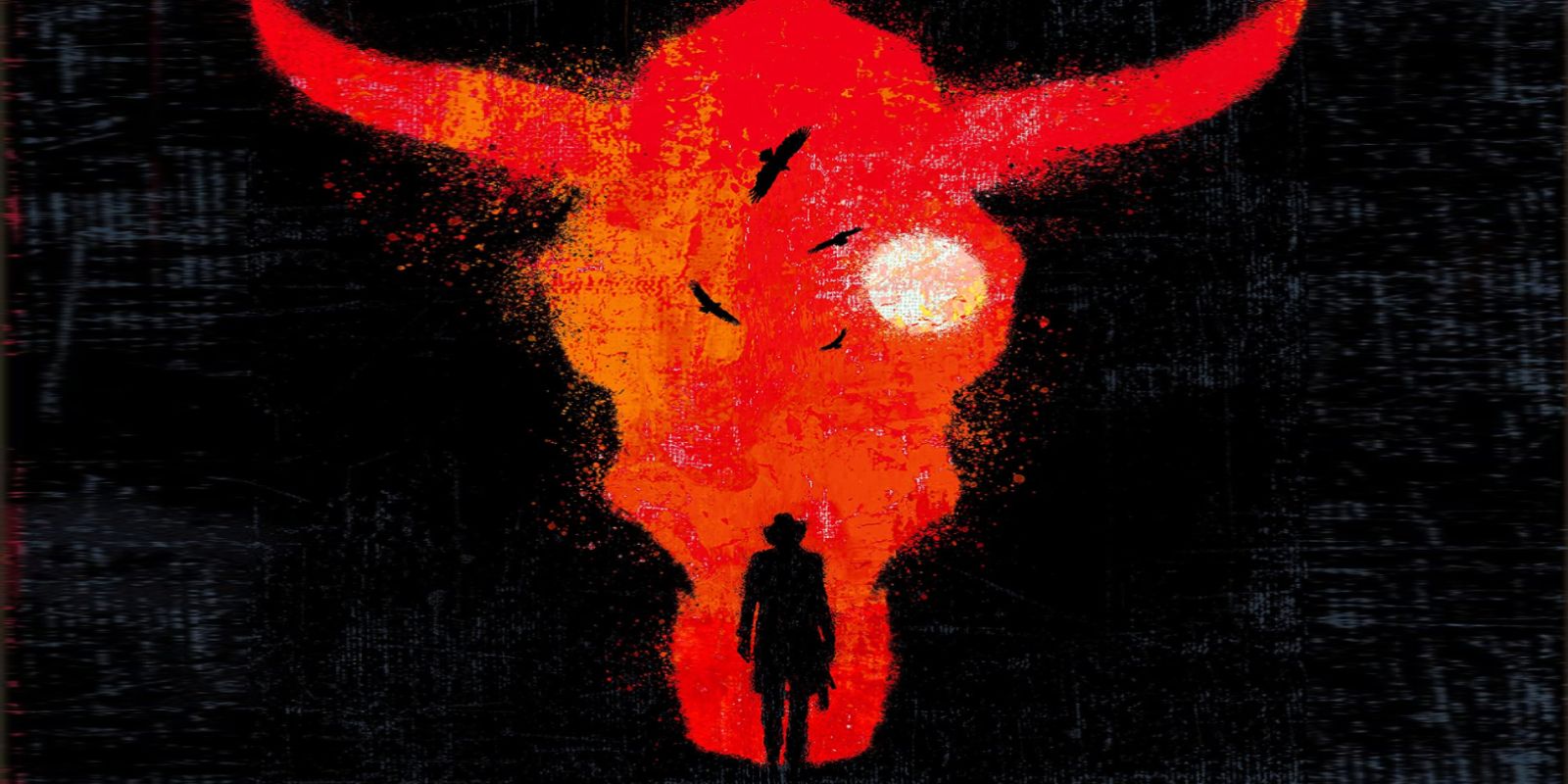
1 'Blood Meridian' (1985)

Two things are true at the same time, when it comes to Blood Meridian: it’s considered one of the best Western books of all time, and it’s easy to highlight as one of the most disturbing novels of all time. If you're talking bleak and/or confronting Western books, as a result, then there’s no contest, really. This is just miserable and unapologetically violent from start to finish, pretty much.
There’s a reason for that, the same way there’s a reason revisionist Westerns get dark and more morally complicated than you might expect in more traditional Western fare. Blood Meridian says a lot about history, violence, and a host of other complicated things, all done in a stark way, with author Cormac McCarthy not even considering, for a millisecond, the idea of pulling a punch. Reading Blood Meridian does feel like getting beat up for 300-ish pages, all by design, of course.
KioskNews shows a cleaned-up reading view extracted from the publisher’s page — the original always lives on their site, not ours.