Sensex Crashes 1,000 Points: Rs 9 Lakh Crore Wiped Out As Foreign Investors Sell Indian Stocks En-Masse
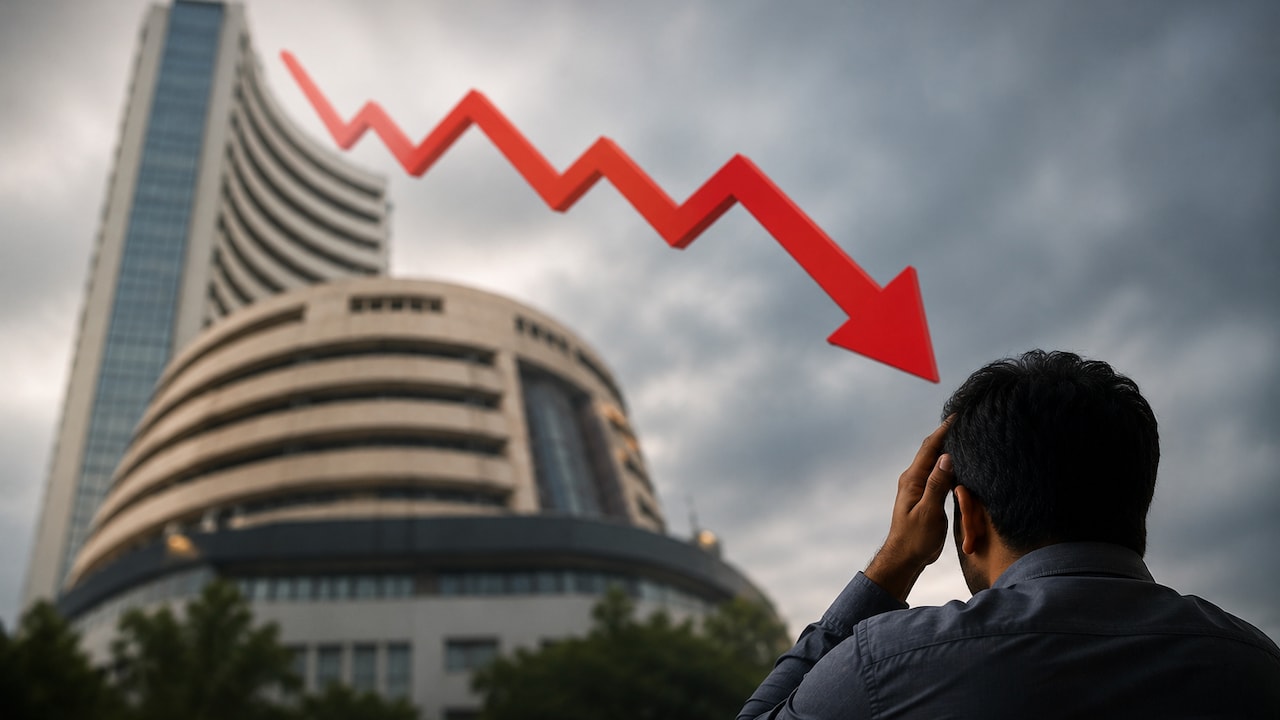
Stock Market Crash: The Indian stock market took another heavy hit on Thursday. The Sensex crashed more than 1,000 points by 2 pm, while the Nifty slipped below 22,300 as foreign investors continued to pull money out of Indian equities.
The total market capitalisation of BSE-listed companies fell from Rs 4,71,86,292 crore at the opening to Rs 4,62,71,545 crore by 1:45 pm -- making the selloff sharp enough to wipe out around Rs 9 lakh crore in market capitalisation in a matter of hours. FOLLOW MARKETS LIVE UPDATES
The fall came as foreign institutional investors continued their selling streak. On September 30 alone, FIIs sold Indian equities worth more than Rs 10,000 crore, taking their selling over the previous two sessions to more than Rs 20,000 crore.
Also Read | Layoffs Are Rising In Tech, But These Skills Are Helping People Unlock Better Pay
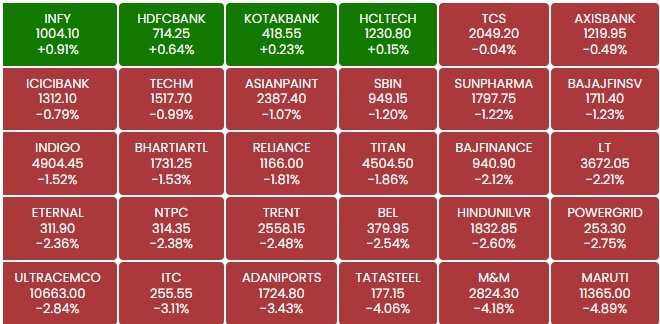
BSE Sensex Heatmap As Of 1:50 pm.
Why Is The Indian Stock Market Falling
One major trigger is the rise in US bond yields. The US 10-year Treasury yield climbed above 5.3 per cent, making US fixed-income assets more attractive for global investors. That can reduce the appeal of riskier emerging-market equities such as Indian stocks.
The rupee is adding to the pressure. The Indian currency weakened beyond Rs 96 against the US dollar on Thursday. A weaker rupee can make dollar-based returns from Indian equities less attractive for foreign investors.
Oil is another concern. Supply disruptions following the conflict with Iran have increased uncertainty around energy prices. Higher crude prices are particularly important for India because the country imports a large part of its oil requirement.
Market volatility has also risen. India VIX, the market's volatility gauge, jumped as the selloff intensified.
Sensex, Nifty Crash: Should You Exit The Market?
The sharp fall in the Sensex does not mean every part of the Indian market has fallen equally. Eshaan Lazarus, Founder & CEO, 021 Trade, told NDTV that the Nifty 50 does not tell the entire story because many retail investors are now more exposed to mid-cap and small-cap stocks.
"The Nifty 50 tells only part of the story. Nifty MIDSMALL400 index is just 5 to 6 per cent off its high. Nifty is not the right benchmark as most investors prefer mid and small cap stocks. SIP money has steadily tilted away from large caps toward mid and small caps over five years."
This shift is important because the Sensex and Nifty are dominated by large companies. A fall in these indices does not necessarily capture what is happening across the entire portfolio of a retail investor.
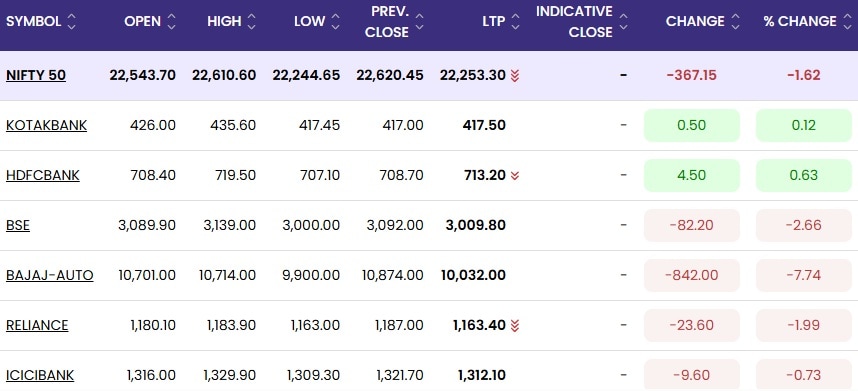
Top Nifty50 Losers As Of 2 pm
Lazarus also pointed to another factor: investor expectations. The number of investors in India's stock market has expanded rapidly in recent years. Many newer investors entered during a period of strong returns. A weaker market can therefore feel particularly painful.
"Part of the disappointment, in my view, also comes from the expectations built during strong markets. NSE's registered investor base more than tripled between the end of 2020 and 2025, showing how many investors are relatively new to the market. Those investors who have only experienced annual returns of 20 to 30 percent will find single-digit returns to be disappointing."
Foreign Selling Meets Global Uncertainty
The immediate pressure, however, remains real. Higher US yields, oil supply uncertainty, a weaker rupee and continued foreign selling have combined to create a difficult environment for Indian equities.
Lazarus said the divergence between India and other emerging markets also deserves attention. "By the end of September, the MSCI Emerging Markets Index had increased by more than 20 per cent on a dollar basis, whereas the Nifty 50 had dropped by about 13 per cent on a rupee basis, and the rupee had weakened from approximately 90 to above 96 against the dollar this year."
Lazarus said the long-term picture should also not be ignored. "In the long term, stocks are still worth looking at. The choice between selling or investing should not be based entirely on whether the market is down today."
KioskNews shows a cleaned-up reading view extracted from the publisher’s page — the original always lives on their site, not ours.