Israel's president taps opposition candidate Eisenkot to form a government, in setback for Netanyahu
Israel’s president taps opposition candidate Eisenkot to form a government, in setback for Netanyahu Gadi Eisenkot ran as the main challenger to Prime Minister Benjamin Netanyahu — neither won a clear majority. Israel's main parties have recommended Eisenkot put together a new government.
News
By
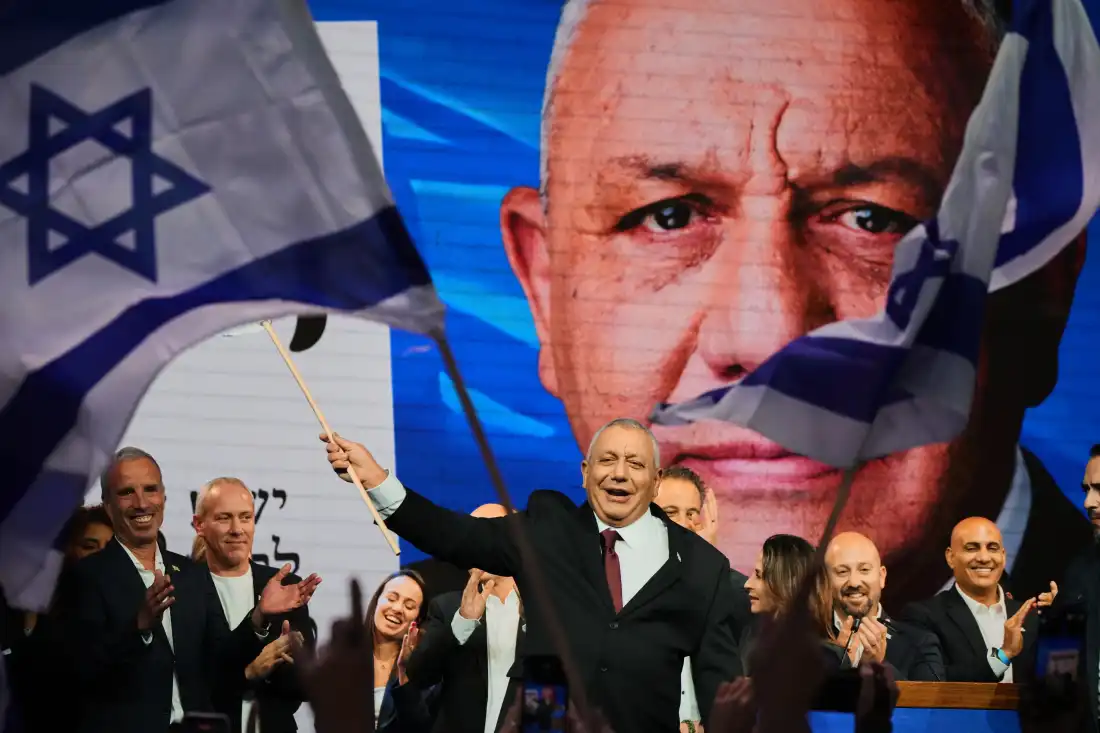
Gadi Eisenkot, leader of the Yashar ("Straight") party, waves an Israeli flag onstage following the release of the first exit poll results in Israel's general election in Tel Aviv, Israel, Wednesday, Oct. 28, 2026. Ariel Schalit/AP hide caption
Ariel Schalit/AP
JERUSALEM (AP) — Israeli President Isaac Herzog said Saturday night that he was giving opposition candidate Gadi Eisenkot the first opportunity to form a governing coalition following elections on Oct. 27.
Eisenkot, a former military chief, ran as the main challenger to Prime Minister Benjamin Netanyahu, leading a bloc of parties seeking to oust Israel's longest-serving premier.
Neither Eisenkot nor Netanyahu won a clear majority in the vote. But in marathon discussions with the president this week, representatives from most of Israel's main parties recommended Eisenkot be tasked with assembling a new government.
The announcement, which had been expected on Sunday, came shortly after Netanyahu called for a "national unity government" in a video statement and warned against "hastily swearing in a government with terrorist supporters" — an apparent reference to the Arab-led parties.
Netanyahu and his allies have repeatedly portrayed the Arab-led parties as a threat to national security, while Eisenkot has indicated a willingness to partner with them under certain conditions, including calling Hamas a terrorist group that needs to be destroyed.
Eisenkot's party, Yashar, slammed the prime minister's video with a statement posted on X and urged members of his party, Likud, to disavow their alliance with "radical parties," in an apparent reference to the more extreme parties in his religious-nationalist base.
The statement argued that Eisenkot would only include parties and parliament members who support its principles, including recognizing Hamas as a terrorist organization.
NPR does not offer or accept money for coverage or interviews.
Anyone who makes such an offer or request is not an NPR employee and does not represent NPR.
KioskNews shows a cleaned-up reading view extracted from the publisher’s page — the original always lives on their site, not ours.