How anime tourism is helping breathe new life into Japan's shrinking towns

NUMAZU, Japan: When Maki Nishiono first visited the coastal city of Numazu, she was chasing a fictional anime world. Today, she calls the place home.
A fan of the hit anime Love Live! Sunshine!!, the 27-year-old was drawn to Numazu in Japan’s Shizuoka Prefecture by the real-life locations featured in the series.
Nishiono was so captivated by the city that she eventually left Osaka to work at Awashima Hotel, one of the settings in the anime.
“Every scene was exactly the same as in the anime. It was real. I was fascinated,” she recalled of her first visit.
She is among seven fans of the series, known as “Livers”, who have relocated to work at the luxury hotel.
Her experience reflects a growing trend across Japan, where fans are turning their love of anime and manga into real-world journeys.
For some destinations grappling with ageing populations, declining industries and the departure of young people, pop culture tourism offers opportunities beyond tourist spending.
WHEN AN ANIME INSPIRE FANS TO MOVE
Numazu has become a pilgrimage destination for fans of Love Live! Sunshine!!, which first aired in 2016.
The anime follows nine schoolgirls who form an idol group to save their school from closing amid falling enrolment.
Today the characters are everywhere – appearing on buses, banners, and even manhole covers.
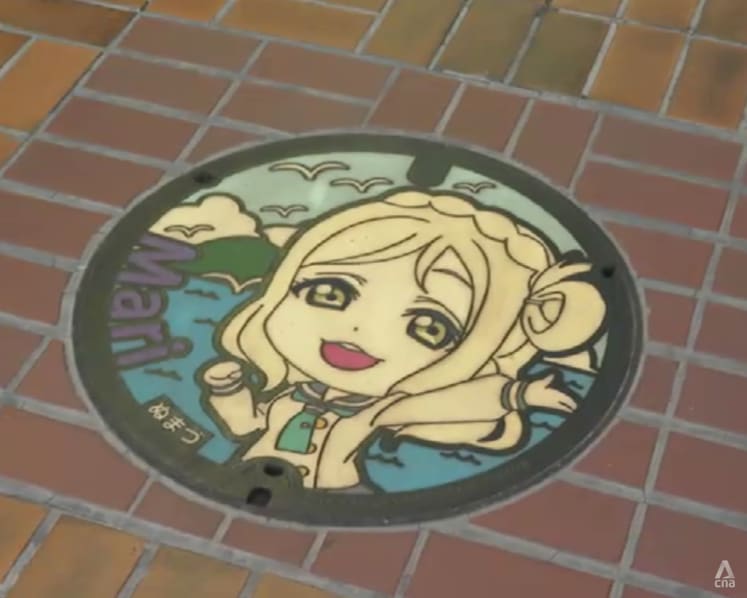
Businesses featured in the series have also embraced their newfound fame.
The 130-year-old Yasudaya Ryokan, a traditional Japanese inn, is depicted in the anime as the home of the group’s leader, Chika Takami.
The ryokan’s general manager, Kazunori Yasuda, remembers a sudden change in clientele.
“When the anime began showing on TV, we had a spike in young male guests,” he said.
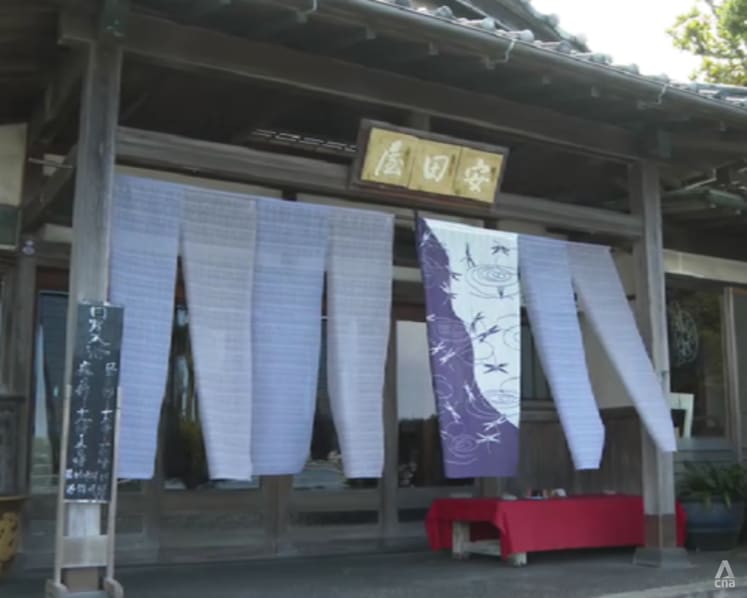
The inn had previously attracted admirers of renowned Japanese novelist Osamu Dazai, who once stayed there.
On nearby Awashima Island, businesses have recreated scenes from the show.
Awashima Hotel – portrayed in the anime as the family hotel of one of the main characters Mari Ohara – also features a special suite modelled after her room.
For the hotel’s management, however, the anime’s influence extends beyond attracting guests.
“It’s an island. So it’s difficult to find people to work with us,” said the hotel’s representative director Hiromi Miyashiro.
“They found us and came here.”
Yuki Terasawa, the hotel’s strategy manager, is another Liver who relocated to work at the property.
“I graduated from a university in Tokyo. I had no hesitation to work here. I’m quite happy to have this job,” said the 24-year-old.
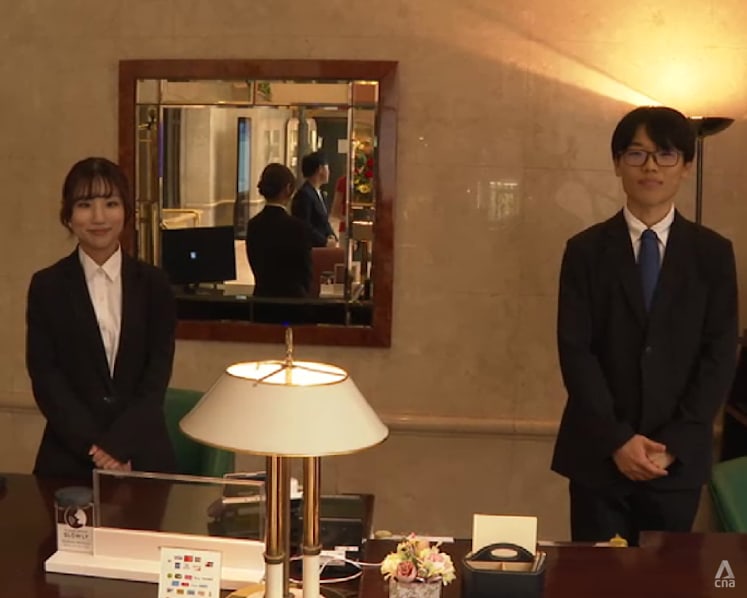
That ability to attract workers is particularly significant for Numazu.
According to mayor Shuichi Yorishige, the city’s population has fallen from a peak of 210,000 to 180,000.
“Young people especially – after graduating (from) high school, they leave for the metropolis for university and jobs,” he said.
Love Live! Sunshine!! proved to be an unexpected pull.
After repeatedly visiting Numazu, hundreds of fans have moved to the city, the mayor said.
Among them is 30-year-old Naoto Moroto, who moved from Kyoto and now works for the city government as a policy promotion officer.
“Learning that it was a pilgrimage site for Love Live! Sunshine!!, I decided to work in Numazu,” he said.
“The sea here is beautiful. I want everyone to see it.”
For married couple Aki Kinjo and Taketo Kinjo, the decision to move was about building a life beyond the fandom.
The pair visited Numazu about 20 times for leisure before settling down in 2022. They now have a two-year-old daughter.
“My husband was thinking of changing jobs. We studied how (Numazu) was for child-rearing, day-to-day living, and decided to move,” 27-year-old Kinjo said.
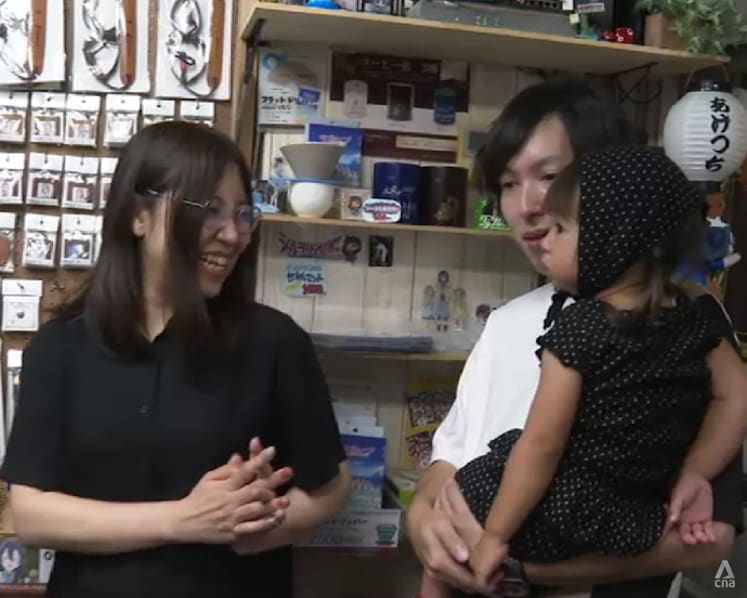
“The people here help us, they are nice,” Kinjo, 38, added.
Their experience suggests that while pop culture may be the initial attraction, a community’s long-term appeal depends on what it can offer residents.
TAKING ANIME TOURISM BEYOND TOKYO
Elsewhere in Japan, railway operators and local authorities are turning to anime to encourage visitors to venture beyond major tourist centres.
Seibu Railway has been working with local governments to promote anime and manga-related attractions along its rail network, to boost tourism to rural communities facing shrinking populations and declining passenger numbers.
“As you travel farther from the metropolis, the declining birth rate and ageing population become apparent,” said Kenji Kageyama, general manager of Seibu Railway’s business creation department.
Among the destinations is Chichibu in Saitama Prefecture, the setting of the 2011 anime Anohana: The Flower We Saw That Day.
Fans visit locations depicted in the series, including Old Chichibu Bridge and Jorin-ji Temple, where visitors leave wooden plaques bearing personal wishes and messages.
Meanwhile, manga characters are being used in southwestern Japan to help communities recover from disaster.
In Kumamoto Prefecture, statues of the beloved pirate crew from One Piece have become unlikely symbols of recovery.
The prefecture was devastated by earthquakes in 2016 that killed more than 200 people.
In the aftermath, Kumamoto-born manga artist Eiichiro Oda, creator of One Piece, wrote a message promising to play a role in its recovery.
That led to the Kumamoto Revival Project, which brought statues of the manga’s characters to communities affected by the disaster.
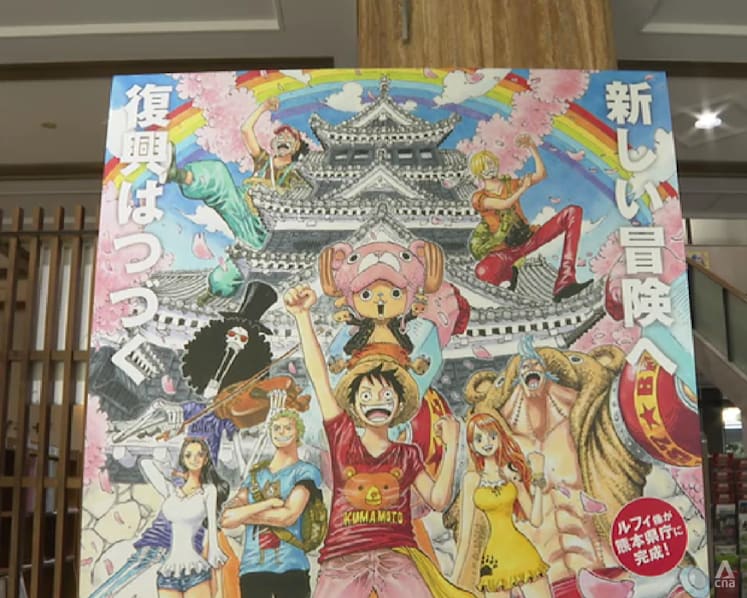
The first statue, featuring protagonist Monkey D. Luffy, was installed outside the Kumamoto Prefectural Government office in 2018.
Nine more members of Luffy’s crew followed over the next four years.
“The statues weren't erected at random,” said Mai Takahashi, manager of the tourism development division of the Kumamoto Prefectural government.
“Each crew member was sent to a different community according to their special skills and the damage that area had suffered,” he said.
Chef Sanji, for instance, was placed in Mashiki, where the earthquakes damaged a school lunch centre.
The statues have also created a tourism trail across the prefecture.
Because visiting all 10 locations in a single day is difficult, tourists often stay overnight, bringing business to local accommodation providers and shops.
In the coastal city of Uto, the arrival of a statue of another crew member, Jinbe, has brought a noticeable increase in visitors.
“This used to be a place where people stopped on their way to Amakusa just to use the restroom,” said shop manager Shinzen Takezoe.
“Since Jinbe arrived, we have seen more tourists.”
According to navigation app Navitime, Uto ranked first in Kumamoto for foreign visitor growth, with numbers rising more than seven-fold between 2019 and 2023.
Still, the influx has not solved every problem.
Many visitors stop to take photographs without venturing into the surrounding community, said Yoshiharu Fujiyama, former head of the Udo Sumiyoshi Fisheries Cooperative.
“The (visitors) don’t enter this area, but just take pictures and go,” he said.
He added that local seaweed farmers are also grappling with poor harvests and a lack of successors to take over their businesses.
For Uto, and other towns facing demographic and economic decline, the challenge is finding ways to turn fleeting visits into lasting economic opportunities.
Numazu offers a glimpse of what is possible. There, anime fans have gone from visiting locations featured in their favourite series to putting down roots, showing how pop culture’s influence can extend well beyond tourism.
For these communities, the real measure of success may not be how many fans come to visit, but how many find a reason to stay.
KioskNews shows a cleaned-up reading view extracted from the publisher’s page — the original always lives on their site, not ours.