In 600-hour creation, Malaysian powerhouse Aina Abdul joins 11 nations in historic Eurovision Asia debut
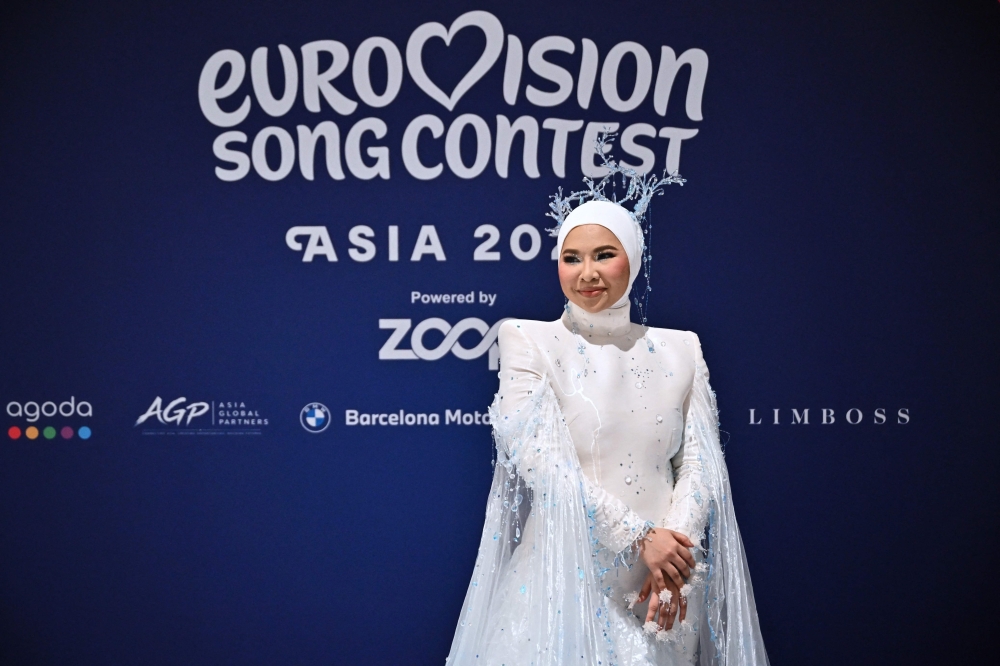

Malaysian contestant Aina Abdul poses during media interviews ahead of the Eurovision Song Contest Asia 2026 at One Bangkok Forum in Bangkok on November 11, 2026. — AFP pic
First Published: Friday, 13 Nov 2026 10:01 AM MYT
BANGKOK, Nov 13 — Singers from 11 nations will compete Saturday in the first Asia edition of Eurovision, the televised contest known for its lavish outfits, soaring vocals, geopolitics and the tantalising possibility of global stardom.
A Mongolian government adviser, a K-pop star and a Bhutanese singer on his first trip abroad are among the contestants performing live at the Eurovision Song Contest Asia in Bangkok, potentially watched by millions on TV and online.
“It’s very important for me to show up, to show respect to our ancestors on this big stage,” Mongolian singer Beck told AFP.
Resplendent in an orange and gold traditional outfit he described as a “suit of a warrior”, his song tells of a fighter who laments the loss of his true love.
Beck is an unusual contestant, a trained economist who advises the country’s deputy prime minister on banking issues – a juggling act he brushes off as modern-day “multitasking”.
But that is the joy of Eurovision, the world’s biggest televised live music event known for its kitsch and political voting, a cultural phenomenon that drew 131 million viewers this year for its Europe edition.
Many of the Asia entries had never heard of the contest, but understand the Bangkok show offers a huge platform, broadcast live in participating countries and several others as well as on YouTube.
“I’m not a star, but I want to be. I want more fame and a bigger stage,” said Junhee, the South Korean entry bringing K-pop energy in shiny red trousers and a matching jacket exposing his bare chest.
‘About time’
Malaysia’s Aina Abdul cites one-time Eurovision winner Celine Dion as one of her musical inspirations, and said it was “about time” the show came to Asia.
“We are music enthusiasts, we want to be noticed. And we feel like Eurovision is the best platform for us,” she told AFP, showing off her lavish blue-and-white dress for Saturday, which took 600 hours of work to make.
Aina is already a star in her home country, known for her powerful vocals and extravagant outfits, but those fans cannot vote for her performance in Bangkok.
A quirk of the contest is that viewers cannot vote for the candidate from their own country – meaning friendly nations often back each other.
“I hope they are strategic enough, so that even though they’re voting for someone else, I can still win!” she said, laughing.
Unlike the long-running Eurovision show, which is organised by national public broadcasters, the inaugural Asia contest is being run by commercial TV stations – and many chose national representatives who already had an established fan base.
One of the biggest stars is Vietnam’s Toc Tien, who will open Saturday’s show with an immaculately choreographed pop-dance track, wearing a glam version of the country’s traditional wide flat hat.
‘Nobody knows me’
For 19-year-old Carmelle from the Philippines, the contest is the latest chapter in a TV and singing career that began when she was a child.
“Sobra-Sobra” (“Too Much”) is an upbeat song about women’s empowerment, where she declares that anyone who says she is too much for them, is not enough for her.
“This is how Filipina women are – strong, fierce, independent,” she said.
Bhutan’s Nyendra, a 24-year-old singer-songwriter who had never before left his home country, admitted that “nobody knows me”.
But he hopes to show off the culture of his tiny nation of 800,000 people, including by wearing handmade traditional national dress on stage.
Winning “would mean the entire world to us, not only for me, but for the entire country”, he told AFP.
Eurovision, which celebrated its 70th birthday this year, has long been about more than music.
It has been a platform for social change, particularly LGBTQ rights, and reflects current geopolitical tensions, most recently with boycotts over Israel’s participation.
But few in the Asia show appear to want to talk politics.
Thailand’s Mang x Daou, two pop stars performing a syrupy love duet, studiously ignored questions about potential tensions with Cambodia, after the two countries’ border clashes last year.
Mongolia’s Beck insisted the show should be a safe space away from the world’s problems, enthusing about music’s ability to cross borders.
“Someday sooner or later maybe it will be like Eurovision World, united, all the continents together on the same stage,” he said. “It’s super exciting.” — AFP
KioskNews shows a cleaned-up reading view extracted from the publisher’s page — the original always lives on their site, not ours.