Argentina’s energy boom to extend surge of bond sales into 2027
A wave of dollar bond sales by Argentine companies and provinces is set to extend into the first half of next year, driven by the country’s booming energy industry, according to Banco Santander, the top underwriter for such deals.
Sales are expected to total about US$9 billion next year, said Mariano Urquiola, head of Corporate and Investment Banking at Santander Argentina. That compares with over US$11 billion raised so far in 2026, with borrowers expected to rush to market in the first half, ahead of October’s presidential election, to avoid potential volatility.
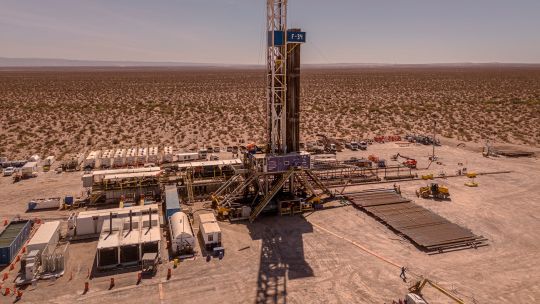
The issuance will be led by energy companies that are investing heavily in Vaca Muerta, the shale formation at the heart of Argentina’s ambitions to become a major oil and gas exporter. Strong balance sheets and growing energy shipments have made blue-chip energy credits favourites among international investors, helping insulate them from bouts of volatility that have hit Argentine sovereign debt and weaker credits.
“We have issuers with fundamentals so strong that they’re less vulnerable to these shocks, particularly energy companies, which can still access the market at single-digit yields,” Urquiola said in an interview in Buenos Aires.
Santander has topped Bloomberg’s rankings of Argentine debt underwriters since the start of 2024, arranging nearly US$7 billion in bond sales, including more than US$3 billion this year. JPMorgan Chase & Co ranks second over the period, followed by Citigroup Inc.
Sales rebound
The lender’s climb has coincided with a broader reopening of Argentina’s hard-currency debt market. Corporate and provincial borrowers have raised almost US$30 billion since the start of 2024, according to data compiled by Bloomberg. That compares with nearly US$60 billion during the 2016-2017 boom under former president Mauricio Macri, before a financial crisis and a bailout from the International Monetary Fund sent borrowing into a prolonged slump. Sales dwindled to a trickle during the Peronist administration that followed between 2020 and 2023.
But the composition of the two waves is markedly different. The federal government was the dominant borrower under Macri, while the latest revival has been driven entirely by companies and provinces, with President Javier Milei’s administration relying on local debt sales, among other sources of funding.
Still, the deals provide a steady inflow of foreign currency at a critical time for Argentina, supporting the Central Bank’s efforts to build reserves ahead of a surge in sovereign foreign currency debt repayments to about US$25 billion next year.
Santander bet
Santander made a bet on the South American nation before Milei’s election in 2023, recruiting experienced Argentine investment bankers from financial centers including New York, London and Switzerland and committing early to financing the development of Vaca Muerta.
“So when Argentina opened up to the world, we already had a strong team in place from day one and didn’t need to fly people into Buenos Aires to meet with a client the following day,” Urquiola said.
The bank has secured roles in some of the country’s largest energy investments. It’s working alongside JPMorgan to lead a planned US$14 billion to US$15 billion financing for Argentina LNG. It’s also working with other lenders on financing for a major natural gas liquids project led by Transportadora de Gas del Sur SA and Pampa Energía, and is the sole financial adviser for Pampa’s planned US$2.7-billion urea plant in Buenos Aires Province.
The financing push comes as emerging-market borrowers face increasingly difficult conditions, with rising global yields and a flood of debt issuance by technology companies making it harder for these borrowers to compete for investors’ cash. Argentina’s own bond pipeline, while the strongest in years, has begun to lose momentum in recent months as borrowing costs climb and concerns over next year’s presidential election weigh on local assets.
The country’s dollar-denominated sovereign bonds lost nearly six percent in October, among the worst performances in emerging markets, while its risk premium climbed to a one-year high. Yet stronger corporate borrowers have continued to tap international markets, seeking to lock in financing before conditions deteriorate further.
Pampa Energía is among those moving early. The company tapped debt markets to get ahead of potential election-related turmoil and competition for financing next year.
“One has to move quickly. The strategy is to get everything locked in,” Chief Financial Officer Adolfo Zuberbuhler said at an event last week, warning that a rush of borrowers ahead of the election in 2027 could crowd others out of the market.
With offshore offerings set to slow in 2027, Santander expects corporate dollar-linked bond sales in the local market to pick up as demand for currency hedges increases and international issuance windows become less predictable.
“There’s a saying in Argentina that when a window opens, you have to take it because you never know when another one will open,” Urquiola said.
KioskNews shows a cleaned-up reading view extracted from the publisher’s page — the original always lives on their site, not ours.