WILD LIFERS: Flowers on the fence as protesters mourn capture of Simon’s Town’s baboons
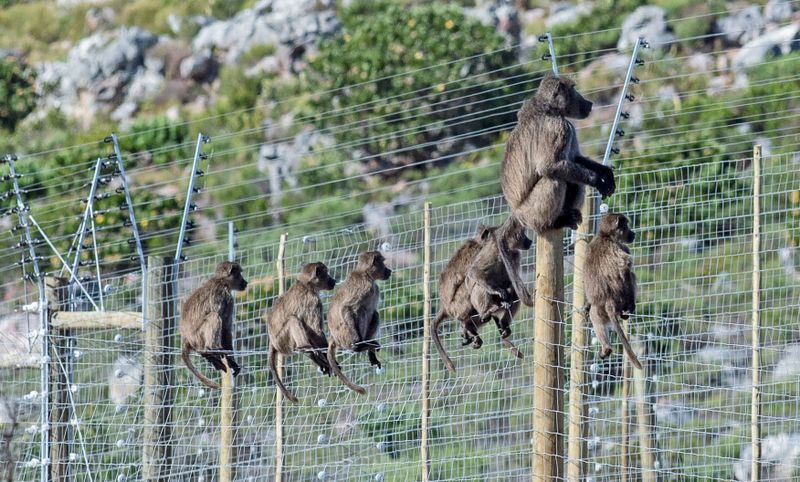
It was a sting operation the baboons never saw coming. On Friday morning, monitors herded members of the Waterfall troop into the double-fenced Navy camp above Simon’s Town.
In the distance, protesters could be heard shouting, but armed naval personnel held the barrier. One by one, trucks backed up with food inside the cages. The baboons jumped in to investigate, and the gates clanged shut. By Sunday, about 44 baboons had been captured.
At the Kogelfontein “sanctuary” near Scarborough where they were confined, the City has set aside 2.3 hectares for Waterfall’s 44 baboons and 1.6 hectares for Seaforth’s 16, contained within a high electrified fence. Healthy males are to be vasectomised and mature females given contraceptive implants. A youngster taken on Friday could spend the next 30 years there.
The protest
On Sunday morning at Kogelfontein, baboons from neighbouring Groot Olifantsbos troop gathered outside the electric fence. The newly captive animals sat facing them on the other side, calling back and forth. Then men with paintball guns fired at the baboons outside. Both groups scattered. By the time the organised protest began at 11am, there wasn’t a baboon in sight.
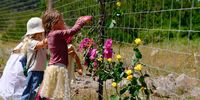
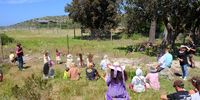
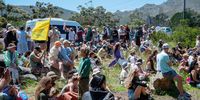
By noon, well over 100 people, many of them children, were sitting on the grass beside the road, gazing at the enclosure. Bunches of flowers were tied to the fence. Posters along the roadside condemned the capture.
After Saturday’s confrontations between some protesters and staff escorting vehicles with caged baboons into the centre, Sunday’s gathering was quiet. No trucks carrying baboons came through while people sat there. It was a silent and powerful condemnation.
On Saturday, a protester had attempted to pull a tarpaulin off a cage on the back of a bakkie which was transporting a caged baboon. Another small group barred the bakkie from driving into the centre’s premises. One person also sprayed a fire extinguisher during a scuffle, where the Cape Baboon Partnership head Sarah Waries was in a heated verbal confrontation with some in the group, who demanded to see the permit that granted them permission to proceed with the capture.
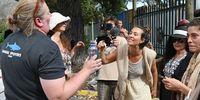
Penelope Georgia had come from Noordhoek. “I’m here to grieve,” she said. “It’s really heartbreaking to see this and to know they’re inside and confined for life.”
For Georgia, the loss extended beyond the animals on the other side of the fence. “There’s grieving for nature. There’s grieving for this entire ecosystem. There’s grieving within my community.”
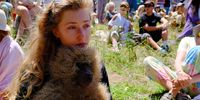
Jeremy Hewett, also sitting at the fence, said people at the protest understood the dangers the baboons faced in town, the poor diets and the injuries. What rankled was how little say they’d had in deciding what to do about it.
Another protester spoke of the baboons being critical for moving seeds across the Peninsula as they foraged. “I think it’s a great privilege to be part of this land, to live here and share the space with such diversity. And if we don’t take care of it, we lose that privilege, we lose that home.”
Megan Carr of the EMS Foundation had seen the social media criticism of protesters who confronted the vehicles, but said it was almost inevitable.
For two months, she said, people from Simon’s Town and Scarborough had stood outside the facility. Nobody had come out to speak to them or called a town hall meeting. “Nobody was given any kind of time frame as to when the baboons were coming in.
“They were so upset at the sight of these boxes of baboons coming in, one at a time, two at a time, eight at a time,” Carr said. She acknowledged that people had been noisy and aggressive. “The authorities watched the build-up for two months. For two months they saw people protesting against this, never bothered to talk to them. What did they expect would happen?”
On Sunday, the City of Cape Town issued a statement saying 44 Waterfall troop baboons had been relocated to the wildlife centre and that all had arrived safely and unharmed.
“The intention to relocate these baboons has been clearly communicated to all affected communities in the Far South for over a year, has been implemented as a very last resort after other interventions were evaluated and deemed ineffective and as an alternative to culling.”
The statement said none of the males was vasectomised and the females received contraceptive implants.
“One old female baboon was euthanised after it transpired during the health screening that she had a growth on her chest, fluid in her bowels and no teeth.”

Baboon killed
A veterinary examination has confirmed one shooting involving a different troop. On 12 November, the alpha male known as Collar of the Groot Olifantsbos troop was found dead beneath its sleeping pine trees. A projectile had entered his chest, broken ribs on the opposite side and torn the wall of his stomach. The Cape Baboon Partnership said he would have suffered for several hours.
Who shot him remains unknown.
The capture
On Saturday, the capture team was filmed coaxing baboons into cages. Asked how she felt, activist Gerry Higgs said, “I’m traumatised.” Of the effort to keep the troops in the wild, she said simply, “We lost.”
Researcher Dr Dave Gaynor watched Friday’s capture from the mountain above the Navy camp. Below him, monitors with paintball guns kept the baboons inside the perimeter while others dropped food to lead them towards the soccer field and the cages.
What worried him was who might be left behind. “What if you catch a mother and not the infant? What happens if you don’t catch all the baboons?” On Sunday night, a female baboon was still calling on the Navy wall in Simon’s Town; she had been left behind and later walked to the Waterfall.
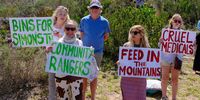
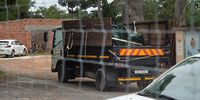
Higgs said lawyers had asked CapeNature for the removal permit. She wanted to see how many baboons it authorised the team to take.
In a letter to Mayor Geordin Hill-Lewis, copied to the authorities responsible for the operation, local nutritional therapist Amy Morris also asked for the permit, its supporting paperwork and the capture protocol.
“What qualifications did the capture team have? Who was authorised to carry or use firearms? She also asked for a breakdown of the reported R10-million allocation and an answer to a question that will outlast the operation. What happens when other baboons move into the area?” There was no answer by the time of publication.

The master plan
In a management plan amended in June, the City, CapeNature and SANParks set out their reasons for the removal. It said housing development had taken up much of the low-lying ground where baboons forage. In Simon’s Town, kitchens and bins offer easy meals. Some Waterfall baboons had learnt to lift roof tiles to find a warm place to sleep.
The authorities described many as being in poor condition and at risk of injury or death at human hands. At Seaforth, they cited a threat to the critically endangered African penguin colony. They claimed permanent enclosure was the alternative to culling both troops.
The alternative
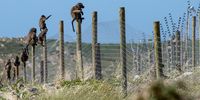
Primate specialist Gaynor had long proposed a 10km fence above Simon’s Town and Murdock Valley that would allow the troops to stay on the mountain. An anonymous private funder had offered to help, he said.
It was dismissed. The City task team decided that an effective fence would need to run for 18km and the money on offer would fall short.
The EMS Foundation has asked the provincial legislature’s environmental affairs committee to convene an urgent hearing. It wants the captures suspended, the permit published and an account of every animal taken. It also wants an independent assessment of whether the baboons already at Kogelfontein could safely go back.

Asked why she had come to the fence on Sunday, Georgia had put it more simply. “I guess we all feel quite helpless,” she said, clearly very upset. “We’re just showing our support for these poor baboons.” DM
KioskNews shows a cleaned-up reading view extracted from the publisher’s page — the original always lives on their site, not ours.