Singapore firms cash in on Chinese consumers’ appetite for experiences

From immersive dining to interactive exhibitions, Singapore companies are finding new ways to attract customers in China.
New: You can now listen to articles.

This audio is generated by an AI tool.

13 Nov 2026 04:49PM
SHANGHAI: Performers soar through the air, executing acrobatic stunts and dance routines, as diners tuck into an eight-course meal during a spectacle that blends gastronomy with theatrical flair.
At Xuyan, an immersive dinner theatre in Shanghai, guests are transported back to China’s Tang dynasty, complete with imperial-inspired costumes they can don before taking their seats.
A dress-up package costs S$55 (US$43), on top of seats that can go for as much as S$133.
Despite the price tag, securing a ticket is not easy, with reservations booked six to seven months in advance.
Xuyan is located within Raffles City The Bund, a shopping mall operated by Singapore property developer CapitaLand.
The dining venue is one example of how malls in China are turning to unique experiences to draw shoppers.
Mr Ervin Yeo, CEO of commercial management at CapitaLand Investment, said that with online retail so prevalent in China, malls must work harder to entice shoppers by offering innovative concepts.
“We think more about the experiential part of shopping. What are the things that we enjoy about shopping? The sense of discovery, sense of something new to feel and touch,” he said.
Such immersive experiences are gaining traction across China.
The country’s experience economy reached 18.4 trillion yuan (US$2.8 trillion) by the end of November 2025, up 22.6 per cent year on year, according to the China Academy of Information and Communications Technology.
MORE THAN JUST A MEAL
For Xuyan, the key to standing out in China’s saturated dining market lies in offering customers more than just a meal.
Mr Rick Garson, its global partner and chief creative officer, said the so-called “dinnertainment” concept allows people to stretch their dollar.
“Instead of just buying a dinner that could be probably around the same price … you're getting a cultural experience, good food, entertainment, a family experience,” he said.
The concept is also a hit with international tourists, who now account for about 45 per cent of Xuyan’s diners, up from just 5 to 10 per cent from when it opened in February.
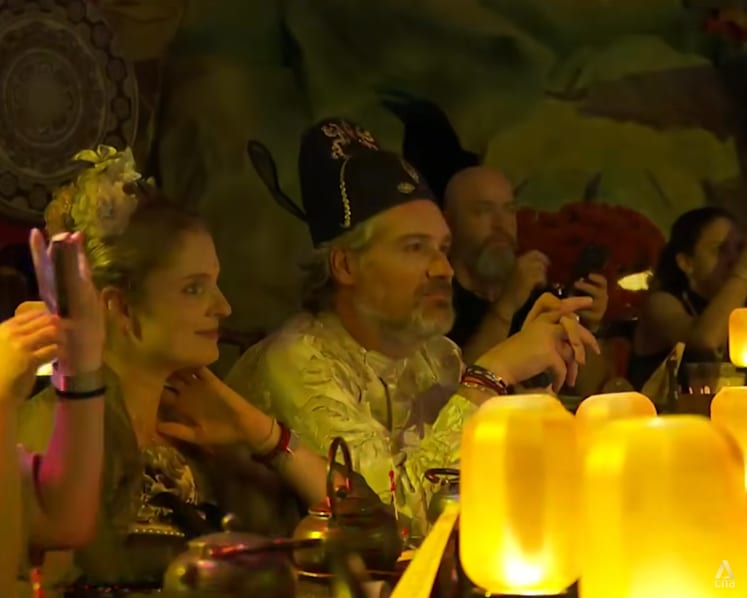
Domestically, Mr Garson said that while Chinese consumers may be spending less than before, they are still willing to pay for experiences they enjoy and consider good value for money.
The shift comes amid sluggish consumer spending in China.
Retail sales in China grew just 1.1 per cent in the first nine months of this year, according to official data. Retail sales of services, however, rose 5 per cent, outpacing the 1 per cent growth in goods sales.
Mr Kow Juan Tiang, executive director for China at Enterprise Singapore (EnterpriseSG), said the country’s retail landscape is evolving as consumers increasingly spend on services.
“It is really about providing an experience to the consumer, and that is the trend that is happening globally. It is also very (prevalent) in China,” he said.
SHOPPING MALLS BECOME EXPERIENCE DESTINATIONS
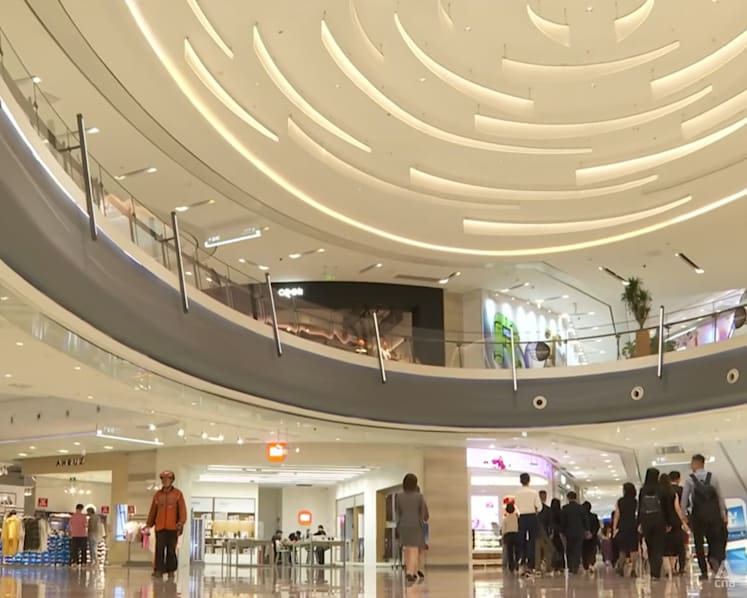
Such experiences have become a key draw for visitors at CapitaLand’s Raffles City The Bund in Shanghai.
Besides Xuyan, the mall also houses a food court that recreates the atmosphere of 1990s Shanghai, as well as a British-style tennis club.
Mr Yeo said CapitaLand’s approach also varies according to a mall’s location and target customers.
While suburban malls tend to cater to shoppers’ daily needs, those in downtown areas or further afield must offer compelling reasons for consumers to visit.
This also means mall operators can no longer focus solely on leasing space, but must actively work with tenants to drive sales.
But Mr Yeo cautioned against jumping onto every new trend.

“Experiential can very easily become gimmicky. Experiential can last, gimmick cannot,” he said.
Despite fierce competition and weak consumer spending, CapitaLand remains confident in China’s long-term potential and has not scaled back its investments there.
It currently manages 49 malls in China, with more in the pipeline.
According to the company, occupancy rates across its malls are above 94 per cent, while footfall has grown around 2 per cent and sales are up 4 per cent.
IMMERSIVE EXHIBITIONS DRAW CROWDS
Beyond shopping malls, Singapore entertainment company Neon is also betting on Chinese consumers’ appetite for experiences.
The company, which is behind attractions in Singapore such as Harry Potter: Visions of Magic at Resorts World Sentosa and Jurassic World: The Experience at Gardens by the Bay, brought an immersive exhibition on Machu Picchu to the Shanghai Museum in July.
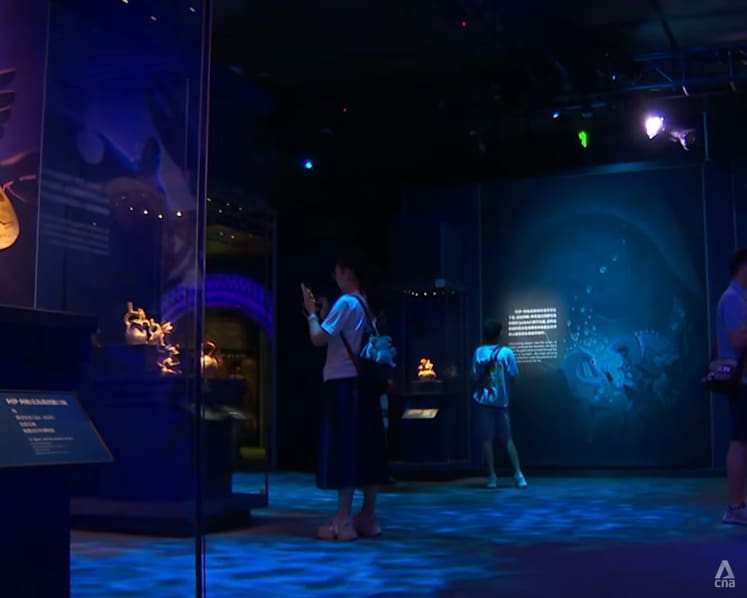
Using virtual reality technology and multisensory installations, the exhibition takes visitors on a journey through the ancient Inca civilisation, from the Andes mountains to the citadel of Machu Picchu in Peru.
It is expected to attract more than 3 million visitors over its 16-month run.
But Neon’s group CEO Ron Tan said even a popular intellectual property franchise no longer guarantees ticket sales.
“China probably has another layer of difficulty because of (its) access to technology,” Mr Tan said.
With consumers facing information overload, shorter attention spans and instant online reviews, he said companies must work harder to meet their expectations.
Neon said power has shifted into the hands of consumers, making it crucial for companies to listen closely to their needs and preferences.

“When we produce an experience … we try to understand from the (visitor’s) point of view, as much as possible,” he said.
“We embrace and we make use of the latest technology to really interpret the content to the consumers.”
With China’s retail market moving at a faster pace and on a larger scale than Singapore’s, businesses face pressure to continually refresh their offerings.
EnterpriseSG says for Singapore firms, the opportunity lies in anticipating changing consumer preferences and telling stories that keep customers coming back.
KioskNews shows a cleaned-up reading view extracted from the publisher’s page — the original always lives on their site, not ours.