Manoj Bajpayee on Gajab Raat row: ‘If creative liberty needs to be sacrificed, then so be it’
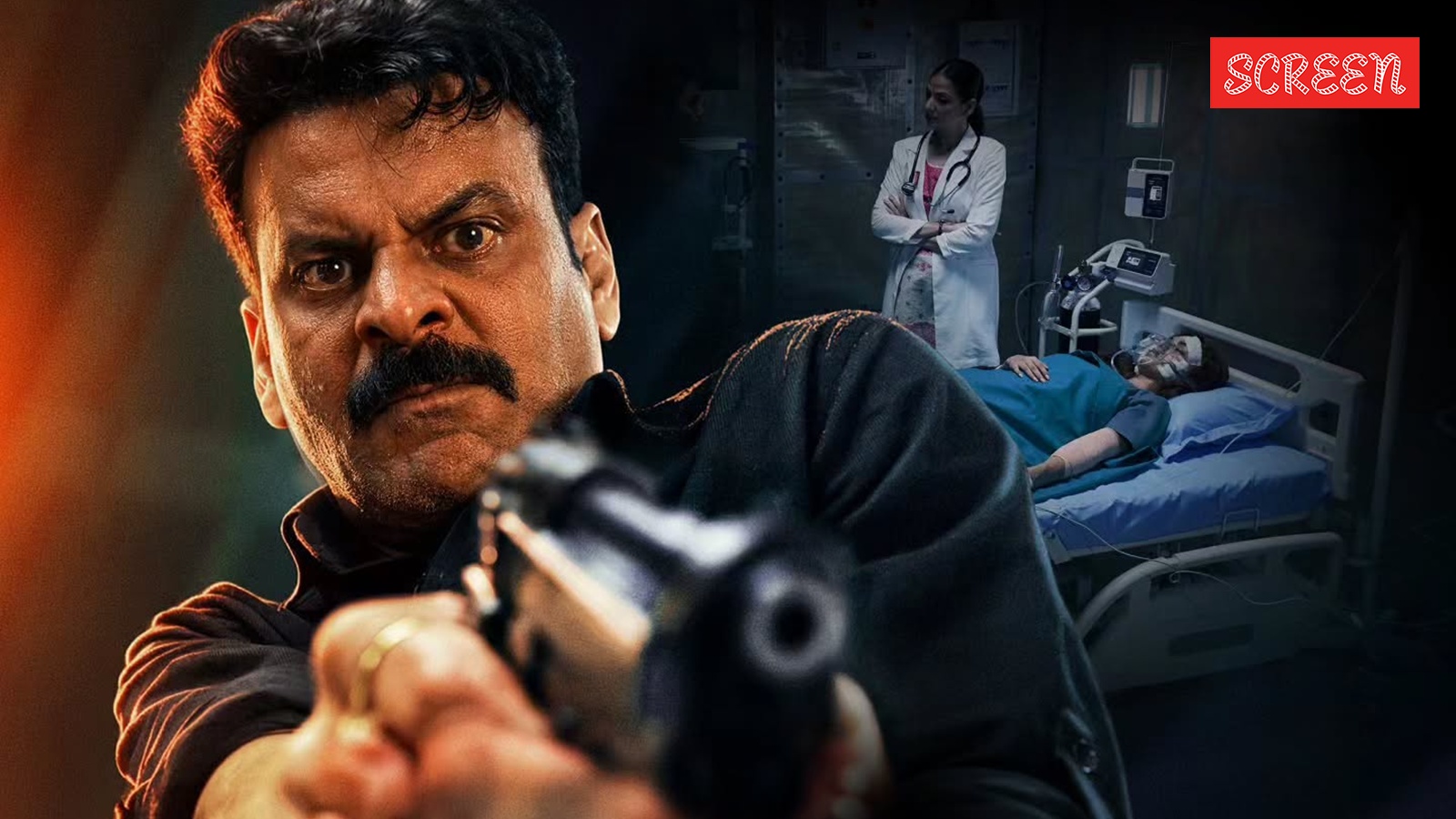
Manoj Bajpayee has established himself as one of the most versatile actors in Indian cinema, seamlessly switching between vastly different roles. From playing a ruthless man in The Family Man to portraying the morally grey Masterji in The Last Man in Tower and embracing an unapologetic way of life in Gajab Raat, the actor has consistently pushed himself into experimental territory.
However, while bringing complex characters to life on screen, Bajpayee recently faced the backlash over his film being titled Ghuskhor Pandit, which was later changed to Gajab Raat.
In an exclusive interview with SCREEN, Bajpayee opened up about The Last Man in Tower, his approach to playing complex characters, and the CBFC’s handling of Gajab Raat, which he believes has come at the cost of creative freedom and personal dignity.
Here are some excerpts from the interview:
Despite The Last Man in Tower opening to positive reviews, your film had limited shows. Was it a conscious decision, or was there a shortage of screens?
Lately, small films don’t get a good run at the box office. So, Rana Daggubati’s Spirit Media decided to start with a few shows, see how the audience reacts to the film, and then perhaps gradually increase the number of shows. We realised that this film is made for families and people who are not going to theatres.
Post-pandemic, there is a big segment of people who are still not going to theatres.
The movies that are becoming hits today cater to a specific kind of audience that goes to theatres. However, families are still keeping themselves away from theatres and waiting for films to arrive on OTT.
Story continues below this ad
That gives me extra assurance that The Last Man in Tower is actually made for families—for people who remember buying their first home and the struggles involved in purchasing that dream home. All these memories are attached to the feeling of having a home. A major chunk of our audience will be families. So, I already thought OTT was a great platform for this film.
You often play varied characters in your films. While playing complex characters like Masterji, how often do you have to forget your real self, and what is your process?
Masterji is a very grey character. He is a very selfish man who is only seeing his own memories. He is unable to look beyond himself or his nostalgia. He cannot see his fellow neighbours’ needs, their dreams, or what they want. Masterji is not entirely a white character. He has personality issues because of which he is always in conflict with others. I consider his character very complex and grey.
It is very difficult. We are often asked how we approach a certain character. But isn’t this what we have been learning for several years? We have studied so much, done theatre, and practised so much. We have learnt multiple methods and choose one device or another to get into character. The device keeps changing, step by step.
Story continues below this ad
You have to be aware of yourself while trying to immerse yourself in a character as complex as this. There is a way of preparing for it, which I always follow. Initially, you use a few devices, but when the character takes over, you start floating. And that is a very meditative state. Then there is only one thing keeping you company, and that is your character. Nothing else exists around you.
You have gone through your own struggles to reach where you are today. However, after nearly three decades in the industry, has your passion for the craft changed?
How can my passion for making movies change? Look at The Last Man in Tower; it is a testament to my choices. Gajab Raat is a testament to my choices. I like delving into varied stories and different genres. I don’t like attaching myself to just one kind of genre or story. That would have been suicide for me. I would have died of boredom. I like challenging myself and reinventing myself with every film. In turn, the actor in me keeps growing and evolving.
Story continues below this ad
You once said that we are yet to see 75% of your talent. What does that mean?
You will see that only with time. That 75% is something you will see only with time. It also depends on the stories offered to me. I still feel that directors and writers have to push the limits as much as possible because we are not just competing with cinema here; we are competing with world cinema at large. So, we should push the envelope as much as possible. When they start pushing it, there will be offers through which I can tap into a few more percentage points of my abilities.
Gajab Raat was embroiled in controversy over its original title, Ghuskhor Pandit. The CBFC has now issued an advisory stating that no release date or title will be considered permanent until censor board approval. Do you think a boundary is being crossed, or has it always been this way?
The CBFC is going to behave according to a few popular choices. The current popular opinion is that anyone can be offended by anything. So, the CBFC must be finding it very difficult to cater to everybody. That is why they have made things temporary. It is very convenient. And if a creative person’s needs have to be sacrificed, then so be it. If creative liberty needs to be sacrificed, then so be it, because they have to be all right in the eyes of their own people.
Story continues below this ad
Today, everybody has decided to be touchy or ready to be offended at any time. We had the entire outcry around Gajab Raat’s title without anyone even seeing a frame of the film. I am very sure that the people who created that kind of outrage will never feel sorry for saying those things about my family or sending me threats. But I am so happy that the film’s success is a fitting answer to everyone.
My character in Gajab Raat has no moral dilemma. Temporarily, he experiences some kind of call of conscience and wants to stick to it just to look good in the mirror. He is not even promising that, from tomorrow morning, he will become a changed man. That is what I liked about him.
Do you enjoy promoting your films, or do you find the process exhausting?
It is fantastic until lunch. After that, it is the same thing. So, promotions should happen only until lunch. Then we are all excited that it is a new day, and after lunch, once you have something to fill your tummy, boredom starts.
KioskNews shows a cleaned-up reading view extracted from the publisher’s page — the original always lives on their site, not ours.