$33.4 billion spent, weapons stockpiles hit: What Pentagon report on Iran war revealed
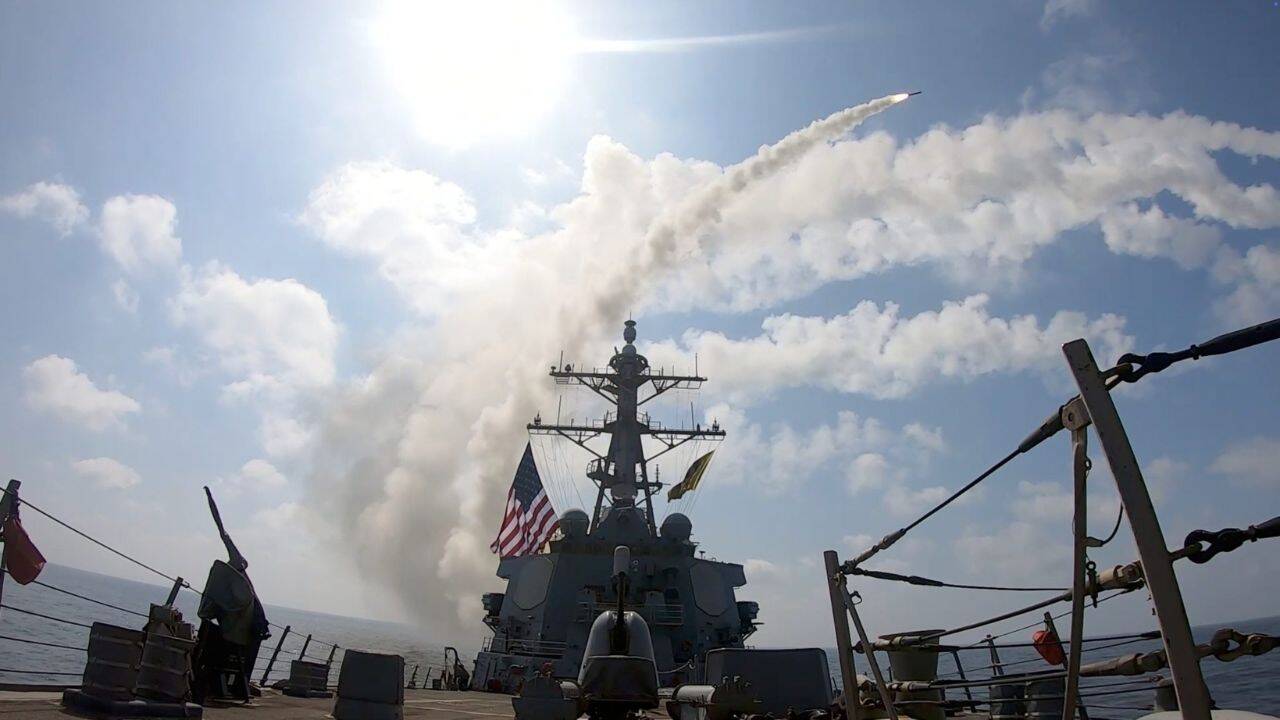
Missile being launched from a US Navy ship in support of Operation Epic Fury
The Pentagon estimated that Operation Epic Fury had cost the US military $33.4 billion by June 29, as a new Lead Inspector General report covering the war through June 30 revealed major shortfalls in US weapons stocks and bottlenecks in the defence industrial base.The report said the heavy use of munitions during the campaign had created “strategic inventory shortfalls”, raising concerns over how quickly the US can replenish weapons used in the Iran war.The report said the $33.4 billion estimate consisted of $7.4 billion in cumulative incremental obligations, $22.3 billion for expended munitions and $3.7 billion in equipment losses. However, the figure does not include the cost of repairing infrastructure damaged during the conflict.The Office of the under secretary for acquisition and sustainment said the munitions used in Operation Epic Fury had created strategic inventory shortfalls and exposed bottlenecks in the US defence industrial base. The Pentagon said it was working to speed up procurement and production, stockpile critical materials and components, and expand production capacity.Pentagon’s efforts to address the shortfall include accelerating existing production lines, expanding defence industrial facilities, securing critical supply chains and working with allies to offset US inventory drawdowns.
However, it warned that expanding production capacity would require “significant lead time.” The most persistent bottlenecks were in solid rocket motors, high-grade explosives and propellants, and skilled manufacturing labour.The scale of the campaign also put significant demands on US forces. More than 50,000 US service members were deployed across the US central command area of responsibility, while the operation involved extensive air, maritime and logistical support.The report also said Iran and its proxies launched thousands of missiles and one-way attack drones against US forces, regional countries, commercial shipping and US military bases and ships.The report highlighted the scale of US air-defence efforts during the conflict. The Middle east defense network intercepted more than 6,000 one-way attack drones and more than 1,500 ballistic missiles targeting US and partner forces, meaning more than 7,500 incoming threats were intercepted across the region.
KioskNews shows a cleaned-up reading view extracted from the publisher’s page — the original always lives on their site, not ours.