The AI boom needs data centres. But why don’t people want them?
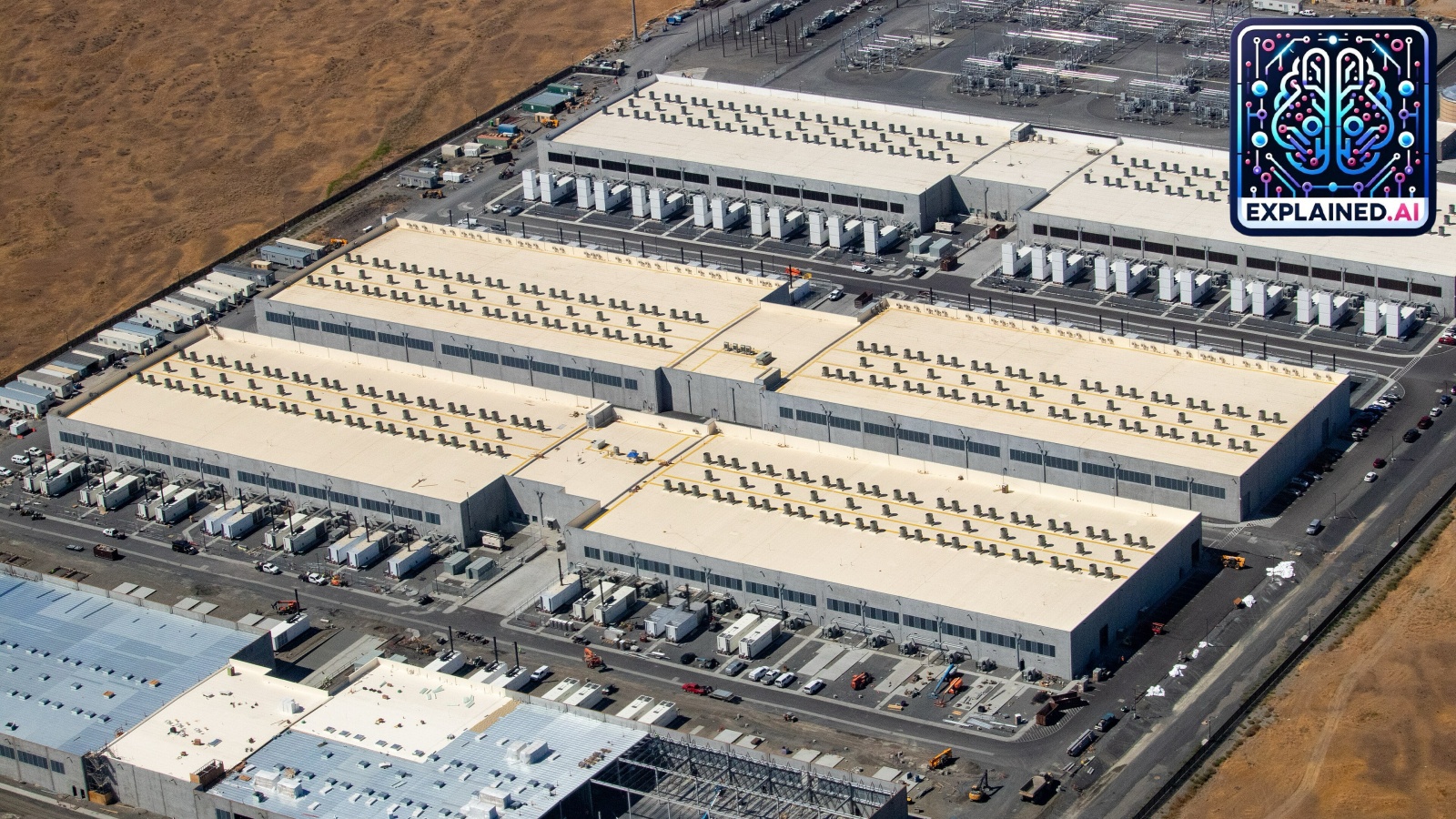
Two interlinked events earlier this month indicate rising scepticism about the future growth of data centres — facilities central to the expansion of artificial intelligence (AI) technology.
First came the US midterm elections for electing members of the legislature and several state governors. The Democratic Party swept the polls, which triggered the second event: a sell-off in tech and AI stocks, including Amazon and Google’s parent company, Alphabet. Around $2.5 trillion was wiped off the Nasdaq.
The sell-off came from the expectation that Democrats will not be as pro-AI as President Donald Trump’s Republican Party. Voters also responded to specific policy proposals on the ballot for their constituencies. Of 47 measures on data centres, 46 saw a rejection of their expansion or approvals for greater scrutiny, according to an analysis by the website Ballotpedia.
The disapproval is not just an American phenomenon. Closer to home, Adani Enterprises and Google announced plans last October to develop India’s largest AI data centre campus in Visakhapatnam, Andhra Pradesh, for $15 billion. Several cases have been filed in courts, challenging the project on grounds including the environmental clearance process and land allocation.
VS Krishna, Coordination Committee Member at the Human Rights Forum, one of the organisations challenging the project, told The Indian Express that the manner of approval was of “deep concern”, with limited gains for the locals. Similar opposition has been raised to such projects ranging from Finland to Kenya.
What exactly is a data centre?
With technological improvements, accessing the internet is now seamless, done at the touch of a finger or press of a button on sleek devices. But the vast amount of information and data being exchanged still needs to be contained and managed at a physical location.
A data centre is a facility that houses the physical infrastructure needed to store, process and manage data, and provide the computing services that underpin much of the internet. Such a centre can include servers, computers, hard drives and cooling systems to manage the heat generated by electrical systems.
Story continues below this ad
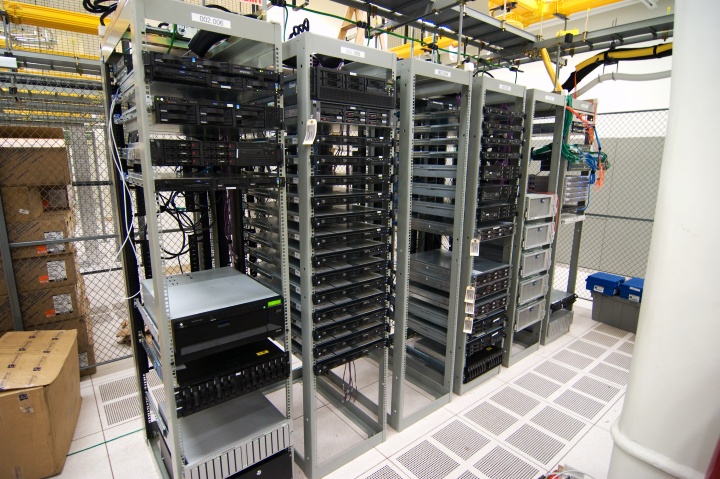 Half-filled racks at a data centre. (Wikimedia Commons)
Shane Greenstein, professor of business administration at Harvard Business School, told The Indian Express that data centres are of various types. “India already has many data centres within its borders, and these play a well-established functional role. They serve as cloud providers for India’s massive IT industry, offering computing, storage, and related software services.”
“Typically, they need to be nearby to deliver services without delays (what is termed “latency”). An Indian business could access such services in Europe or the US, but users would notice delays from the distance the electronic signals travel, or from congestion along the way,” he said.
Data centres for training Large Language Models (LLMs) like ChatGPT initially did not need to be located nearby, Greenstein added. However, the growing use of these models for everyday applications has increased demand for inference — the computing required to generate responses to user prompts. Some applications also retrieve information from external databases or the internet, adding to their computational requirements. Newer-generation data centres typically use Nvidia’s Graphics Processing Units (GPUs), which can carry out complex calculations and support running applications and programmes.
AI data centres thus tend to be larger and consume much more electricity. Adarsh Ranjan, research analyst at Carnegie India, said the scale has risen substantially. “Data centres are sometimes measured in terms of power, say a 10 megawatt data centre, referring to what it needs to run.” But now, he said, companies are treating bigger facilities as the baseline. According to the International Energy Agency, “A typical AI-focused data centre consumes as much electricity as 100,000 households, but the largest ones under construction today will consume 20 times as much.”
Story continues below this ad
“AI adoption at the enterprise level is still not very high. Companies are still trying to devise how to make their operations more productive with it. LLMs, however, are being increasingly used, resulting in more data centres,” Ranjan told The Indian Express.
The other argument for expanding data centres concerns data sovereignty, he said. “The country in which the data centre is located will essentially determine the laws governing it — including how secure it is and who gets to access it. Imagine the data centre is located in a country that you don’t have friendly ties with; that would lead to worries about the data, especially if it’s critical and sensitive, like health.” Currently, the United States leads globally, housing nearly half of all data centres.
What explains the backlash against data centres?
AI is among the most rapidly adopted technologies of the modern age, and the companies driving its growth have painted this pace as somewhat inevitable. An Adani-Google data centre media release says that its development “will create a powerful engine for economic growth in Visakhapatnam… and thereafter the entire nation by driving digital inclusivity and creating tens of thousands of jobs in technology, construction and clean energy.” An associated energy project is planned not only to “support the data centre’s operations but also enhance the resilience and capacity of India’s electricity grid.”
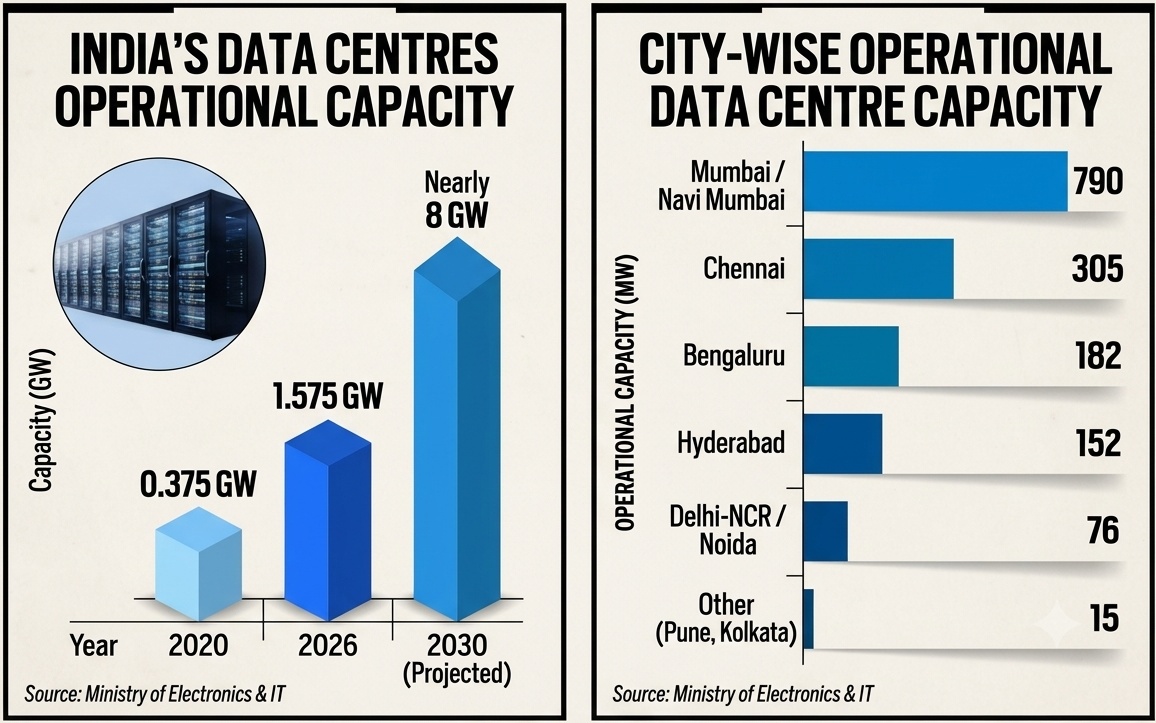 India’s data centre capacity. (MeitY data via PIB, generated with AI assistance)
But for all their promised benefits, data centres have increasingly acquired a negative reputation, seen as guzzlers of water and electricity, with questionable benefits.
Story continues below this ad
India’s 2025-26 Economic Survey, for instance, stated that “Despite generating nearly 20 per cent of the world’s data, India hosts only about 3 per cent of global data centres.” In the same paragraph, it described the facilities as “double-edged swords”. It further quoted Mark P Mills, senior fellow at the Manhattan Institute, from a Congressional testimony: “In moonshot terms: the amount of energy used to launch a rocket is consumed every day by just one AI-infused datacenter.”
Water is used in data centres primarily to remove the heat generated by servers and processors. Traditional cooling systems often use evaporative cooling, in which water is evaporated to dissipate heat. Newer approaches, including direct-to-chip cooling, circulate coolant through cold plates attached to processors. While these can improve cooling efficiency, they do not necessarily eliminate water consumption, since the heat still has to be dissipated elsewhere in the facility.
“People are generally wary of potable water being used, and how this could impact local community access to water. Over time, companies themselves have realised that this would be a major issue moving forward. They traditionally employed evaporative cooling, releasing water into the air to lower temperatures. It would consume vast amounts of water, which led to methods like direct-to-chip cooling that use significantly less water,” Ranjan said.
Data centres additionally require large and reliable electricity supplies. While companies do procure renewable energy, electricity may also come from grids that rely heavily on fossil fuels. The additional demand and load on the ground could ultimately be passed on to other electricity consumers.
Story continues below this ad
Greenstein said there was also a clearer cost issue on frontier AI. “Some opposition worries about whether society is using its resources well. Consider a 150MW facility, a scale that marked the AI frontier last year. Constructing the shell — land, connectivity, cooling, electricity, racks, etc. — can cost roughly $2 billion to $4 billion. Filling it with servers and associated hardware can add $3 billion, and easily several times that, with the frontier chips driving expenses high above that minimum. Operating it can cost more than $500 million a year, depending on location and weather. Hardware replacement adds another recurring bill measured in billions.”
“Such a build creates many jobs during construction, with thousands working on it for a year. After construction, the number of newly created jobs is modest, maybe just a bit more than 100 employees,” he added.
VS Krishna of the HRF added that jobs were a major factor for the people of Visakhapatnam, too: “Say if 1 lakh jobs were expected to be created, the people would not have opposed the project so vehemently.”
In Visakhapatnam, he said that the environmental clearance process was not based on informed public debate. “The clearance was given despite sustained and well-founded objections from concerned citizens, environmental experts and civil society organisations who have repeatedly warned of the serious ecological, hydrological and social consequences of permitting a project of this scale in an environmentally sensitive area linked to the Mudasarlova reservoir catchment and the Kambalakonda Wildlife Sanctuary,” said an HRF press release.
Story continues below this ad
How are data centres being regulated?
Ranjan said that globally, the conversation is focused on two areas. “Countries recognise the need to bring in investment and establish facilities to support their domestic ecosystem. The second part is to ensure that the environmental fallout does not impact local communities.”
The Economic Survey suggests that since investment in AI infrastructure competes directly with other sources of demand, such as households and industries, a stronger case can be made for “smaller, task-specific (AI) models that can run on limited hardware and decentralised compute networks.” These would require fewer resources.
National data centre-specific policies have generally been lacking, although states have formulated their own, including in India and the US. “Uttar Pradesh, Maharashtra, Andhra Pradesh, Karnataka, and Telangana have their own policies, but these largely look at attracting investments,” he said. In the absence of a national policy, states could engage in a kind of race to the bottom to offer the most cost-cutting alternatives to companies.
Experts say that better resource utilisation is achievable, including with more green technology and energy-efficient methods. Ranjan said whether companies and governments move towards mandating them is more a question of political will.
Story continues below this ad
But there is also a bigger fundamental question at the heart of the opposition — discomfort, scepticism and even anger, over the technology itself. Krishna said, “It has been billed as a gamechanger, but it’s also indirect. It’s a rudimentary example, but say, a hospital was being built instead. People will have direct use for it; it will result in lodging and food facilities coming up nearby, but that’s not the case here.”
Greenstein added that data centres face an “inescapable issue”: “The benefits go to users and businesses, who are distant and dispersed, while many of the costs are conspicuously local. That also creates opportunities for NIMBY (not in my backyard) opposition. Locals have no reason to care.”
“LLMs today are doing all sorts of things — writing music, writing books, helping people do things like draft emails, which can be a drag as part of your job. But for the amount of hype around it, we don’t yet have a very clear sense of how that’s going to add value for people,” said Ranjan. In such an atmosphere, building trust was key, he added. Mandates could be specified for water and energy use, with the local communities made aware of the kind of costs associated with such projects before approvals are sought. Ultimately, the debate is about whether such projects justify their costs, and if they do, what can be done to ensure they are accepted by the very communities they could impact most directly.
KioskNews shows a cleaned-up reading view extracted from the publisher’s page — the original always lives on their site, not ours.