Sahel juntas launch Russia-backed TV in ‘imperialist’ fight
Burkina Faso, Mali and Niger have launched a joint TV channel as part of the three junta-run nations’ struggle for hearts and minds against a Western media they accuse of being “imperialist.”
Russia-backed Tafouk TV represents another battleground in the Sahelian countries’ campaign against the West since the trio fell to military coups between 2020 and 2023.
“We had to strike back ... to ensure that these platforms could spread our own narrative,” Malian Minister of Foreign Affairs Abdoulaye Diop said at the channel’s launch this month.
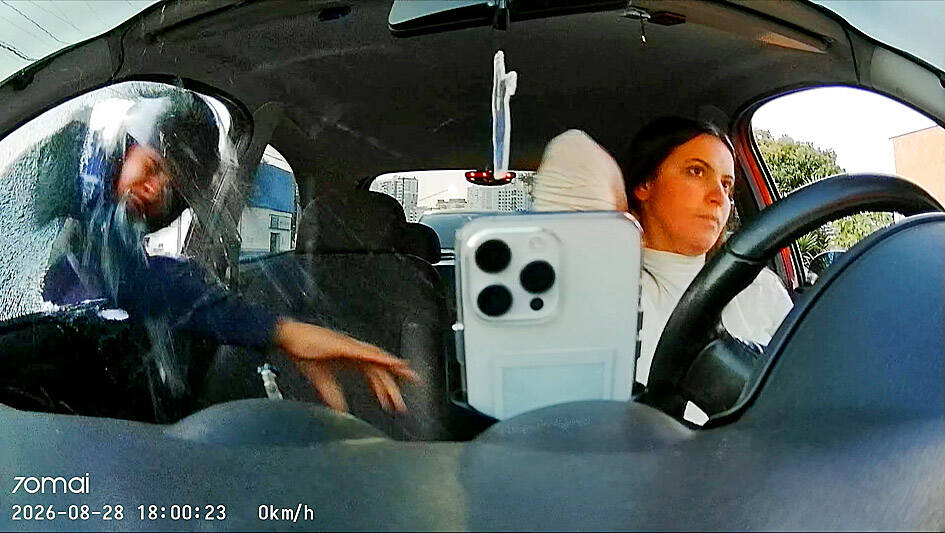
A screengrab from a security camera inside the car of Tabata Gomes Lenk shows the moment a thief breaks the car window to steal her cellphone in Sao Paulo, Brazil, on Aug. 28.
Photo: AFP
Tafouk TV, whose name means “Sun” in the Tamasheq language spoken by the nomadic Tuaregs, is accessible through Canal+, which is widely available online and throughout west Africa. Setting the tone, its opening credits theme tune is inspired by the music of traditional Dozo hunters.
The logo for its “Communication Intervention Brigade” show is a winged shield incorporating a camera, microphone and pen.
“When plotters attempt to destabilize the state, the battle plays out not just in the barracks, but also on our screens, in newspaper columns and on social media,” said presenter Abdoul Niang, Tafouk TV’s news director and a cyberactivist with close ties to Mali’s military leadership.
His guest to help “decipher” the French media’s coverage of a thwarted mutiny in Niger last month was pan-African influencer and fellow Sahel junta supporter Franklin Nyamsi.
The three juntas have all turned their backs on the West, especially former colonial ruler France, in favor of closer ties with Russia. Despite invoking the need to end years-long jihadist violence in their countries to justify seizing power, none of the juntas have succeeded in halting the deadly unrest.
The trio are also regularly accused of clamping down on criticism. Several foreign correspondents have been expelled and the military governments have suspended most major Western media outlets for reporting on losses by the armies, contradicting official accounts of battlefield successes.
Broadcasting from the Malian capital, Bamako, Tafouk TV produces three news bulletins a day dedicated to current events in the junta-led governments.
The three countries formed their own confederation called the Alliance of Sahel States after quitting a regional west African grouping.
“From now on in the battle of narratives, the people of the Sahel ... are no longer passive consumers of false and manipulated stories coming from fake news factories,” Niger’s state television said as the channel went on air.
Its line-up promises shows on factchecking, geopolitics and news from the front, broadcast in French and English, as well as several regional languages, including Bambara and Hausa. Tafouk TV is openly backed by Russia: In June, Moscow’s ambassador to Mali, Igor Gromyko, hailed the channel’s “role in the fight against disinformation and cognitive warfare.”
A month later, the channel signed an agreement with the parent company of Russia Today in Niamey. RT said the deal covers “content exchanges, sharing of expertise and joint coverage of major current events in Russia and the Sahel countries.”
Tafouk TV’s launch followed the December debut of the AES-wide Daande Liptako radio station.
It broadcasts from Burkina Faso’s capital, Ouagadougou, on the frequency formerly home to Radio France Internationale (RFI), now banned across the alliance. A joint official press agency based in Niamey is expected to be set up soon, too.
“Tafouk TV is far more than a television channel. It’s the AES’s communication weapon,” a Burkinabe analyst said.
However, a former Nigerien lawmaker insisted that the “television channel must not become a propaganda tool.”
“We also need genuine, open debates where any and all opinions can be expressed,” the lawmaker added.
KioskNews shows a cleaned-up reading view extracted from the publisher’s page — the original always lives on their site, not ours.