France's 140 year old Town Hall survived two World Wars but succumbed to protesters
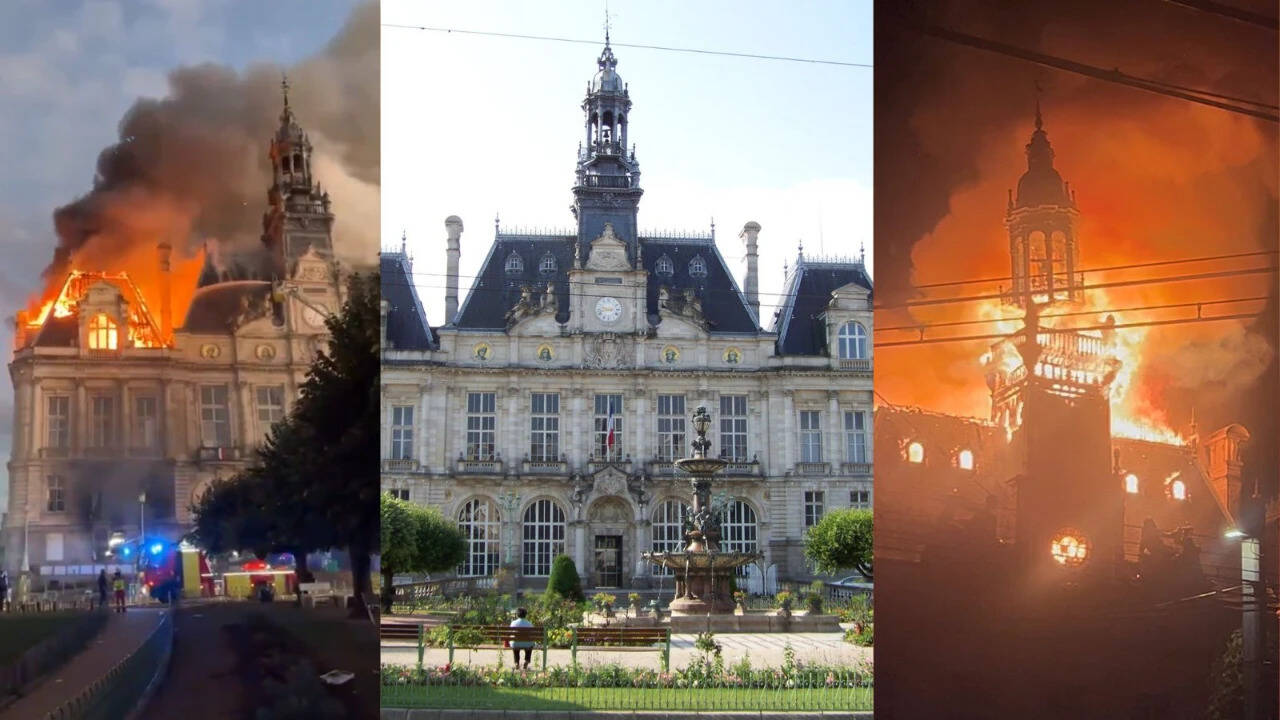
Limoges town hall, a 143-year-old landmark, gutted in fire during violent protests in France
A 143-year-old town hall in the French city of Limoges, which served as a hub for resistance activities during Nazi occupation and hosted Belgium’s government-in-exile in 1940, has been largely destroyed after protesters set it ablaze during violent demonstrations over the cost of living, school conditions and public services.Local officials said around two-thirds of the historic building had been destroyed in the fire, describing the damage as a “catastrophe for heritage”.The destruction came as protests swept across France on Saturday, with demonstrations over rising fuel prices, inflation and deteriorating public services turning violent in several cities. An estimated 550,000 people took part in the marches, according to the French interior ministry.Also Read | Student grievances, cost-of-living crisis, political discontent: Why are protests turning violent in FranceDozens of shops were looted in cities including Paris, Marseille, Nice, Nantes, Bordeaux, Limoges, Lille, Toulouse and Strasbourg. Fires burned in Paris late into the evening, while riot police used tear gas and baton charges to disperse crowds.
The damage to Limoges town hall has put the spotlight on a building with a significant place in the city's wartime history.In May 1940, as Nazi Germany advanced across Europe, Belgian ministers and parliamentarians who had fled their country arrived in Limoges on May 31.
They had briefly taken refuge in Poitiers before moving to Limoges, where they were welcomed by the city's then mayor, Léon Betoulle.Also Read | France protests leave Paris streets buried in rubbish amidst violence, looting across nationThe Belgian representatives condemned King Leopold III's decision to surrender to the Nazi threat and established their offices in the town hall and the prefecture. Belgian flags were flown alongside French ones, turning the municipal building into a centre of activity for the government-in-exile.During the German occupation of France, the town hall also became an important base for the Resistance in the southern unoccupied zone.Lucien Berdasé, who worked in the municipal administration, helped resistance fighters by sabotaging lists of Jewish residents, preparing false documents and concealing weapons stored in the building. He also arranged travel permits for vehicles used by the *Maquis*, the French resistance fighters.Suzanne Rodi-Boyer, who was responsible for distributing food ration cards at the town hall, helped Jewish families obtain false papers using stamps taken from the municipality. These efforts made the building part of a wider network that helped people evade Nazi persecution and supported resistance activities.The town hall's post-war history included a visit by General Charles de Gaulle on March 4, 1945. Georges Guingouin, a prominent Resistance figure and member of the Order of Liberation, later served as Limoges mayor from April 1945 to October 1947.The latest destruction comes amid wider unrest across Europe over economic pressures and public services. In France, the demonstrations followed student-led protests last month and expanded into a broader movement against rising living costs and what protesters described as government inaction.French President Emmanuel Macron condemned those responsible for violence and looting, warning that people who attacked public offices, businesses and town halls would face prosecution and punishment.At least 195 people had been detained amid criticism of the authorities' handling of the demonstrations.
KioskNews shows a cleaned-up reading view extracted from the publisher’s page — the original always lives on their site, not ours.